Moneywise and Yahoo Finance LLC may earn commission or revenue through links in the content below.
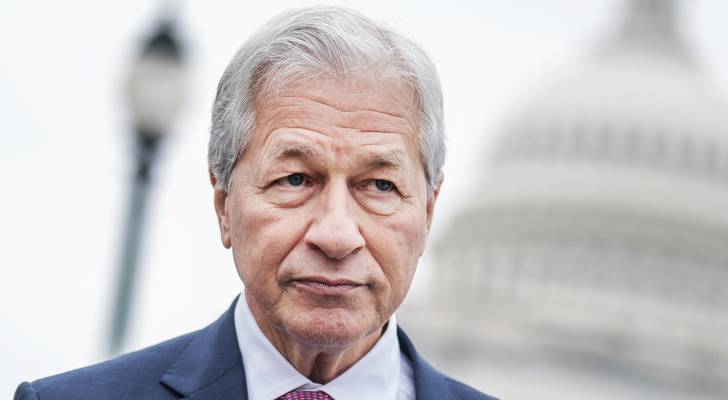
In October 2024, Jamie Dimon, CEO of JPMorgan, told a crowd at the Institute of International Finance’s annual meeting in Washington, D.C., that war and nuclear proliferation are greater existential threats than climate change.
“World War III has already begun. You already have battles on the ground being coordinated in multiple countries,” Dimon said at the event (1). Since then, global tensions have only ratcheted up further.
At the time, Dimon named the potential conflict between Western countries and China, Russia, Iran or North Korea as far more concerning to him than any potential instability in global financial markets.
J.P. Morgan Chase has “run scenarios that will shock you” in preparation for potential global conflict, Dimon told the audience.
Of course, World War III hasn’t truly begun. But since Dimon made his remarks, global geo-political tensions have only risen — at least in part driven by U.S. foreign policy.
The likelihood of war, or at least an age of increasingly tense global politics, seems to have only increased since October 2024.
The last year has seen President Donald Trump’s administration levy sweeping tariffs against nations like China and Russia, but also allies such as Canada and the EU. The U.S. has also flouted international norms with tariff-backed threats, including against Greenland. Trump has repeatedly claimed that the U.S. should “own” Greenland, with an eye towards securing mineral rights, according to CNBC (2). Following the 2026 World Economic Forum, Trump announced a tentative framework deal with NATO Secretary-General Mark Rutte regarding Greenland after weeks of escalation.
However, many world leaders have condemned Trump’sapproach. French President Emmanuel Macron posted on X in January, “Tariff threats are unacceptable and have no place in this context. Europeans will respond in a united and coordinated manner should they be confirmed. We will ensure that European sovereignty is upheld (3).”
Meanwhile, the Prime Minister of the U.K., Keir Starmer, said in a statement that, “any decision about the future status of Greenland belongs to the people of Greenland and the Kingdom of Denmark alone. That right is fundamental, and we will support it (4).”
There’s also been criticism from within the Republican Party. Rep. Don Bacon of Nebraska told CNN that Trump’s threats to Greenland are “absurd,” adding, “We’ve got to speak up and say it’s wrong. You don’t threaten a NATO ally. They’ve been a great ally. We’ve had bases there since World War II. Denmark has fought with us (5).”
And it’s not just politicians ringing the alarm. A 2025 S&P Global report noted that, “A world ordered for decades by globalization and geoeconomics has quickly become a world grounded in geopolitical risk (6).”
The report goes on to state that this volatility has a “significant impact on the global economic outlook, influencing economic growth, inflation, financial markets and supply chains,” according to S&P Global.
It’s a confusing time, fraught with uncertainty. And if you aren’t sure what your best move is to protect your finances, especially given market volatility, then you aren’t alone.
Read More: Approaching retirement with no savings? Don’t panic, you’re not alone. Here are 6 easy ways you can catch up (and fast)
Periods of geopolitical instability can have significant ripples for you and your retirement account, but working with an experienced financial advisor can help you navigate troubled waters.
Finding a reliable financial advisor is now easier than ever with Advisor.com. Their network consists entirely of fiduciaries, so they’re legally obligated to act in your best interest.
To get started, enter some basic information about yourself, like your ZIP code, and your financial goals. Then Advisor.com will scour its database to match you with up to three reputable SEC/FINRA-registered advisors near you.
A qualified financial advisor can stick with you for the long haul, market chaos or no, so it’s worth taking your time. Fortunately, Advisor.com lets you set up a free, no-obligation consultation with your match to see whether they’re the right fit.
Whether you are concerned about Dimon’s warnings or not, they might inspire you to start thinking about your own response to global instability.
Given the ongoing conflicts around the world, it might at first feel tempting to hide out in cash.
But many market veterans, including Warren Buffett, don’t exactly believe in stashing your savings under the mattress.
“The one thing you can be quite sure of is if we went into some very major war, the value of money would go down,” Buffett told CNBC in 2014. “That’s happened in virtually every war that I’m aware of. So the last thing you’d want to do is hold money during a war (7).”
Cash is also more vulnerable to inflation, a common by-product of war, than assets that accrue value. High-yield accounts, stocks, bonds and alternative assets can gain steam over time through interest, dividend yields and increases in valuation. This can allow them to keep pace with or beat inflation.
But not all assets are created equal, especially those closely tied to fiat currencies like the U.S. dollar.
What should investors do instead of holding onto cash?
When it comes to investing in assets, you should always be picky. This is especially the case when it comes to real estate investing, which is one common hedge against inflation and instability.
Dimon has been vocal about his concerns for the commercial real estate sector. At a company shareholder meeting in 2023, he explained the knock-on effect of America’s regional bank crisis, saying “There’s always an offsides,” referring to the indirect consequences of an outcome (8).
“The offsides in this case will probably be real estate. It’ll be certain locations, certain office properties, certain construction loans. It could be very isolated.”
Many brick-and-mortar stores have struggled since the pandemic, and this can directly impact the property owners’ revenue stream. That’s why selectivity is key.
That’s why finding the right assets can be challenging for many investors. The knowledge needed to find and invest in resilient real estate is often the stuff that world-class investment firms are made of.
As an individual investor, this is when working with experts becomes important.
Mogul is a real estate investment platform offering fractional ownership in blue-chip rental properties, which gives investors monthly rental income, real-time appreciation and tax benefits — without the need for a hefty down payment or 3 a.m. tenant calls.
Founded by former Goldman Sachs real estate investors, the team hand-picks the top 1% of single-family rental homes nationwide for you. Simply put, you can invest in institutional quality offerings for a fraction of the usual cost.
Each property undergoes a vetting process, requiring a minimum 12% return even in downside scenarios. Across the board, the platform features an average annual IRR of 18.8%. Their cash-on-cash yields, meanwhile, average between 10 to 12% annually. Offerings often sell out in under three hours, with investments typically ranging between $15,000 and $40,000 per property.
Ultimately, the stock market will react to fears of a war, whether or not it actually happens. That’s because even the talk of a conflict can bring about a massive degree of uncertainty, which stock markets notoriously dislike.
For this reason, it can be worth considering investments that behave differently from the stock market.
“It’s likely there’ll be a 10 to 20% drawdown in equity markets sometime in the next 12 to 24 months,” said Goldman Sachs CEO David Solomon, at the Global Financial Leaders’ Investment Summit in November 2025 (10).
If that turns out to be true, diversification isn’t just ‘smart’ — it’s essential. Billionaires like Jeff Bezos and Bill Gates continue to invest heavily in stocks, but they also carve out a portion of their portfolios for assets that behave differently from the market.
One standout example is a globally recognized asset class that, until recently, was the domain of the ultra-rich like Bezos and Gates. Even better, it outpaced the S&P 500 by 15% from 1995 to 2025 while showing near-zero correlation to traditional equities.
The asset in question? Art.
Until recently, this world was off-limits. Now, with Masterworks, you can buy fractional shares in multimillion-dollar works by icons like Banksy, Picasso and Basquiat. While art can be illiquid and typically requires a long-term hold, it offers unique portfolio diversification.
Masterworks has sold 25 artworks so far, yielding net annualized returns like 14.6%, 17.6% and 17.8% among assets held for longer than a year.
Even better, you can get priority access to diversify with art by skipping the waitlist today.
Note that past performance is not indicative of future returns. Investing involves risk. See important Regulation A disclosures at Masterworks.com/cd
We rely only on vetted sources and credible third-party reporting. For details, see our editorial ethics and guidelines.
Marketwatch (1); CNBC (2), (6) (10), @EmmanuelMacron (3); U.K. Government (4); CNN (5); S&P Global (7); J.P. Morgan (8), (9)
This article provides information only and should not be construed as advice. It is provided without warranty of any kind.






Leave a Reply