
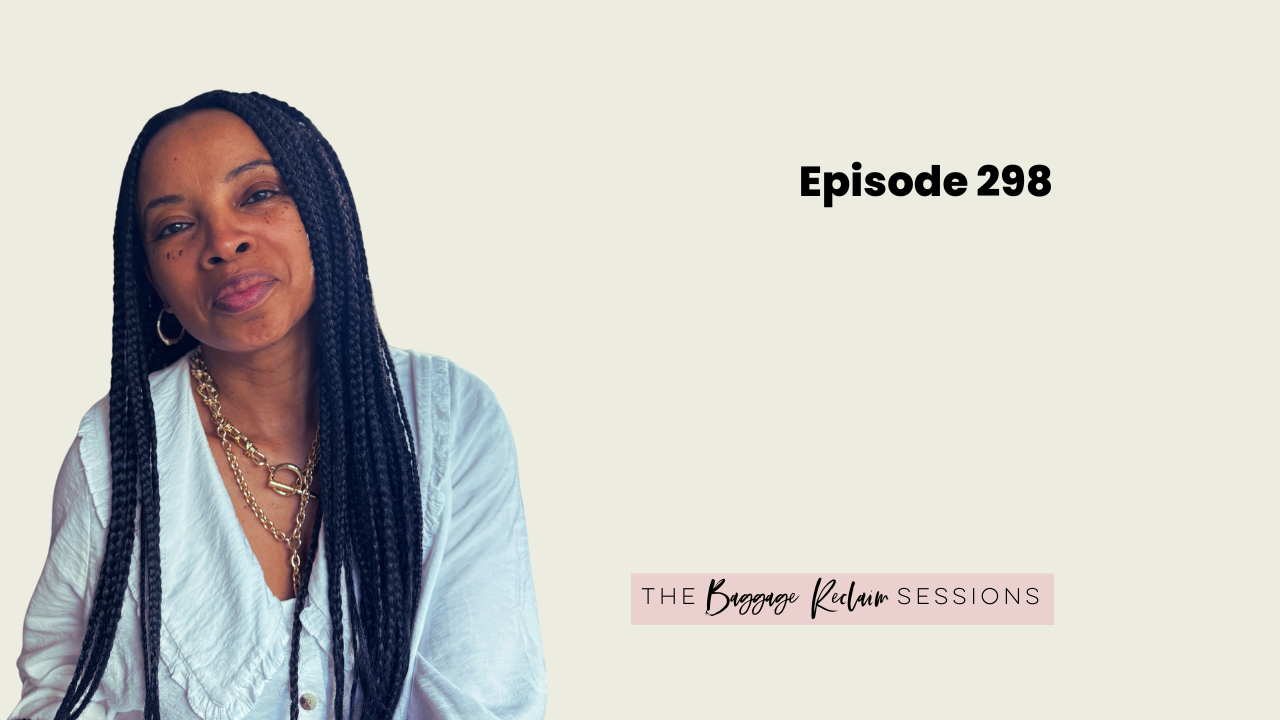
In this week’s episode of The Baggage Reclaim Sessions, I share how I’ve moved through what’s felt like the most difficult time in my life (my cancer diagnosis earlier this year) to finding peace and clarity on the other side. I explore the profound shift from constantly worrying, Am I going to be okay? ,to recognising and living from the truth that I AM okay, even while facing ongoing monitoring and uncertainty.
I dig into feeding our worry goldfish, how to recognise and interrupt habit trains of thought, and why our minds don’t differentiate between what’s actually happening and what we’re rehearsing in our heads. If you’ve found yourself caught in cycles of anxiety about the future or struggling to live fully while managing uncertainty, this episode offers both validation and practical tools for finding your way back to yourself.
IN THIS EPISODE…
- The shift from ‘Am I going to be okay?’ to ‘I AM okay’. Recognising that constantly worrying about future outcomes takes us away from acknowledging our current reality. Even while facing ongoing health monitoring and uncertainty, living as if you’re okay (because you are) allows you to actually experience your life rather than being consumed by hypothetical scenarios.
- Worry doesn’t know when to stop, much like goldfish that will eat until they’re overfed. Being mindful of how much we feed our anxiety and recognising when worrying shifts from helpful preparation to harmful rumination helps us maintain better emotional balance and use our bandwidth more productively.
- Breaking habit trains of thought that keep us stuck. Many of our anxious thoughts aren’t new or reflective of current reality but are habit patterns we’ve repeated so often they feel automatic. Learning to notice these thought trains and get off at earlier stops prevents us from riding them all the way to emotional destinations that don’t serve us.
- Your mind doesn’t differentiate between rehearsal and reality. Whether something is actually happening or you’re just worrying about it, your body responds the same way. This means the “dress rehearsals” and “reruns” we create in our minds have real emotional and physical impacts, making it crucial to be intentional about what reality we’re presenting to ourselves.
- Returning to what makes you feel most like yourself. After trauma or difficult periods, we often abandon activities and spaces that previously brought us joy or comfort. Gradually returning to reading, hobbies, and environments that feel authentically “you” becomes an important part of healing and reclaiming your sense of self beyond the crisis.
LINKS MENTIONED AND RECOMMENDED RESOURCES
SUPPORT THE PODCAST
Donate to the podcast tip jar
CONNECT WITH ME

 Add to favorites











Leave a Reply