
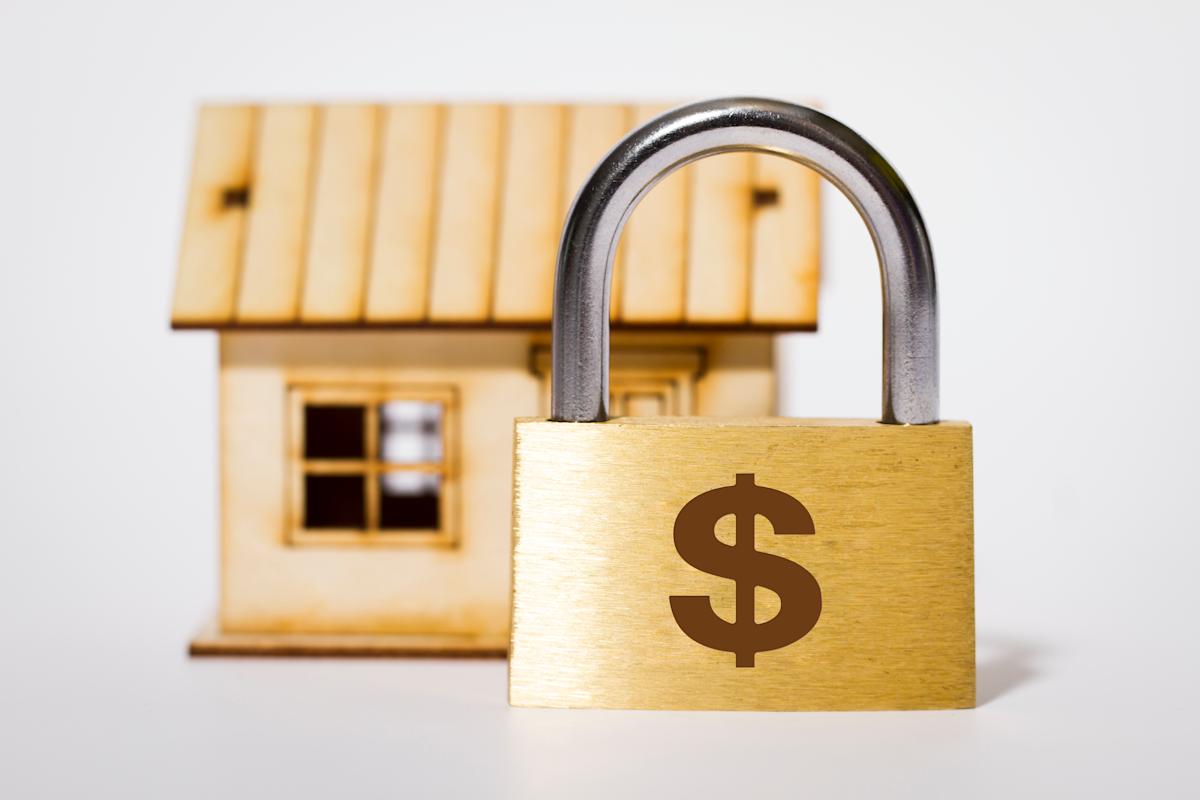
Mortgage rates are always on the move, and they’re currently on a downward trajectory thanks to rate cuts by the Federal Reserve.
If you’ve had an eye on buying or refinancing your mortgage, that’s welcome news. However, it also raises an important question: Should I lock in my mortgage rate today or wait? Here’s the good news: You can alleviate the stress of the now-or-wait game with something called a rate lock, and its close companion, the rate float-down.
A mortgage rate lock is a commitment from a guaranteeing that the interest rate on your home loan will remain the same until the day you close on the house — provided the mortgage closes within the specified time frame, and there are no changes to your loan application. With a mortgage rate lock, the home buyer can keep the lower rate even if market rates rise.
However, if rates go down when you close on the mortgage loan, you could be stuck with a higher rate. A float-down option takes away that risk.
With a , you can still get a better rate if mortgage rates dip below your rate lock. It typically isn’t free (though there are exceptions), and most lenders will charge 0.5% to 1% of the loan amount to exercise the float down.
How do you know if paying the float-down fee is worth it? You’ll need to run the numbers to see if the cost justifies the potential long-term savings.
Typically, you can lock in a mortgage rate at any time after you’ve been approved for the home loan and up to a few days before closing. However, the time frames vary by lender.
A lender might include a rate lock in the , which it provides within three days before closing. Some lenders allow you to lock in a rate earlier, such as when you are preapproved.
But with all these options, when exactly should you lock in a rate? The short answer is: Pay attention to market dynamics.
If interest rates have been stable, locking in your rate early may not be necessary. If rates are falling and are likely to continue to drop, you may want to wait a bit before locking the rate, since you could get a better rate in a few weeks.
However, if interest rates are rising or unpredictable, and you’re worried you won’t be able to afford your mortgage with a higher interest rate, it’s worth doing a mortgage rate lock as soon as possible.
Consider today’s mortgage rate market. According to the most recent data from Freddie Mac, rates on a 30-year fixed-rate mortgage are nearly 0.75% to 1% lower than they were just a year ago. Rates on 15-year fixed-rate loans are down around 0.50%. Given these downward trends, it’s likely wise to lock your interest rate as soon as your lender extends the option. For extra protection, you can add a float-down option to capture a better rate if signal broader interest rate cuts that will eventually make their way to the mortgage market.
For those interested in refinancing — especially those who bought when rates were in the 7% range — locking in today’s lower rate can capture long-term savings that may cut up to 1% from their current rate.
Your best bet? Lock your rate today and seek out lenders with low-cost float-down options to maximize your savings at the closing table.
Depending on the lender, you can typically lock in a mortgage rate for 30, 45, or 60 days — sometimes even longer. As long as you close within the specified time frame, your mortgage rate won’t change.
But if your rate lock expires before you close on the loan, you’ll have to pay a fee to extend the period of time. The interest rate lock extension fee is typically a percentage of your loan amount. The longer the extension, the higher the cost.
If you’re unsure whether locking in your mortgage rate is the right move, weigh these pros and cons to help you make an informed decision.
-
Protects you from interest rate hikes
-
You can typically choose from various lock periods, such as 30 or 60 days
-
Gives you peace of mind
-
Makes it easier to budget for your home and monthly payments since your interest rate is set
-
You could miss out on a lower interest rate if you don’t have a float-down option
-
You may have to pay extra to extend the lock after the expiration date
-
Many lenders charge rate lock fees
Find out what determines mortgage rates.
A mortgage rate lock can be helpful if market rates are trending up before your closing date. Take the following steps to lock in your mortgage rate:
-
Shop around. Before locking in your mortgage rate, with at least three different mortgage lenders so you can compare potential offers. Besides interest rates, you’ll also want to compare things like down payment requirements, origination fees, rate lock periods, and float-down options.
-
Find a home and make an offer. While many lenders allow you to lock in the mortgage rate any time after you’ve been approved for the home loan and up to five days before closing, you may have to pay extra to extend the lock if the rate lock expires before your loan closes. So, it might be best to start house-hunting and before locking in a rate.
-
Contact your lender. When you’re ready for a mortgage rate lock, reach out to your lender to select the mortgage rate lock period you want and fully understand your options.
Learn about how long it takes to close on a house.
The answer is: Perhaps. A float-down without a rate lock might be the better option.
Mortgage rates are at the , with economists predicting additional rate cuts in 2026. With mortgage rates trending downward, it may be wise to skip a paid rate lock and opt for the float-down instead.
Say you’re taking out a mortgage for $450,000 on a $500,000 home with a 30-year fixed-rate mortgage at today’s rates of roughly 5.98%. Your monthly principal and interest payment would be about $2,692 (plus fees and insurance). If rates dropped to 5.75%, your monthly payment would drop to $2,626 — a savings of only $66 per month. If your lender charges a 0.50% fee for a float-down, that’s another $2,250 out of pocket to save $66/month. You’d have to stay in your home at least 34 months (nearly three years) to break even.
If you’re buying your forever home, paying for a float-down option could make sense. In the example above, you’d save about $23,802 over the life of your loan. That’s about $793 per year.
If you’re buying a starter home or planning to relocate before that three-year break-even mark, take advantage of a no-cost rate lock today and skip the float down. The extra out-of-pocket expense doesn’t add up.
The best mortgage lenders offer unique rate lock programs to attract customers. Here’s how some of them work.
-
Newrez’s Lock & Shop Program. has a program that locks your interest rate for 75 days while you search for your new home. If rates drop during this period, the lender even lets you relock to get a lower rate at no extra cost.
-
Embrace Home Loans’ two float-down options. lets you lower your interest rate twice instead of once, all the way up to 15 days before closing. Each float-down option costs 0.25% of your total loan amount, and rates must have improved by at least 0.25% to be eligible.
-
Navy Federal Credit Union’s No-Cost Freedom Lock. offer a float-down option called No-Cost Freedom Lock that lets you float down twice, but the total rate reduction cannot surpass 0.25%. Navy Federal doesn’t charge any fees when you exercise your float-down option unless you extend it past the 60-day rate-lock period.
-
Third Federal Savings & Loan. You lock in your rate for 60 days with . If rates go down during that time frame, just ask for the lower rate at no cost.
MORE: See our top picks for mortgage lenders for first-time home buyers.
Locking in a mortgage rate could be a smart move if interest rates are on the rise. But if mortgage rates are trending downward (as they have been for the past year), it could be more important to focus on a rate float-down option.
A float-down lets you capture a lower interest rate if rates drop before you close. Some lenders charge for float-downs, while a few out there do not. Be sure to ask for the costs associated with both rate locks and float-downs on your Loan Estimate.
What happens if you lock in a mortgage rate and it goes down?
If you’re locked in and mortgage rates fall, you’ll be stuck paying the higher rate unless your rate lock includes a float-down option. A float-down option lets you honor your locked-in rate or the current rate, whichever is lower. This option isn’t free, though. You can expect to pay between 0.5% to 1% of the loan amount when you use a float-down. For a $350,000 loan, that’s $1,750 to $3,500.
Lenders typically charge anywhere from 0.25% to 1% of your loan amount to lock in a mortgage rate. So, if you take out a , you can expect to pay $750 to $3,000 for a mortgage rate lock.





Leave a Reply