The Federal Reserve, the central bank in the U.S. tasked with keeping prices stable and maximizing employment, had its last meeting on March 18. It decided to keep the Fed Funds rate unchanged.
And the quasi-governmental organization indicated that it could cut rates one time this year and once in 2027. Investors who were hoping for upbeat commentary surrounding looser monetary policy were probably disappointed.
Will AI create the world’s first trillionaire? Our team just released a report on the one little-known company, called an “Indispensable Monopoly” providing the critical technology Nvidia and Intel both need. Continue »
Given the rising threat of inflationary pressures from the Middle East conflict, there’s likely a higher possibility that the Fed isn’t going to cut interest rates anytime soon. In fact, the upward trend of the 10-year Treasury yield throughout March shows the market’s expectation of higher interest rates.
Here’s what that means for your artificial intelligence (AI) stocks in 2026.
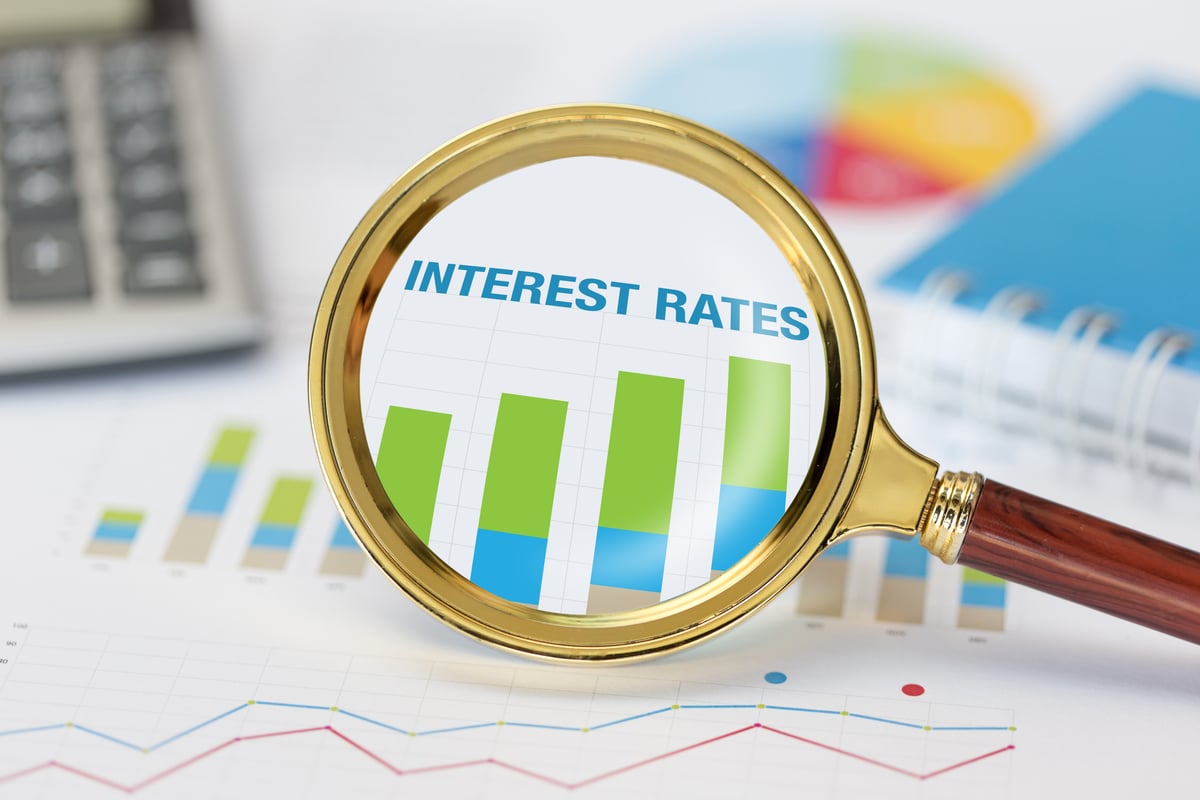
Image source: Getty Images.
If the Federal Reserve leaves rates unchanged or even decides to raise them in the not-too-distant future, it has some implications for AI businesses.
The first variable to think about is borrowing and raising capital. Everyone knows by now just how huge AI-related capital expenditures (capex) are. According to Nvidia(NASDAQ: NVDA) CEO Jensen Huang, there will be $3 trillion to $4 trillion of AI infrastructure capex annually by the end of the decade.
If rates don’t come down, then it means that the cost to borrow capital for these initiatives will be elevated. And businesses that want to continue investing aggressively into AI projects will have to raise money at potentially less-than-favorable terms.
A quarter- or half-percent here and there might not make that big of a difference. However, higher interest payments eat away at a company’s profitability. And investors are becoming critical of the possible returns that AI will provide.
On the other hand, if the Fed decides to cut rates, it introduces looser monetary policy that could result in even greater investment in AI.
All else being equal, lower interest rates (or the expectation of cuts) incentivizes more risk-taking on the part of investors. Yields from certain investments might not be as attractive, which necessitates buying more-speculative or growth-focused assets that have greater upside for capital appreciation. The fact that the Fed doesn’t plan to cut rates reverses this line of thinking.
From an investing perspective, AI stocks could start to see their valuations come down in a tighter monetary regime. This is particularly true for those that aren’t yet profitable, like C3.ai and SoundHound AI, whose valuations depend a lot on earnings much further into the future.
Even for established AI leaders, there could be pressure if market sentiment becomes challenging. Nvidia trades at a price-to-earnings ratio (P/E) of 35.6. Investors have clearly been enthusiastic about the company’s profit trajectory, as demand for its powerful chips has been off the charts.
A business such as Alphabet(NASDAQ: GOOG)(NASDAQ: GOOGL) might be a bit more insulated since its operations were in great shape prior to the AI boom. Nonetheless, its P/E of 26.6 could contract if investors expect rates to stay higher for longer.
It’s quite surprising how much attention the Federal Reserve gets. Because this is the most important central bank in the world, it makes sense that investors are glued to every word and decision.
But the best investors spend less time worrying about potential changes to interest rates and more time figuring out how to properly position their portfolios. What the central bank does is totally unpredictable. And even if you could accurately predict what will happen, it’s hard to profit from it.
What matters most is the quality of the holdings in your portfolio. Owning good companies that can succeed regardless of the Fed’s moves is a smart strategy that will keep you in the game long enough to let compounding work.
Before you buy stock in Nvidia, consider this:
The Motley Fool Stock Advisor analyst team just identified what they believe are the 10 best stocks for investors to buy now… and Nvidia wasn’t one of them. The 10 stocks that made the cut could produce monster returns in the coming years.
Consider when Netflix made this list on December 17, 2004… if you invested $1,000 at the time of our recommendation, you’d have $532,066!* Or when Nvidia made this list on April 15, 2005… if you invested $1,000 at the time of our recommendation, you’d have $1,087,496!*
Now, it’s worth noting Stock Advisor’s total average return is 926% — a market-crushing outperformance compared to 185% for the S&P 500. Don’t miss the latest top 10 list, available with Stock Advisor, and join an investing community built by individual investors for individual investors.
See the 10 stocks »
*Stock Advisor returns as of April 5, 2026.
Neil Patel has no position in any of the stocks mentioned. The Motley Fool has positions in and recommends Alphabet, Nvidia, and SoundHound AI. The Motley Fool recommends C3.ai. The Motley Fool has a disclosure policy.
The Fed Isn’t Cutting Rates Anytime Soon. Here’s What That Means for Your Artificial Intelligence (AI) Stocks in 2026. was originally published by The Motley Fool












Leave a Reply