
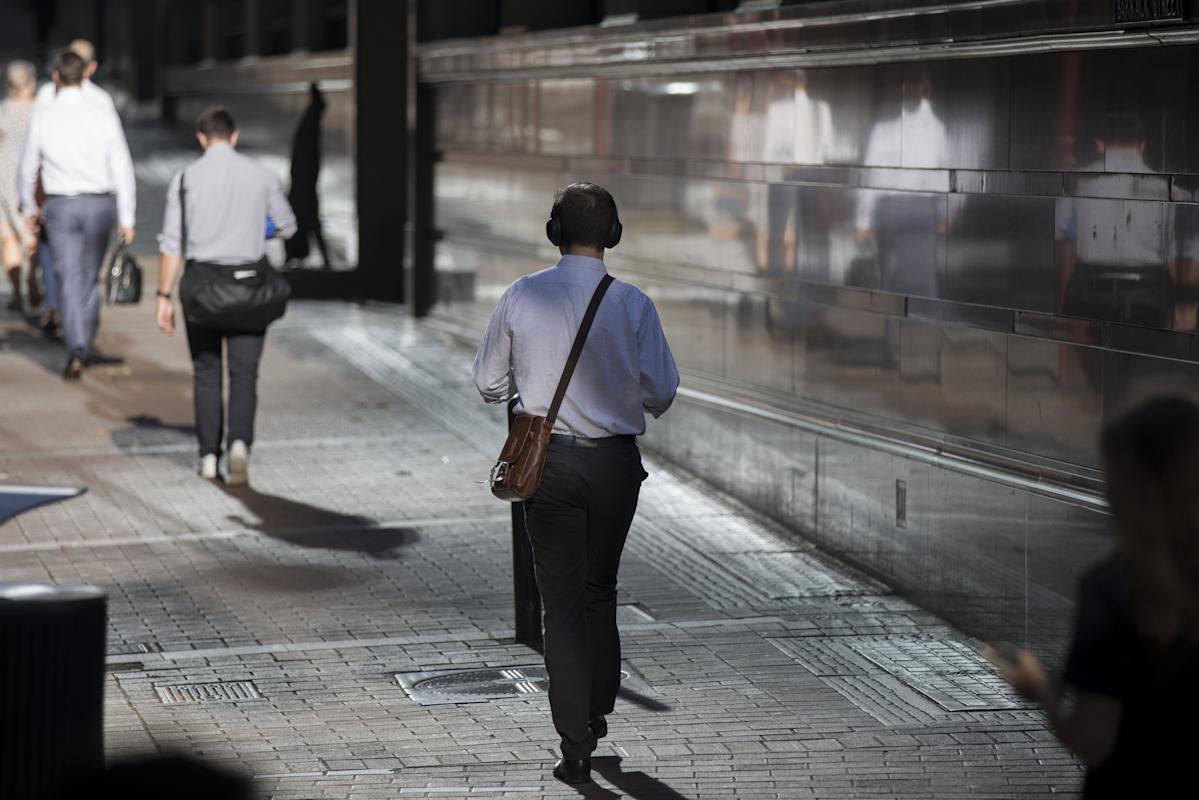

(Bloomberg) — Australian unemployment unexpectedly fell in December as the economy added more jobs than anticipated, prompting traders to boost bets that the Reserve Bank will be forced to raise interest rates as early as next month.
The jobless rate dropped to 4.1% from 4.3%, beating economists’ estimate of 4.3%, government data showed Thursday. Employment advanced by 65,200, led by full-time roles, and more than double the expected 27,000 gain.
Most Read from Bloomberg
Yields on policy sensitive three-year government bonds rose to the highest level since November 2023, while the currency jumped to its strongest in more than a year. Money markets are now pricing an almost 60% chance of a rate hike in February, up from less than one-third prior to the jobs print. Stocks pared gains.
The labor market reading, along with next week’s quarterly inflation print, are crucial data for policymakers ahead of the RBA’s Feb. 2-3 policy meeting. The central bank may be approaching an inflection point where it needs to decide whether to keep the key rate unchanged or pivot to a hike to help tame renewed inflationary pressures.
“The labor market data removed one hurdle to the RBA hiking in February, but the key test is next week’s” fourth-quarter inflation reading, said Carol Kong, a strategist at Commonwealth Bank of Australia. Consumer prices may have risen 0.9% in the quarter “which we think will be sufficiently strong to compel the RBA to hike in February.”
The RBA undertook a brief easing cycle between February and August last year when it cut the key rate by a total of 75 basis points to 3.6%. However, at the December policy meeting, Governor Michele Bullock said that further easing is unlikely in the near-term, and the next move could well be a hike.
The strong employment data helped extend the Aussie’s gain this year to 1.8%, the best performer among Group-of-10 currencies, as the prospect of a rate hike in Australia compared to cuts in the US helped the case of currency traders who favor the former.
Money markets are fully pricing an RBA rate rise for May and there’s a better than 90% chance of two hikes this year.
Earlier this month, RBA Deputy Governor Andrew Hauser described inflation as “too high” and echoed Bullock’s remarks, saying Australians have probably seen the last cut of the easing cycle. At the same time, he signaled that the rate-setting board is taking a patient approach to controlling inflation.






Leave a Reply