
An intriguing 2026 NFL Draft that began with just one certainty — that quarterback Fernando Mendoza would go No. 1 to the Las Vegas Raiders — is now over. What did you think about your favorite team’s draft picks? Who was a hit or miss? Which rookie are you most looking forward to following?
The Athletic asked its NFL writers to share one favorite pick for each team across the three-day draft in Pittsburgh. “Favorite” doesn’t necessarily mean “best” — though in some cases, it’s one and the same.
Here are our writers’ thoughts.
Pick: No. 3, Round 1 | Cardinals takeaways
I’ll admit: I was not completely on board with the Cardinals taking Love with the No. 3 pick. I thought the Cardinals needed to continue building the offensive line, a process they started during free agency. But the Cardinals made a convincing argument, and Love appeared excited to prove his worth. He knew the history of backs taken recently within the top 10 picks. He was ready to represent his position group and the organization. First-year coach Mike LaFleur perhaps put it best: With an elite playmaker, the play call does not have to be perfect. The execution does not have to be sharp. He can still turn it into an explosive play, making something out of nothing. If that’s what the Cardinals have with Love, this will work out just fine. — Doug Haller
Pick: No. 79, Round 3 | Falcons takeaways
Since 2020, only five NFL teams have scored fewer touchdowns than the 224 the Falcons have. Branch may not have ideal size (5-9, 177 pounds), and his route tree may be limited (one-quarter of his catches last year came on screens), but you know what he can do? Score from anywhere.
Branch has electric quickness. If all he does in Atlanta is catch swing passes and make defenders look silly, that could be a boon for an offense that needs to score more points one way or another. The Falcons have only 42 scoring plays of 20 or more yards since 2020. That ranks 31st in the league in that span. — Josh Kendall
Baltimore Ravens: Adam Randall, RB, Clemson
Pick: No. 174, Round 5 | Ravens takeaways
Randall is an intriguing story on his own: a wide receiver who didn’t move to running back permanently until his final college season. The process that led to the Ravens drafting him makes it an even better story. Team owner Steve Bisciotti has long said that he wanted to make one draft pick. General manager Eric DeCosta finally acquiesced and told him ahead of time he could select one of the Ravens’ fifth-rounders. Bisciotti did his homework and became enamored with Randall. Bisciotti is friends with Clemson coach Dabo Swinney, so he had plenty of intel. When the Ravens were on the clock at pick 174, Bisciotti called Randall to inform him he was the newest Raven. —Jeff Zrebiec
Pick: No. 126, Round 4 | Bills takeaways
While many Bills fans were over the moon about the team selecting a wide receiver (Skyler Bell) just one pick prior, Buffalo might have found a potential long-term starter at No. 126 in Elarms-Orr. He was one of my three favorite fits for the Bills at the position during the entire pre-draft process based on positional value and where he could be available. His size (234 pounds), athleticism, tackling and blitzing ability can all make a big impact. The inside linebacker depth chart has a clear path for a young player to take over a starting role as early as 2026, and Elarms-Orr definitely has the skills to do so. — Joe Buscaglia
Carolina Panthers: Monroe Freeling, OT, Georgia
Pick: No. 19, Round 1 | Panthers takeaways
Maybe it was watching him smile throughout his Zoom call minutes after he’d been drafted. Maybe it was watching the Georgia film and seeing him locking out his long arms against SEC pass rushers and getting to the second level on run plays. Either way, there’s something about Freeling that suggests he’ll be good on the field and in the locker room. At 6-7 and 315 pounds, Freeling has the look of a guy who will start at left tackle in this league for a long time — Carolina head coach Dave Canales doesn’t think the 21-year-old has even fully grown into his body yet. That growth process for a player who made only 17 starts at Georgia should be fun for Panthers fans to track. — Joseph Person
Pick: No. 25, Round 1 | Bears takeaways
A no-brainer, right-fit, easy-to-explain draft pick is always a preference, and it’s a bonus when it comes in the first round. Thieneman is going to start Day 1 next to Coby Bryant at the one position on the Bears’ roster that had a clear need for a starter. He has speed, ball skills and the ability to hit, and he’s a hyper competitor, one of the traits the Bears prioritized this draft. Some didn’t think Thieneman would get to the Bears at No. 25, and when he did, they didn’t overthink it, and now they have their safety duo for the long term. — Kevin Fishbain
Cincinnati Bengals: Jack Endries, TE, Texas
Pick: No. 221, Round 7 | Bengals takeaways
In a ridiculously deep class of tight ends, the Bengals waited until the final round to dip into the group. What they ended up with was not just a solid, accomplished tight end in Endries, a fourth-/fifth-round projection by The Athletic’s Dane Brugler with 89 receptions for nearly 1,000 yards over the last two seasons. The Bengals also got an extremely motivated individual. That was clear when Endries hopped on a call with Cincinnati media after the pick and was emotional at the end of a long wait to be drafted. “I’m going to make sure I make every team that didn’t f—ing draft me pay,” he said. — Paul Dehner Jr.
Cleveland Browns: Taylen Green, QB, Arkansas
Pick: No. 182, Round 6 | Browns takeaways
Green is my favorite pick because he’s an absurdly talented athlete who was a four-year starting quarterback at the college level. His best work was done as a runner, and it seems doubtful he’ll ever become an NFL-level passer, but the Browns are willing to let him work. Also, Green was drafted at No. 182 — a pick the Browns first acquired in a trade with the New York Jets last summer, then traded to Jacksonville in October, then got back Saturday afternoon from Denver. It’s a wild story that matches Green’s wildly high (but probably unreachable) ceiling. — Zac Jackson
Pick: No. 11, Round 1 | Cowboys takeaways
The Cowboys entered the offseason needing upgrades at all three levels of their defense. Spending almost their entire draft on that side of the ball was needed. But to get arguably the most impactful defensive player in this class takes things to another level. That certainly was not expected when (initially) picking at No. 12. Downs should immediately improve the second level. He also has the potential to be the face of a massive turnaround. He appears to be the ideal fit for coordinator Christian Parker’s multiple defensive scheme. Downs will help at safety but his biggest impact could be at nickel cornerback. Regardless of position, his playmaking should lead to him being a serious contender for NFL defensive rookie of the year. — Jon Machota
Pick: No. 108, Round 4 | Broncos takeaways
The Broncos brought back J.K. Dobbins this offseason. They believe second-year back RJ Harvey will continue to develop into a versatile, pass-catching weapon out of the backfield who also provides big-hit ability in the run game. But Coleman, at 5-foot-9 and 220 pounds, is a self-described “thumper,” and that’s exactly what Denver needed to add to its backfield. Coleman scored 25 touchdowns across his past two seasons and 24 came in the red zone. He led the running backs in this draft class in percentage of yards gained after contact (71 percent). He’s a tough, physical runner and has the right tools to become the kind of pass protector who can be trusted on third down. It’s the right fit for a team that is sharpening around the margins in an attempt to make a title run in 2026. — Nick Kosmider
Pick: No. 17, Round 1 | Lions takeaways
I know, I know. I went with the first-round pick. But I viewed Miller as a fit dating back to his combine media session, when he revealed that he delayed surgery the spring of his junior season because he didn’t want to miss practice and be away from his teammates. He ended up missing a single practice, and told reporters, “that kinda sucked.” His demeanor is perfect for this team, and outside of his intangibles and experience, he checks the physical and athletic boxes of a first-round tackle. The Lions didn’t swing for the fences, but Miller’s floor is exactly what they needed. — Colton Pouncy
Green Bay Packers: Trey Smack, K, Florida
Pick: No. 216, Round 6 | Packers takeaways
The Packers had a predictable draft devoid of fanfare until they traded up for a kicker. Let me repeat. Traded up for a kicker! My favorite pick is an easy call, and not just because his last name is Smack. Florida’s Trey Smack went to the Packers with the last pick of the sixth round after GM Brian Gutekunst gave both of his seventh-rounders to the Seattle Seahawks. Coach Matt LaFleur emphasized there will be a true kicking competition this summer, but will it really be that between Brandon McManus and Smack after the Packers traded up for the latter? — Matt Schneidman
Pick: No. 36, Round 2
The Texans used their first-round pick on Keylan Rutledge to bolster the interior of their offensive line, but McDonald could have the most immediate impact. The 6-2, 326-pound Ohio State product carried a first-round grade and should fit well on a defensive front that features edge rushers Will Anderson Jr., Danielle Hunter and defensive tackle Sheldon Rankins. McDonald is a powerful run-stopper with impressive quickness and good recognition. He also takes on double teams well to create opportunities for teammates. McDonald shared an emotional moment with Roger Goodell once he finally heard his name called on Day 2 of the draft, and it’s hard not to root for him in his quest to make an already dominant Texans defense even more terrifying. — Mike Jones
Pick: No. 53, Round 2 | Colts takeaways
Allen is the first linebacker the Colts have drafted in the second round since four-time All-Pro Shaq Leonard in 2018. The 6-foot-1, 230-pounder fills an obvious hole in Indy’s defense after the team traded multiyear starter and captain Zaire Franklin to the Green Bay Packers last month. Allen ended his career at Georgia with a dominant campaign that included eight tackles for loss, 3.5 sacks and four passes defensed en route to being named a 2025 first-team All-American. He should be a Day 1 starter in Indy. — James Boyd
Pick: No. 88, Round 3
Coach Liam Coen succinctly described Pregnon as a guy with ideal “ass and mass,” so let’s not overthink the favorite pick of the Jags’ class. They hung tight with their picks after trading away their first-rounder to move up for Travis Hunter in 2025, so their draft was about filling out roster depth with the likes of second-round tight end Nate Boerkircher, third-round cornerback Jalen Huskey and fourth-round defensive end Wesley Williams. Pregnon, who might be the steal of the third round, probably won’t start without an injury ahead of him on the depth chart, but the 6-foot-4, 314-pounder could grow into a long-term fixture at the position. — Jeff Howe
Pick: No. 161, Round 5 | Chiefs takeaways
The Chiefs appeared to reserve a fourth-round pick for a running back last year … only to see six of them go off the board in a run before their late-round slot arrived. GM Brett Veach didn’t wait around this time, trading up to select Johnson with the 161st pick. Johnson, who was ranked by Brugler as the fourth-best running back in this class, also was confident in his own abilities during a post-draft interview, vowing that he will to “come in and dominate” whatever role the Chiefs give him. — Jesse Newell
Las Vegas Raiders: Hezekiah Masses, CB, California
Pick: No. 175, Round 5 | Raiders takeaways
Las Vegas had a need for playmakers in its secondary; Raiders defensive backs had just five interceptions and 24 pass breakups in 2025. Enter Masses, who tied for the FBS lead with 18 pass breakups and added five interceptions in his lone season with the Golden Bears. Masses’ knack for finding the ball could make him a valued addition to the Raiders defense. (I’m also partial for this reason: Besides Mendoza, Masses was the only player I predicted correctly in my mock draft.) — Sam Warren
Pick: No. 145, Round 5 | Chargers takeaways
Barrett is a stout, powerful run defender, and it’s easy to see why Chargers defensive line coach Mike Elston was excited about the traits. Barrett had only one year of starting production in college, which could explain why he fell to the fifth round. I see a player who can make an immediate impact. Barrett is a block destroyer, something the Chargers covet along the interior. He also has a good motor as a pass rusher, with some upside in that phase. Barrett got the better of Texas A&M guard Chase Bisontis multiple times when they faced off in 2025. — Daniel Popper
Los Angeles Rams: Trade for CB Trent McDuffie
Rams takeaways
No, McDuffie is not a 2026 draft pick. But trading the No. 29 pick to the Kansas City Chiefs for him in March (plus Nos. 169 and 210, and a 2027 third-round pick) was always going to be hard for the Rams to top. I feel like it has to count for this draft class because the move to bring in an All-Pro at the cornerback position, which was by far the team’s biggest weakness, is what inspired this five-man draft class that was all about depth and the future. Without it, the selection of Alabama quarterback Ty Simpson at No. 13 would be that much harder to rationalize. If the Rams had sent out No. 13 for McDuffie and taken Simpson at No. 29, it all would have felt more seamless, but that’s the net result. — Nate Atkins
Pick: No. 12, Round 1
We’ll see if the Dolphins ever rue the day when they passed on safety Caleb Downs, but they traded back a spot and selected Proctor at No. 12. Before the draft, one coach (not with the Dolphins) made a case to me that Proctor had the upside that was worthy of the No. 1 pick. Yeah, teams are absolutely cognizant Proctor must take ownership of his weight and conditioning, but I haven’t gotten the sense that anyone was legitimately concerned about his maturation process. Once Proctor refines the areas that help him become a true pro, he has elite potential at tackle. — Jeff Howe
Pick: No. 98, Round 3 | Vikings takeaways
Everything about this selection made sense. Thomas is a versatile safety who transformed a Miami secondary that reached the national championship game. He blitzes, sees the field well and is sharp enough to absorb multiple positions and communicate on the field. All of these traits are hallmarks of defensive coordinator Brian Flores’ system. The Vikings were never going to force a fit at safety in the first round. Instead, they targeted Thomas early and made sure to snag him in the third round. — Alec Lewis
Pick: No. 196, Round 6 | Patriots takeaways
This is a little off the board, but there’s so much to like with this sixth-round flier. The odds suggest he won’t become a starter, since that’s the reality of the sixth round. And the Patriots already took an offensive tackle in the first round both last year (Will Campbell) and this year (Caleb Lomu). But it’s fun to think about what could be with the right development for a 319-pound tackle with an 86-inch wingspan who ran a 5.14-second 40. The definition of a low-risk, high-reward pick. — Chad Graff
Pick: No. 136, Round 4
Lance feels like he could be a sneaky-good fourth-round pick at an obvious position of need. A 6-foot-3 wideout who ran a 4.34 40-yard dash at the combine? Feels like a safe pick on Day 3. He had 17 touchdowns in 2024 to help the Bison win a national championship. Giving second-year quarterback Tyler Shough more options outside of Chris Olave was a priority in this draft. Wide receiver Jordyn Tyson felt like a no-brainer at No. 8 given the draft board, but adding Lance could become a shrewd move. — Larry Holder
Pick: No. 10, Round 1 | Giants takeaways
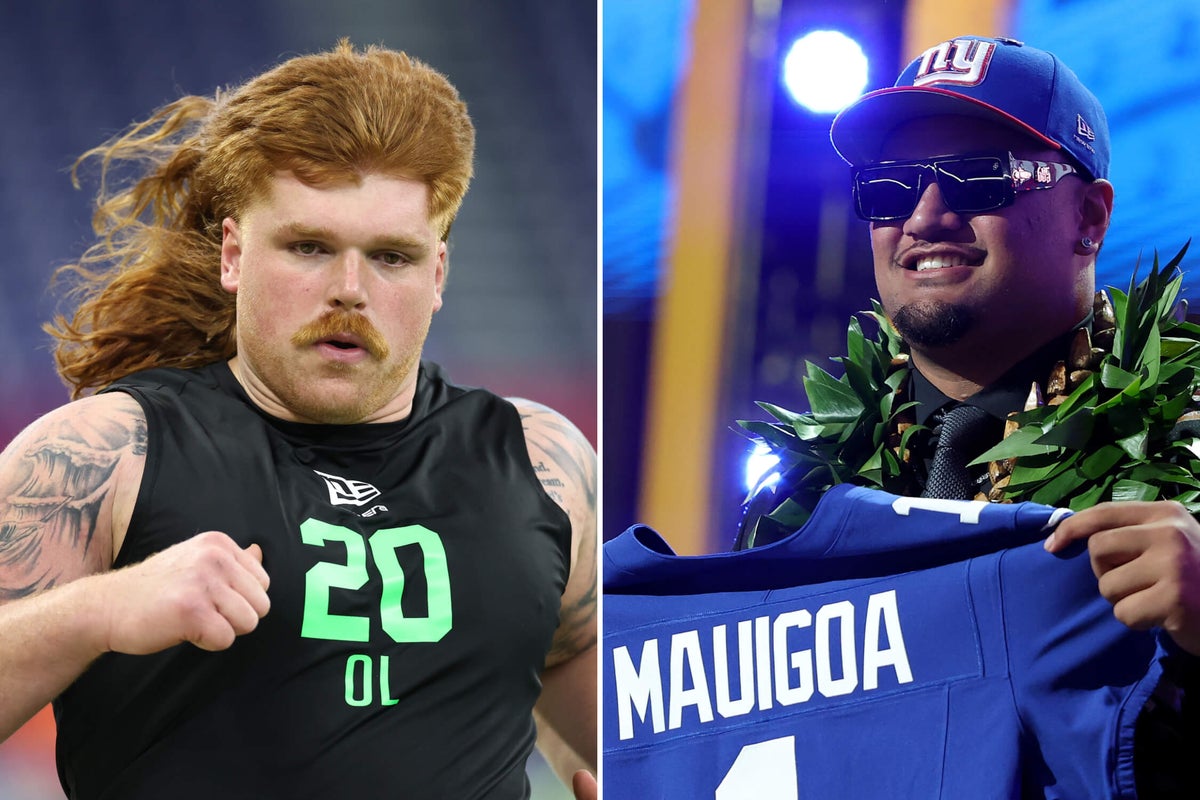
It might be a little bit of hyperbole and not necessarily an original sentiment from a draft pick, but you have to admire the dedication of a guy who says he’ll “die for” the team’s quarterback. That’s what Mauigoa proclaimed, immediately after the Giants drafted him, about looking after quarterback Jaxson Dart. As Mauigoa said, “That should be everybody’s mentality.” Now the Giants have a full set of starting offensive linemen to work with and Mauigoa’s mindset should pair nicely next to right tackle Jermaine Eluemunor, who plays with a similar vigor. Dart must feel safer post-draft. — Charlotte Carroll
Pick: No. 50, Round 2 | Jets takeaways
The player Ponds is most often compared to? Aaron Glenn, his new head coach. Perhaps we all should’ve seen this pick coming; it just makes too much sense. There’s a belief around the league that the 5-foot-8 Ponds would have been a first-round pick if he were a couple of inches taller. His height is really the only major knock on his scouting report. The Jets will cross-train him at outside and inside corner and it wouldn’t be a surprise for him to be starting early for a team that lacks playmakers at cornerback. The Jets are also coming off a season in which they had zero interceptions. — Zack Rosenblatt
Pick: No. 54, Round 2 | Eagles takeaways
The Eagles haven’t drafted a tight end before the sixth round since 2018, and Stowers could eventually take over a position that has gone from Brent Celek to Zach Ertz to Dallas Goedert. Stowers is 6-foot-4 and 239 pounds, ran a 4.51-second 40-yard dash and set records at the combine for a tight end in the broad jump (11 feet, 3 inches) and vertical jump (45.5 inches). He won the Mackey Award as the nation’s top tight end and was first-team All-American after a 62-catch, 729-yard season. But you don’t want him to block. He’s played the position only for three years, and the Eagles hope he can develop. — Zach Berman
Pick: No. 96, Round 3 | Steelers takeaways
Based on his hair alone, Dunker fits perfectly in a city where the mullet never went out of style. His folk-hero persona and mauling playing style has Dunker destined to become a fan favorite — don’t be surprised to see plenty of Yinzers wearing his camo jersey this season. Beyond the fun factor, Dunker could also fill one of the most glaring voids on the roster. Isaac Seumalo’s departure in free agency made the guard position an immediate need. The third-round pick should have an opportunity to compete for the job on Day 1. Best-case scenario, he’ll be the final piece to complete the transformation in the trenches that began in 2023 and has included three first-round tackles (Broderick Jones, Troy Fautanu and Max Iheanachor), a second-round center (Zach Frazier), fourth-round guard (Mason McCormick) and, finally, a third-round guard (Dunker). — Mike DeFabo
Pick: No. 33, Round 2 | 49ers takeaways
It was a close call with fourth-round pick Carver Willis, but the 49ers’ top pick stands out most. The son of a longtime Marine, Stribling has a maturity and toughness to him that’s reflected in his play. He stood out for blocking and YAC at Ole Miss, averaging 7.3 yards after the catch per reception. For comparison, Indiana’s Omar Cooper Jr., well-known for his YAC, averaged 7.2 in 2025. The 49ers have also dealt with some maturity issues at wideout in recent years with Deebo Samuel and Brandon Aiyuk, both of whom engaged in extremely rocky contract disputes. That might have been in the back of the team’s mind when scouting Stribling and other wideouts. — Matt Barrows
Pick: No. 32, Round 1 | Seahawks takeaways
Positional value aside, Price makes the Seahawks a better football team, and that’s what the draft is all about. He can pull away from defenders at the second level, and he’s physical and fits well in Seattle’s wide-zone run scheme. Kenneth Walker III left big shoes to fill, and Price should be able to step right in and lead Seattle’s rushing attack as a rookie. He’s an explosive player in an offense that needed some juice after losing Walker, Seattle’s Super Bowl MVP, to the Chiefs in free agency. — Michael-Shawn Dugar
Pick: No. 77, Round 3
It’s one thing to make Bruce Feldman’s Freaks list; it’s another to be a productive “Freak.” Hurst was a productive Freak with 127 catches for 1,965 yards in his last two seasons, though he did not play against elite defenses at Georgia State. He probably won’t have the kind of quick impact that Emeka Ebuka did last year, but that’s OK because the Bucs are loaded at wide receiver. He shouldn’t be looked at as a replacement for Mike Evans, but he might be looked at as a down-the-line lineup replacement for 30-year old Chris Godwin, depending on how long Godwin plays. — Dan Pompei
Pick: No. 4, Round 1
Tate may have been a bit of a reach at No. 4 — he was Brugler’s No. 10 prospect — and certainly his career will be compared to Arvell Reese’s as time goes on. But this is a really good player who gives direct help to second-year quarterback Cam Ward and gives the Titans a chance at a dynamic presence on the outside for the first time since A.J. Brown last played in Nashville in 2021. Tate had nine catches of 40 yards or more last season, which is basically an entire season for the entire Titans team of late. — Joe Rexrode
Pick: No. 187, Round 6 | Commanders takeaways
First-rounder Sonny Styles is the star of Washington’s draft class and will undoubtedly upgrade a defense that needed a leader and playmaker like him. But my favorite Commanders selection was Allen, a durable and powerful runner with good vision and one of the finest nicknames in sports. As he explained: “I was a fat baby and everybody in the town called me Fatman. Hopefully, I keep it going in Washington and they call me Fatman and, you know, when I score all you hear is Fatman.” Yep, the Commanders’ rushing corps will be led by “Bill” (Jacory Croskey-Merritt) and “Fatman.” Giddy up. — Nicki Jhabvala



Leave a Reply