
The Federal Reserve held interest rates steady for the third consecutive policy meeting this year amid a surge in oil prices and increased economic uncertainty from the Iran war.
The central bank voted in a split decision Wednesday to hold its benchmark interest rate in the range of 3.5% to 3.75%. Fed governor Stephen Miran disagreed, preferring to cut rates by a quarter percentage point. Cleveland Fed president Beth Hammack, Minneapolis Fed president Neel Kashkari, and Dallas Fed president Lorie Logan supported maintaining rates but disagreed with the “easing bias” implied in the policy statement and thus dissented.
The last time there were four dissents was Oct. 6, 1992.
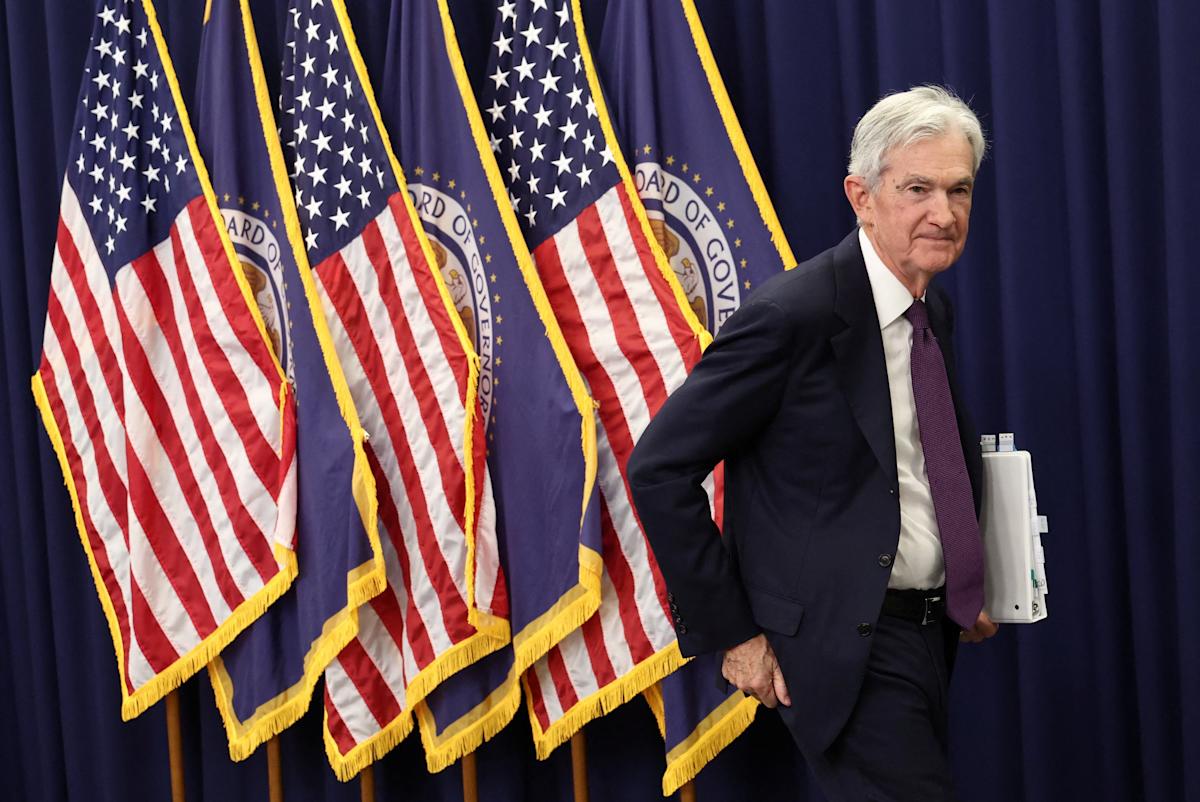
The divisions emerged as Fed Chair Jerome Powell announced on Wednesday that he intends to remain in his seat as a governor, citing “the series of legal attacks on the Fed which threaten our ability to conduct monetary policy without considering political factors” as his reason for staying.
“I plan to keep a low profile as a governor. There is only ever one chair of the Federal Reserve Board. When Kevin Warsh is confirmed and sworn in, he will be that chair,” Powell said in a press conference.
Warsh, President Trump’s nominee to succeed Powell, moved a step closer to confirmation on Wednesday when the Senate banking committee voted to confirm him on a party-line vote and send his nomination to the full Senate.

‘The center is moving’
The policy statement that drew the three dissents retained language stating that “in considering the extent and timing of additional adjustments … the Committee will carefully assess incoming data, the evolving outlook, and the balance of risks.”
That language is considered an easing bias — in other words, a stance on the committee favoring interest rate cuts. Several members of the central bank have favored changing the language to reflect that there’s an equal chance of raising rates as of lowering them.
“I think that the center is moving toward a more neutral place,” Powell said. “And that’s sort of what markets are saying too.”
Fed officials noted that inflation is elevated, in part, due to the recent increase in global energy prices. They also said that conflict in the Middle East is contributing to high uncertainty about the economic outlook.
Read more: How oil price shocks ripple through your wallet, from gas to groceries
Powell added that Fed officials have long expected isolated price shocks from Trump’s tariffs, but that the price increases would ultimately stop and not push inflation higher.
“It’s time for that to happen,” he said. “You know, we really do expect that to be happening in the next two quarters. So we’ll be watching very carefully to see that what we’ve thought all along would happen.”






Leave a Reply