
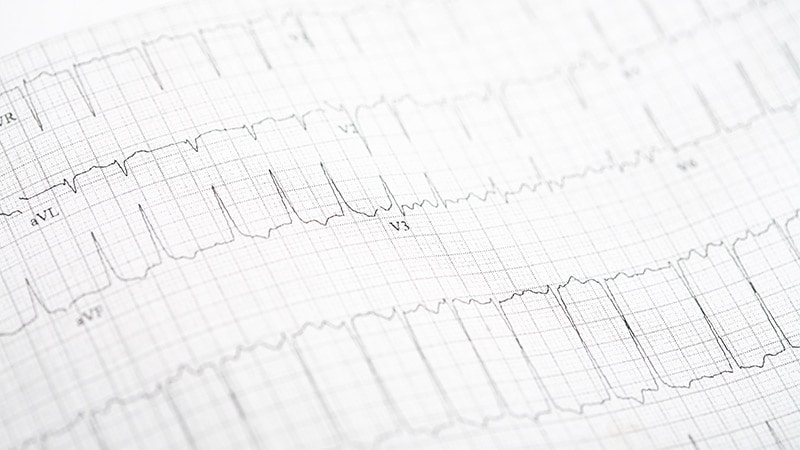
One-year data with a spherical, 122-electrode pulsed field ablation (PFA) catheter bolster evidence that this novel single-shot device is safe and provides reliable long-term suppression of atrial fibrillation.
In the PULSAR study, an FDA investigational device exemption clinical trial, nearly 78% of patients achieved the primary efficacy endpoint at 1 year, which included freedom from atrial arrhythmias on weekly monitoring, according to a multinational team of investigators led by Vivek Y. Reddy, MD, director of Cardiac Arrhythmia Services at Mount Sinai Health System in New York City.
Although one adverse event was reported, it was not judged to be device-related, according to the data.
The results were presented at the 2025 annual meeting of the Heart Rhythm Society and published on January 21 in the Journal of the American College of Cardiology.
The Globe Pulsed Field System (Kardium; Burnaby, Canada) received premarket approval from the FDA in the summer of 2025. It is among a growing list of catheters using pulsed-field energy as an alternative to thermal devices. PFA is growing in popularity for several perceived advantages, such as improved safety and procedural efficiency, according to multiple publications, including a comparative trial.
A New Shape
Several of these PFA devices, such as the nine-electrode PulseSelect system (Medtronic) and the 20-electrode FARAPULSE system (Boston Scientific) employ multiple electrodes to sense and ablate culprit arrhythmia pathways. Relative to these systems, the Globe device is distinguished by a spherical shape on which 122 individually selectable electrodes can be employed to sense, map, and pace suspected pathways of arrhythmia in the effort to target ablation, according to the published data.
In the PULSAR trial, researchers enrolled 183 patients at 12 sites in the US, Canada, and Europe with recurrent symptomatic paroxysmal atrial fibrillation and failure or intolerance to antiarrhythmic therapy. Patients with severe mitral regurgitation and advanced heart failure were excluded.
Conducted under general anesthesia or deep sedation, the procedure involved delivering the novel device via the femoral vein or through a transseptal puncture. Once positioned near the pulmonary veins, the mapping capabilities were employed to confirm and document potentials to guide ablation. Arrhythmia recurrence was monitored weekly with a transtelephonic device and 24-hour Holter monitoring.
The primary efficacy composite endpoint was freedom from atrial fibrillation, failure to achieve pulmonary vein isolation, need for repeat ablation or cardioversion, and need for new or increased doses of class I or III antiarrhythmic drugs. With respect to this endpoint, results showed 77.8% of patients remained controlled at the end of 12 months. Symptomatic efficacy was 84%.
The only major safety event was a hemorrhagic stroke immediately after the procedure in a patient with severe hypertension and polycystic kidney disease, translating to an overall primary adverse event rate of 0.5%. The investigators, however, determined the stroke was not device related.
There were no embolic strokes, permanent phrenic nerve paralysis, pericardial tamponade, esophageal complications, coronary spasm, or hemolysis, Reddy and colleagues reported.
‘Very Positive’ Results
Based on this outcome, the trialists concluded the study results demonstrate the safety and efficacy of this PFA system. With only 1.2 applications on average per vein, the Globe device was also characterized as “efficient.” The researchers reported that the “largely single-shot pulmonary vein isolation technology” only required an ablation time of about 25 minutes.
Redo ablation was required in 41 veins in 11 patients, of which 39 (95%) remained durably isolated, the researchers added.
In an editorial in the same issue of JACC, Boris Schmidt, MD, and Julian Chun, MD, both from the Bethanien Cardiology Center at Agaplesion Markus Hospital in Frankfurt, Germany, called the main findings “very positive.” They pointed to the safety and the durability of the pulmonary vein isolation, highlighting that freedom from arrhythmias while off antiarrhythmic drugs was 73.5%.
They also pointed out several potential weaknesses, such as the 21 F sheath used to deliver the 16 F catheter to the left atrium. They suggested the relatively large size might pose a risk for creating atrial septal defects or postprocedural hemostasis, a particular concern when same-day discharge is planned.
Relative to previously released PFA devices, the greater number of electrodes and their potential for more detailed mapping were also singled out as a potential advance, at least for providing further detail about atrial fibrillation.
The ability of this device to simultaneously record intracardiac electrograms from 122 distinct electrodes “may help us to better understand atrial fibrillation,” Schmidt told Medscape Medical News. “If the company develops software tools that are able to integrate the simultaneously recorded information, it might have the potential to improve ablation outcomes.”
However, these advantages are theoretical. Schmidt cited the lack of direct comparisons with other PFA devices, noting that “other devices are quite good at placing durable lesions” with high rates of clinical success at 1 year.
Bradley P. Knight, MD, a professor of cardiology at Northwestern Feinberg School of Medicine in Chicago, made a similar point. He noted that the success rate of the selected primary endpoint is in line with other single-arm studies of PFA devices. The endpoint permitted those who remained on antiarrhythmic therapy to be counted among those with freedom from arrhythmia at 12 months,
No Head-to-Head Comparisons
“This is the fifth pulsed field ablation device to market, and we do not have any randomized comparisons,” Knight said.
While he believes there is a general consensus that PFA is a safer and more efficient energy source than thermal forms of atrial fibrillation ablation, each of the approved devices so far has employed very different designs with different features.
“They all have pros and cons,” he said, suggesting it is difficult to claim clinically relevant differences on the basis of single-arm studies, even if the study designs are similar. He also said clinical trials are not likely to come soon.
“There are more devices coming and there is still innovation that is likely to produce new versions of existing devices,” he said, indicating that data generated from trials conducted now might not remain clinically relevant for long.
He, too, thinks that more sophisticated software to better integrate data from multiple electrodes is on the horizon. That means the effort to create the most effective and efficient ablation catheter remains at an early stage.
Also, catheter choice is not necessarily in the hands of the clinician at a given institution, he added.
“These systems are expensive and involve considerable capital investment, so the decision to bring in one system over another is typically made at the hospital level,” Knight said.
Although Knight does not have experience with the Globe device, he suggested that differences other than suppression of arrhythmias after 12 months, or even longer, might not be the most important differentiator. Again, the available PFA devices have performed similarly in the independent studies conducted so far.
If efficacy and safety are comparable, then devices will be selected for other types of features.
In the electrophysiology lab, “we are very much concerned with practical issues, such as how easy it is to manipulate the catheter and how much time the procedure takes,” Knight said.
Reddy reported having a financial relationship with Kardium, which sponsored the single-center trial. He also reported having financial relationships with 35 other pharmaceutical or device companies, most of which are also involved in products used in cardiac electrophysiology. Schmidt reported having financial relationships with Abbot, Boston Scientific, and Medtronic. Knight reported having financial relationships with Abbott, Biosense, Boston Scientific, Medtronic, and Webster.
<














Leave a Reply