

Key takeaways:
- Novel mechanisms of action have shown safety and efficacy in psoriatic arthritis.
- Combining biologic agents may be feasible and effective in PsA.
DESTIN, Fla. — Combination therapy with multiple biologics may be on the horizon for patients with psoriatic arthritis, according to a presenter at the Congress of Clinical Rheumatology East.
“We are doing way better with psoriatic arthritis,” said Arthur Kavanaugh, MD, a rheumatologist and professor of medicine at the University of California San Diego. “We really want everyone to be in remission.”

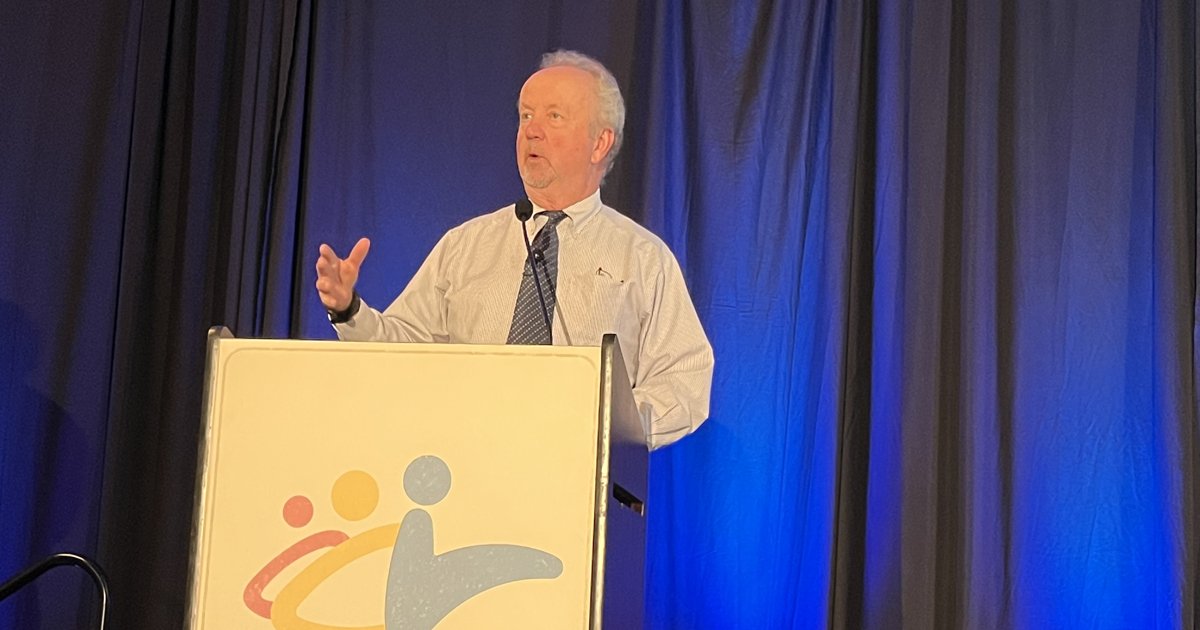
“It is exciting to me that there are biologics in pill form,” said Arthur Kavanaugh, MD. Image: Rob Volansky | Healio
Rheumatologists have multiple pathways to achieve that goal using old and new therapeutic paradigms, according to Kavanaugh.
“We are looking for precision medicine,” he said. “We have made a little bit of progress, but we still can’t say, ‘Based on your disease progress, we should go with this.’”
There may be the perception that the newer agents and mechanisms of action like interleukin (IL)-17, IL-23 or IL-12/23 inhibitors are better or more effective than decades-old standards like TNF inhibitors, according to Kavanaugh.
“But nothing has actually beaten [TNF inhibitors] in terms of efficacy,” he said.
However, he added that IL-17 and IL-23 inhibitors may be better for the skin.
“In dermatology, from head-to-head data, they have had agents that have done better than TNF inhibitors,” Kavanaugh said. “IL-23 inhibitors have really taken off in psoriasis subsets. The algorithms are starting to diverge between rheumatology and our dermatology colleagues.”
A similar pattern has emerged for IL-17 inhibitors.
“This is an incredibly important new topic,” Kavanaugh said. “They work better in the skin. Our dermatology colleagues go to them more than the TNF inhibitors. For joints, they do not do as well as TNF inhibitors.”
Kavanaugh counseled attendees to consider data from the BE-BOLD study, which compared the IL-17 inhibitor bimekizumab (Bimzelx, UCB) with the IL-23 inhibitor risankizumab (Skyrizi, AbbVie), when assessing individual patients with PsA.
“Bimekizumab did better than risankizumab in joint response,” he said. “We love head-to-head studies. Otherwise, we are left with indirect comparisons that are never quite as strong or robust.”
Another consideration pertains to the medication delivery. Kavanaugh discussed findings from the ICONIC LEAD study, which assessed the oral IL-23 targeted agent icotrokinra (Icotyde, Johnson & Johnson). The drug showed significant skin clearance in psoriasis, according to the data.
“It is orally available,” Kavanaugh said. “This will raise a lot of considerations in terms of compliance. It is going to be something that is popular.”
Oral biologics could have a significant impact on the market, according to Kavanaugh.
“It will address cost and access issues,” he said. “It is exciting to me that there are biologics in pill form.”
Another exciting development, according to Kavanaugh, is a return to combination therapy in PsA, particularly following “negative data” from the early days of biologic therapy that essentially derailed this approach.
“Combination therapy is a hot topic that has come back,” he said, noting landmark data demonstrating the effectiveness of combination therapy with ixekizumab (Taltz, Eli Lilly) alongside the GLP-1 receptor agonist tirzepatide (Zepbound, Eli Lilly) in PsA.
Meanwhile, in the VEGA study, researchers combined IL-23 and TNF inhibition with some success. Importantly, no new safety signals were reported for this combination.
“It turns out combination therapy is a good idea, you just have to have the right combination,” Kavanaugh said. “This is paving the way to think about other combinations.”
However, rheumatologists should not expect a raft of combinations to hit the market overnight, according to Kavanaugh.
“It is a slow road,” he said. “Still the biggest unmet need is which therapy or therapeutic approach is best for which patient.”
Despite this gap, Kavanaugh said he is encouraged by ongoing research in the field.
“This is a very exciting time,” he said. “We have come a long way in not that many years. I am very excited for the future.”
For more information:
Arthur Kavanaugh, MD, can be reached at akavanaugh@health.ucsd.edu.
Sources/Disclosures
Source:
Kavanaugh A. Achieving precision medicine in PsA: Novel treatment strategies. Presented at The Congress of Clinical Rheumatology East; April 30-May 3, 2026; Destin, Florida (hybrid meeting).
Disclosures:
Kavanaugh reports associations with AbbVie, Amgen, Bristol Myers Squibb, Eli Lilly, Janssen, MoonLake, Novartis, Pfizer, Takeda and UCB.

Ask a clinical question and tap into Healio AI’s knowledge base.
- PubMed, enrolling/recruiting trials, guidelines
- Clinical Guidance, Healio CME, FDA news
- Healio’s exclusive daily news coverage of clinical data
<













Leave a Reply