
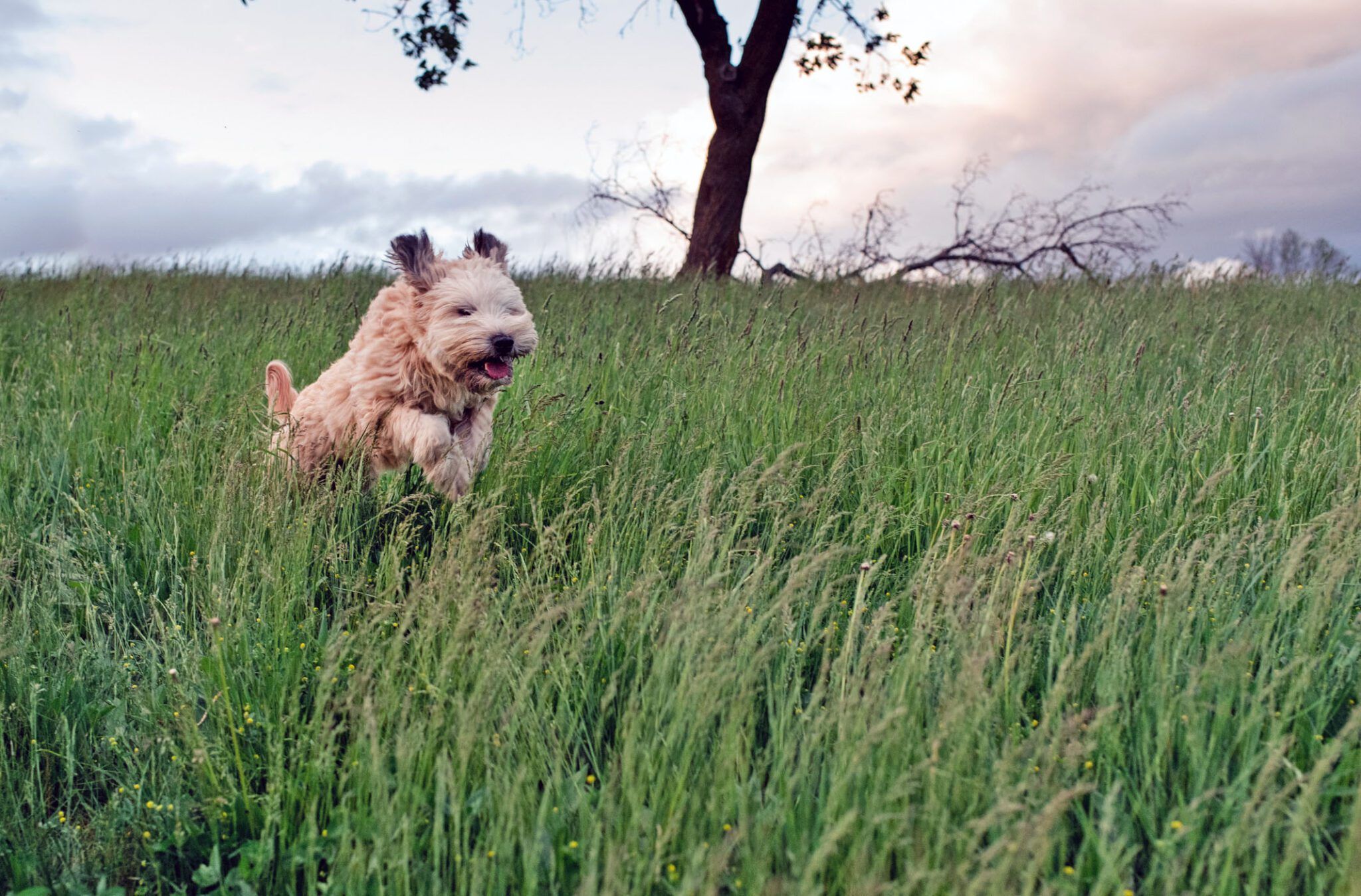

Chigger mites on dogs are itchy and annoying, but they are easy to treat. These tiny bugs hide in brush, tall grass, and other vegetation and are most likely to bother your dog in the late summer or early fall. They’re often called “grass mites” for good reason.
Chiggers hang out in areas of dense vegetation such as bushes, hedgerows, tall grass, and mulchy or wooded areas. The mites are usually in their larval stage in the fall and most active on sunny days. They can be found across the United States and elsewhere in the world but are most common in the Southeast and Midwest.
Chiggers Have Many Names
Grass mites are known by many names: harvest mites, red bugs, trombiculid mites, scrub-itch mites, and berry bugs. The two species of interest for humans and dogs are Eutrombicula (or Trombicula) alfreddugesi and Eutrombicula splendens. Adult mites are harmless and feed on plants, but the larval stage, often called chiggers, feeds on warm-blooded animals.
Dogs Can Get Chigger Bites
If a dog passes through an area with chiggers, the larval mites swarm and jump aboard.
Once on your dog’s skin, the chiggers pierce the skin and begin to feed. When this tiny bug is attached, it injects enzymes that break down skin cells so the mite can eat them. The chiggers will feed for two to three days, then fall off to transition to their adult life stage.
Chiggers are bright orange, but they are extremely tiny and difficult to see. If your dog has lots of mites, you may see an orange patch of skin. The chiggers generally settle in areas with less hair, such as the ears, paws, belly, and under the tail.
Chigger bites on dogs are extremely itchy. Your dog will likely scratch and chew at the site of the infestation. Between the damage caused by the mites themselves and damage from your dog scratching, the skin may develop patches that are crusty, bald, or raw and irritated.
Treating and Preventing Chiggers on Dogs
Your veterinarian may see grass mites on a skin scrape, but diagnosis is often made based on the time of year, location, and if your dog spends time in dense brush.
The good news is that chiggers are susceptible to most flea medications. If your vet suspects that chiggers are the cause of your dog’s itchiness and discomfort, a flea medication will be prescribed and possibly anti-inflammatories in severe cases. If your dog has developed a secondary bacterial infection on her skin, she may also be treated with antibiotics.
Most dogs feel better quickly, but you can soothe your dog’s skin by bathing her with an oatmeal-based shampoo.
Chiggers are not usually passed from animal to animal, so there is no need to worry about yourself or your other pets. However, if you walk in the same area as your dog, you can pick up grass mites yourself.
To prevent your dog from being exposed to chiggers, use a monthly flea preventive medication and stick to paths and mowed lawns during the late summer and early fall. If you already have a solid flea and tick prevention plan for your dog, she is likely safe from chiggers as well.











Leave a Reply