
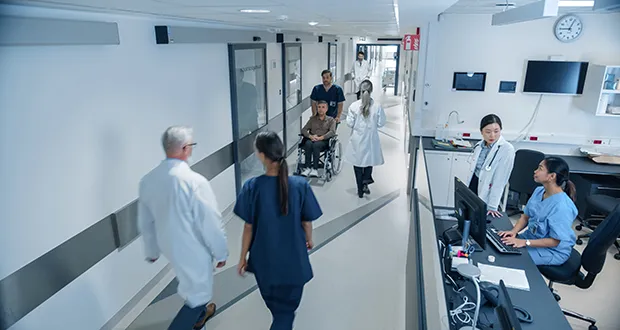
Ireland’s task is simple in theory and complicated in practice: make sure that when something breaks far away, it doesn’t break everything at home, writes Terence Cosgrave
It is one of the quieter miracles of modern life that you can walk into a pharmacy in Ranelagh or Rathdowney, hand over a prescription written in handwriting last seen on medieval scrolls, and walk out with exactly the right pills in a tidy white bag. This works because of a vast, invisible, web of ships, planes, factories, spreadsheets, and mildly anxious people in logistics.
It also works because nobody important has recently decided to set fire to one of the main junctions of that web.
Unfortunately, Donald J. Trump did just that. (The ‘J’ is for ‘Jerk’)
In late February, U.S. forces launched strikes on Iran under Trump’s direction, and the situation has since simmered along with all the calm restraint of a kettle full of fireworks. The important detail here is not just that there’s a war, but where it is: uncomfortably close to the Strait of Hormuz, through which (we all know by now but obviously he didn’t realise then) about one-fifth of the world’s oil and gas travels. This is rather like picking a fight in the middle of the M50 at rush hour—except the M50 powers hospitals.
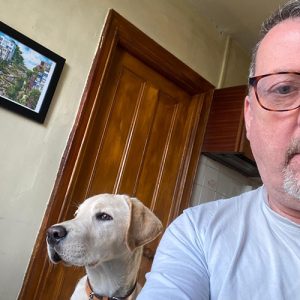
Terence Cosgrave and pup
Now, in Ireland, we have lots of craic and spirit, but no oil or gas. So when things go sideways in the Gulf, Irish hospitals don’t just read about it or feel it in their bones – they feel it in their generators, their ambulances and their heating systems. The HSE has helpfully pointed out that if energy supplies falter, things like life-support machines, patient monitoring systems, electronic records, and even lifts can stop working. This is generally considered suboptimal in a hospital or a clinic of any kind.
But energy is only the beginning.
Medicines arrive in Ireland through global supply chains that are already about as stable as a soda-soaked toddler on a three-legged stool on a trampoline. The HPRA notes that shortages are often caused by manufacturing hiccups, quality issues or supply bottlenecks. Add a war that disrupts shipping routes, airspace and insurance costs, and suddenly your prescription has to travel the scenic route via three continents and endure a mild existential crisis.
Devices—things like diagnostic equipment and essential consumables—are equally vulnerable. They depend on steady flows of materials and components, many of which are tied, directly or indirectly, to global trade routes that do not respond well to naval mines or geopolitical brinkmanship.
Meanwhile, Irish hospitals are already quite full. Not ‘busy’ in the sense of a lively café, but ‘92.6 per cent occupancy’ busy, which is more like trying to run a hotel where every room is permanently booked and guests keep arriving anyway. Ireland also has fewer hospital beds per person than the EU average, which means there isn’t much slack in the system. When something goes wrong, there’s nowhere for the problem to go except into waiting lists, trolleys, and very patient, vulnerable patients. (And not a single one of them from a US swing state where they could, in theory, have done something about this.)
And we as a country have no response. Because we can blame Trump later for starting the whole thing, we haven’t (as yet) come up with any clear plan for next winter to deal with this fallout, or the next few years if Trump’s mental breakdown and dementia are allowed to continue unchecked by any of those wonderful American balances.
So, to summarise: a war started by a man with a fondness for dramatic gestures, violent sadism, and limited patience for consequences is now threatening the fuel, supplies, and basic functioning of a healthcare system that was already operating at near full tilt. It’s a bit like someone loosening the bolts on a bicycle just as you’re heading downhill.
What, then, should Ireland do—besides sigh heavily and check the news with increasing dread?
First, stockpile the important stuff. Not everything, but the essentials: key medicines, critical consumables, and anything that would cause immediate chaos if it disappeared. Rotating stock so it doesn’t expire would be wise, as expired antibiotics are rarely appreciated.
Second, make sure hospitals can keep the lights on. That means more robust back-up generators, more fuel stored on-site, and ideally some renewable energy systems so that a geopolitical argument in the Gulf doesn’t determine whether an MRI machine works in Galway. (Or not).
Third, guarantee fuel access for healthcare. If diesel becomes scarce, ambulances and hospital generators should not be competing with weekend motorists filling up for a trip to Donegal.
Fourth, improve visibility of shortages. A real-time system showing what medicines and devices are running low across the country would allow quicker, smarter responses—rather than discovering a shortage when someone says, ‘We’re out of those’.
Fifth, rethink procurement. Buying the cheapest supplier in the most distant location works brilliantly right up until it doesn’t. Resilience—having multiple suppliers and shorter supply chains—needs to matter as much as price.
Sixth, strengthen cyber defences. Because if there is one thing worse than a hospital under pressure from shortages, it is a hospital under pressure from shortages whose computer system has just been locked by ransomware.
Seventh, expand capacity outside hospitals. More community care, more primary care, and faster discharge options can keep hospitals from becoming the bottleneck for everything.
Eighth, prepare for additional demand. Conflicts tend to move people, and people tend to need healthcare. Planning for that now is easier than improvising later.
Ninth, build a workforce buffer. A reserve of trained staff or flexible staffing arrangements could make the difference between coping and collapsing.
And finally—though this one is admittedly beyond the direct control of the Irish government—encourage world leaders not to treat geopolitics like a reality TV show. This may be a bit overly-ambitious. But it comes down to embracing the EU and its democratic liberal traditions, and no longer looking to America for leadership.
In the meantime, Ireland’s task is simple in theory and complicated in practice: make sure that when something breaks far away, it doesn’t break everything at home. Because the true measure of a health system isn’t how it performs when everything is fine, but how it holds together when someone, somewhere, decides to kick over the generator. 
<







Leave a Reply