
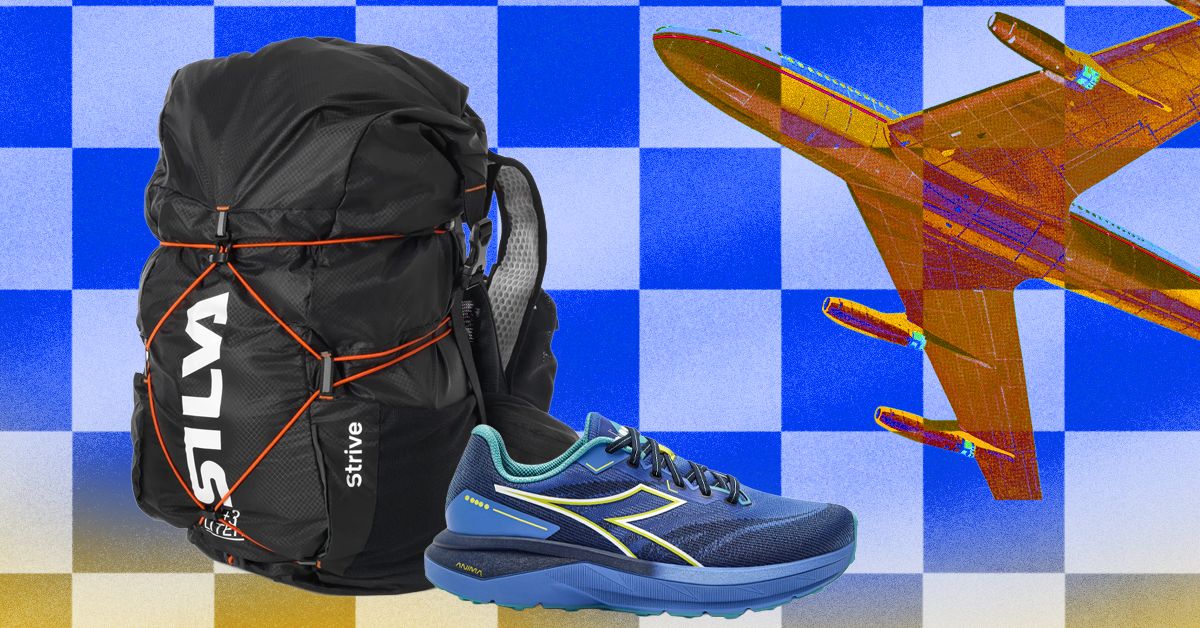
Summer is right around the corner. We’re headed out on adventures and bringing our stuff with us. Here are all the tech and tips that WIRED Reviews recommends for your travels.
In 2015, I ran the Marathon Des Sables. You know, that race across the Sahara where people wear funny flappy sun hats and gaiters, and carry everything they need to survive (except a tent) on their backs. A week spent battling the giant dunes and the blistering, dried up rocky river beds taught me an important lesson: It’s possible to pack your life into a 10-lb pack and run big distances. It’s also a lot of fun.
Since then, I’ve embarked on many running adventures, including a 100-mile lap of Italy’s Lake Garda and the 184 mile length of the River Thames. In 2022, I became the first person to run Europe’s Danube river from sea to source, 1,830 miles across eight countries in 67 days, always carrying my own kit. I’ve spent a lot of time “kit pratting”, or obsessing over my ideal gear. I’ve worked out what’s essential (less than you might think), what’s superfluous, and what I can trust.
For my most recent excursion, I took on the Via Degli Day, an 80 mile trail run across the Italian Apennines from Florence to Bologna (though most people hike from Bologna to Florence). On day one I ran around 24 miles, 26 miles on day two and 30 on day three, somewhere between 5-8 hours each day. Here’s some of the essentials I packed to get me from Point A to Point B.
The Running Shoes

The Diadora Nucleo 2 GR ($170) is one of the new wave of gravel running shoes that’s made to handle everything from road to light off-road trails. I encountered a lot of both on this run, along with more challenging trail sections. The big wedge of softish cushioning, shallower lugs, and wider base worked well on the harder-packed, clear and runnable terrain while the really nice roomy toe box was excellent for blister-free comfort.
The Nucleo 2 GR is a bit heavy and struggled for precision, agility and stability on the more rock-strewn technical descents. But the grip worked surprisingly well (outside of some very muddy sections). Crucially, it’s a protective shoe with a generous fit that’s also easy to lace back on when it’s time to forage for dinner once you’re done running. That’s important when you’re only taking one pair of running shoes.
The Running Watch

Confession time: As a running gear tester, I had three sports watches on the go. The Garmin Forerunner 570, the Forerunner 970, and the Fenix 8 Pro 51 mm AMOLED. Of these, the Fenix 8 Pro stood out as the top performer. It’s expensive, but it’s the ultimate tool for multi-day adventures where you need multiple days of GPS staying power, reliable mapping and best-in-class routing, all on a big, easy-to-scan screen.

Photograph: Kieran Alger
If you’re running far off grid, the Fenix 8 Pro also offers back-up satellite safety tools like SOS Emergency, off-network messaging, and live tracking, though you’ll need an inReach satellite subscription to unlock some of those. I was pleasantly surprised by the Forerunner 970 which just about lasted the three days. It lacks the safety tools and the routing wasn’t quite as on point as the Fenix 8 Pro, but for shorter runs of where you have access to charging, it’s a decent option.
Running Headphones
You can’t underestimate the morale boost from meaningful music or a well-timed chat with family (my Phone a Friend lifeline). So I always pack workout headphones. The Shokz OpenRun Pro 2 ($140) bone conduction headphones, or open ear styles like the Shokz OpenDots ($160), are good for staying connected with the world around. But I often opt for headphones that also cater for the time in transit, or the flights and trains to get to the trails when I’m not running.








Leave a Reply