
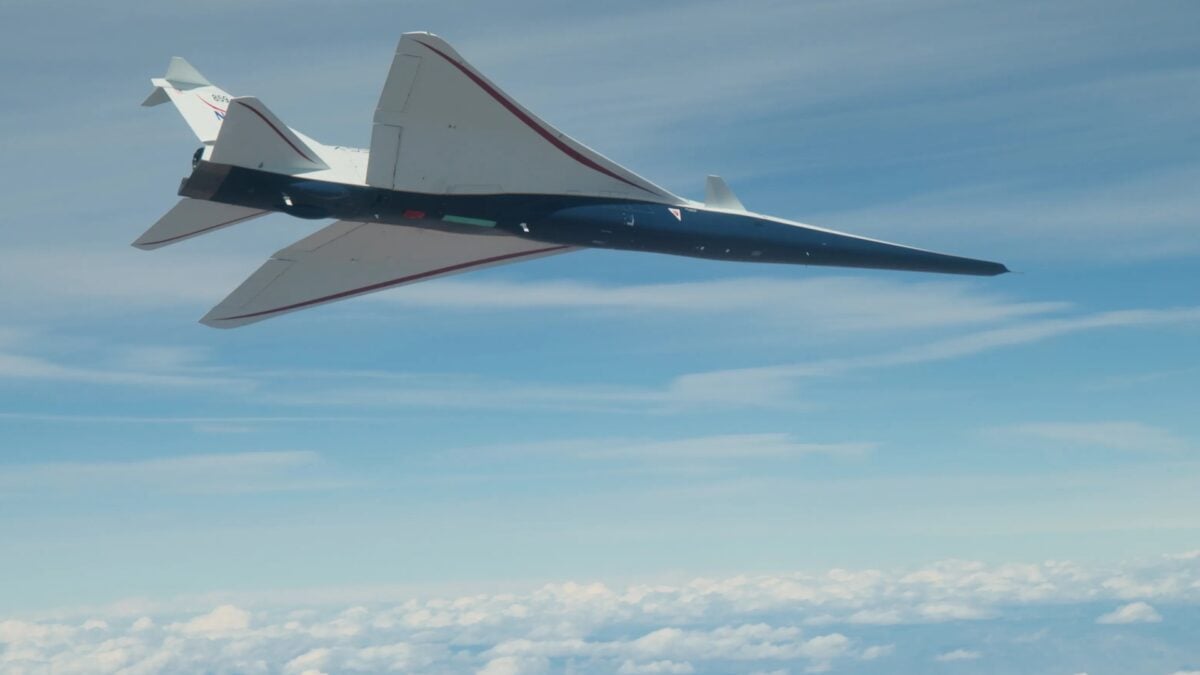
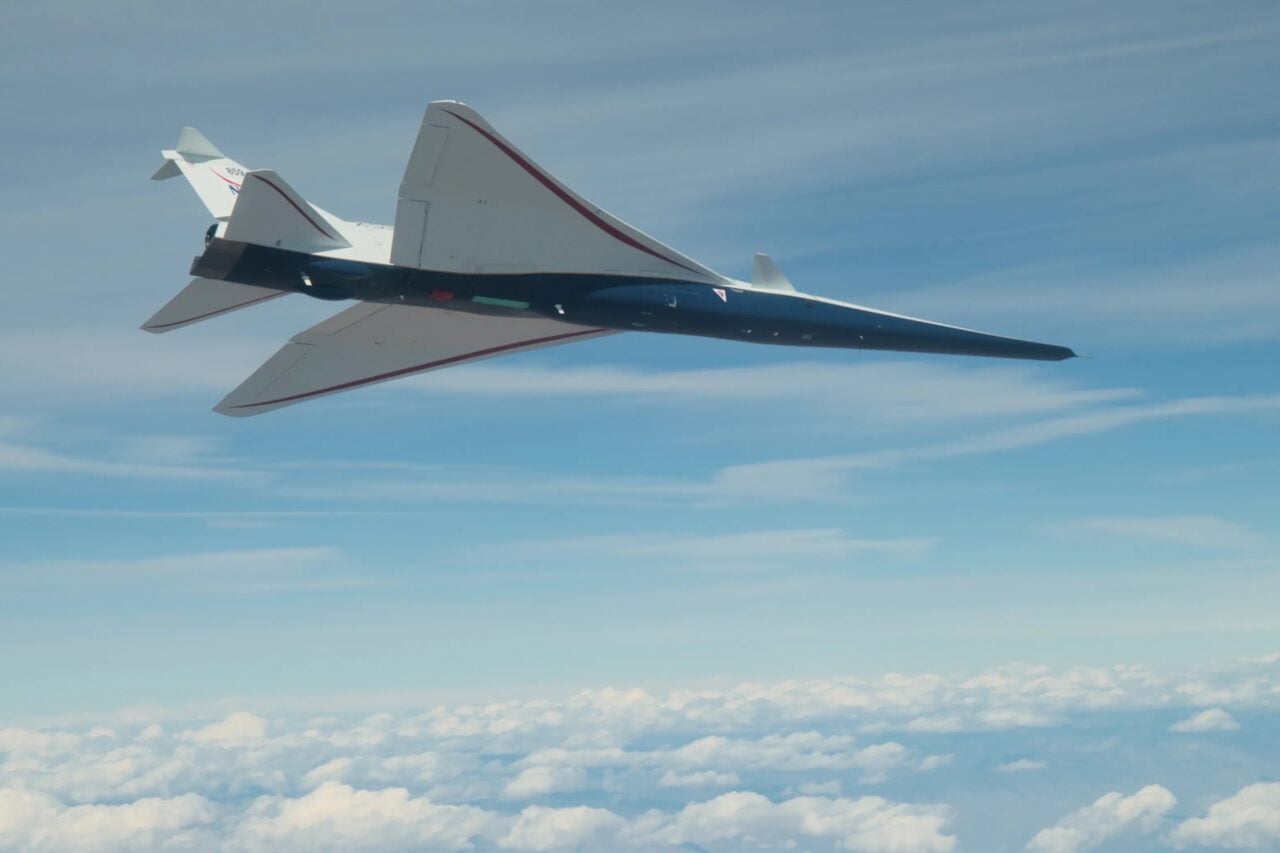
NASA pilots recently put the X-59 supersonic aircraft through the wringer—performing roller-coaster-style climbs and descents, among other actions, as part of its ongoing test campaign.
The space agency released a video of its experimental aircraft performing a series of maneuvers as it soared over California’s Mojave desert. The X-59, built by aerospace contractor Lockheed Martin, is designed to break the sound barrier without the explosive, thunder-like clap that comes with traveling at supersonic speeds.
The recent series of tests is helping NASA gather data on how the aircraft operates in flight, as well as gain more insight into its performance. This process is known as envelope expansion, whereby engineers test a new vehicle beyond its validated limits.
You might want to pack a barf bag
X-59 took to the skies for its inaugural flight on October 28, 2025, spending around one hour in the air before landing near NASA’s Armstrong Flight Research Center in Edwards, California. For its first flight, the aircraft operated slower than the speed of sound at 230 miles per hour (370 kilometers per hour) and a maximum altitude of about 12,000 feet (3.6 kilometers).
Since its debut, NASA has been flying the aircraft faster and higher to validate its performance. During a recent flight on April 14, X-59 completed a series of maneuvers as it was pushed to higher altitudes and near-supersonic speeds. Some of the in-flight tests included pitching the aircraft up and down to better understand aerodynamic forces and characterize stability and control during what’s known as the rollercoaster maneuver. Pilots also rolled the aircraft from one side to the other, tipping its wings toward the right and slowly rolling them back to the left, in the bank-to-bank maneuver.
The flutter excitation maneuver introduced deliberate vibrations into the aircraft’s structure to make sure it maintains safe margins across the flight envelope. To evaluate the aircraft’s longitudinal stability, pitch response, and trim characteristics, pilots perform a controlled, wings-level pitch-down movement. Pilots also extended the aircraft’s landing gear at a controlled airspeed and configuration so that engineers can measure the aerodynamic, structural, and handling qualities of its gear deployment. Extending the landing gear can cause sudden changes in drag, pitch, vibration, and airflow.
Super fast, but super quiet
The X-59 measures 99.7 feet (30.39 meters) long, with a wingspan of just 29.5 feet (9 meters) and a needle-like nose. The ultimate goal is to allow supersonic aircraft to once again fly over land in the United States.
When planes fly faster than the speed of sound, Mach 1, or about 767 miles per hour (1,234 kilometers per hour), they create a loud, explosive noise, known as a sonic boom, due to the shock waves created by the extreme speeds. In 1973, the Federal Aviation Administration prohibited supersonic flights of non-military aircraft over land so as not to startle people living in cities where supersonic jets fly overhead.
NASA began developing its quiet supersonic aircraft nearly a decade ago, paying $518 million to Lockheed Martin to build X-59. The aircraft’s sharp design is meant to reduce the pressure change that flows over the ground, while the engine is mounted on top to reduce the amount of noise from the plane that reaches the ground. Instead of producing a sonic boom, the X-59 is designed to mitigate the noise and release a sonic thump as it breaks the sound barrier, according to NASA.
As part of its test campaign, NASA eventually plans on flying X-59 over selected U.S. communities to collect data on how people perceive the aircraft’s so-called sonic thumps.













Leave a Reply