
Key takeaways:
- An expert at ACP discussed medication recalls, safety profiles, shortages and more.
- GLP-1s and ADHD medications are particularly notable in 2026.
SAN FRANCISCO — At the ACP Internal Medicine Meeting, Douglas S. Paauw, MD, MACP, offered a presentation on challenges in prescribing.
Healio spoke with Paauw, the Rathmann Family Foundation Endowed Chair for Patient-Centered Clinical Education and a professor at the University of Washington School of Medicine, about what primary care physicians should know for 2026, including drug shortages, safety concerns and more.

Healio: Why did you decide to present on this topic?
Paauw: For at least the last 20 or 25 years, I’ve done a topic on drug interactions and side effects to try to update physicians and health care professionals on newer things we’re learning about safely using medication. This year, they asked me to touch on some of the other topics as well — drug shortages, drug recalls — so I added that in. But generally, I like to focus on side effects, because as new drugs are released and as we’re learning more about drugs we’ve used for a long time, we find out things that the medications do that we weren’t aware of before.
Healio: What changes have there been in the medication landscape in the last few years? Is there something that makes 2026 particularly challenging?
Paauw: I don’t think there’s anything about this year being dramatically different, I just think it’s a summation of things. One of the things that I’m not going to really cover a lot in this talk — but I think is really challenging and hard for health care professionals — is that when we prescribe a medication that we think is a good option for a patient, it’s not as simple as that because so often we prescribe medicines, and then it goes through prior authorization, and an outside entity — that is, pharmaceutical benefit managers, insurance companies, etc. — may get in the way. So, I think that’s a level of frustration that every health care professional faces. As far as things like drug shortages and recalls, they have created a lot more media attention. But as far as statistically, our biggest year for drug shortages was back in 2011, so shortages are nothing new.
Healio: Are there any drug shortages happening that PCPs should know about? Are there any signs that indicate when a shortage might occur (the spike in GLP-1 demand, etc.)?
Paauw: Probably the biggest one that I think day-to-day health care professionals are running into is the ADHD meds. They have been in short supply for a number of years now, and probably from two things. One is a real spike in demand, especially after the pandemic. We get into more trouble with shortages with controlled substances than any other group, and ADHD meds are a controlled substance. There is a government-imposed limit on production. We’ve seen that with some pain medications as well. You touched on GLP-1s, where there was a real spike in demand for them that I think outstripped the supply; that has definitely improved. More companies are getting involved in making GLP-1 drugs. Supply chain problems have been resolved and manufacturing capacity has increased. And so, I would say ADHD medication is probably still the one that sometimes people will bump into. One thing that I ran into with a few patients recently was shortages in estradiol patches. I think there’s a spike in demand for that as well in the last probably 12 to 18 months.
Healio: How do drug recalls affect PCPs? What do they need to know?
Paauw: The main way they affect health care professionals is that patients will call in and hear something on the news and they’ll hear like maybe a hypertensive medication is being recalled, and they didn’t catch what it was, and they’re not sure what it is. So, when these things happen, a lot of calls and electronic messages come into practices, and then we’re trying to sort those out, reassure patients and help them know that they probably aren’t impacted by it. If they are impacted by it, if it is their medication, then they can either get represcribed the same drug from a different manufacturer, where it wasn’t recalled, or when it’s such a widespread recall, then they often get switched to a different drug in the same class until the recall is taken care of. But the requirement really is that the pharmacies notify patients when a drug lot is recalled, because they carry all that information. As health care professionals, we don’t carry that information. We know we prescribed a certain drug, but the pharmacies are the ones that will reach out to the patients.
I did want to make one quick comment on drug recalls, and the question is why do drugs get recalled in the first place? Almost half of the time the main reason they get recalled is some contamination with the drug. The most common thing that gets into them is nitrosamines, which usually occur during the manufacturing process. These things are everywhere in our environment, in our food chain, and at low doses we don’t consider harmful. But at higher doses they can be carcinogenic. There have been major drug recalls when the amount of nitrosamines in the medications are above a level that is considered OK to take without accelerating a potential risk. This especially happened with angiotensin receptor blockers. Many of the most common brands have been recalled in the past and then reinstituted when they could prove that the lots were safe. So, that’s the main reason that we get recalls. The more I guess I’d say the word “disgusting” reason is animal feces in the pills. If places that medications are made and stored are not under the best sterile, clean conditions, pigeon droppings and rat droppings have gotten into the supply chain, and that’s certainly something that I think would make most people pretty disgusted, and certainly potential for spread of certain illnesses. But that hasn’t really come to fruition, as far as big outbreaks of certain illnesses from these, but whenever they find increased animal droppings and animal parts, those lots get recalled.
Healio: What do PCPs need to know about adverse events? How do these impact clinical decision–making?
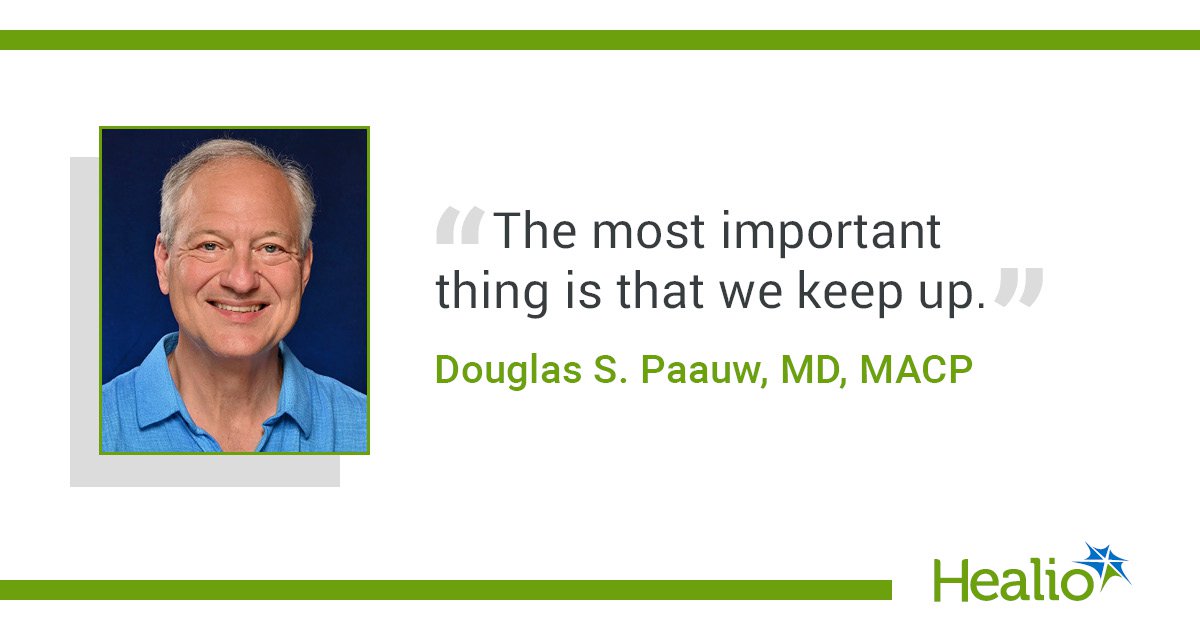
Paauw: I think the most important thing is that we keep up on them — that when a new side effect becomes clear that it is a problem with a drug that we are aware of, that we don’t keep prescribing medicines without discussing certain possible side effects with patients. Obviously, none of us can know all the side effects of every medicine because we prescribe lots of medicines and every medicine has side effects, but to know the ones that are frequent or most severe. This year, I’ll be touching on a few that have really come to light in the last 24 months.
To give you a few examples, I talk quite a bit about GLP-1s because they’re so frequently used now. When they first came out, they were used as diabetes medications. Now they’re used very frequently for treatment of obesity. Zepbound (Eli Lilly), which is trizepatide, has an FDA-approved indication for obstructive sleep apnea. So, we see a lot of these drugs used. We all have known for a while about gastrointestinal (GI)-related issues, especially nausea, slow GI motility that can lead to gastroesophageal reflux, which can be more persistent and severe. And then the other GI issue that has been shown to absolutely be true is an increased risk for developing gallstones. There are some misconceptions about the box warning for the drugs. They point out the potential for an increased risk of medullary thyroid cancer and, to date, a number of studies that have looked at recipients of GLP-1s and compared them with diabetes patients who have received non-GLP-1 drugs have not seen a signal of increased thyroid cancer with these drugs. It doesn’t mean we will never talk to a patient about that, but we will keep our eyes open to see if this is really as big a concern as it originally appeared to be. Certainly, in animal studies, there were more thyroid cancers, but it’s not clear that that’s happening in humans.
Another one that got a lot of media attention when it was first described — and appears to be real, although extremely rare — is an eye problem: non-arteritic ischemic optic neuropathy. If you just look at everybody in the population, the risk is very, very rare. With people who use that medication, that risk can double or triple, but it’s a very small risk, so even tripling the risk does not make it a common thing. The problem with it is that it is a very bad complication, because it can lead to major visual loss, and there really isn’t a great way to decide who’s at higher risk for this and who isn’t. So, I think that’s a real side effect of this, albeit a very rare one.
The one that has gotten the most publicity recently is that these medicines can potentially lead to muscle mass loss; that with weight loss, a good chunk of the weight is fat loss, but some of it is muscle mass loss. It appears that in younger individuals, in studies for treatment for diabetes, there’s a little bit of muscle loss, but it stabilizes, and that muscle loss probably is not going to have a major clinical impact. The area where it’s the biggest concern is in elderly populations, because muscle loss is common as people age, and if a medicine accelerates muscle loss, that could lead to weakness, it could increase fall risk, and do other things that could be problematic. So, I think it is really a more complicated decision on use of GLP-1s in our very elderly patients. They certainly can be helpful and effective in this population, but it’s more of a complicated equation on deciding to use them in our very elderly patients.
Healio: If nothing else, what would you like readers to get out of this article?
Paauw: Well, I really would want them to be always keeping up on new side effects. It doesn’t mean that we’re not going to have people use certain medications. It’s just, if we are well aware of what the problems are with some of these meds, we can decide, is it worth it to prescribe a certain medicine? Or can we recognize side effects early enough? And as we’ve discussed, a lot of these are with the GLP-1s, for example. They’re so commonly used, it should be part of the risk-benefit discussion when we start these medicines with patients. And many times, the benefit far outweighs the risks.
As far as being prepared for drug shortages, try to come up with other strategies if a drug is not available — and that usually will mean switching to a similar drug that may be available. It may mean that the patient is going to have a period of time where they can’t get the drug that’s been very, very helpful for them, but most of the time we can get around that.
Healio: Is there anything else you would like to add?
Paauw: The other thing that I was just going to touch base on in my talk, which I think almost every one of my patients will bring up at some point, is the expiration date on medications. For most medicines that we just use once in a while — let’s say you have a pain medicine that you use once every 3 years, or you have maybe a medication that you’re taking for heartburn or something that you do not take very often — in general, the expiration date for meds is much beyond what is on the pill bottle. There are many studies that show these meds remain potent for many years after the expiration date.
So for my patients, for drugs they use as needed that they don’t fill all the time, and that they want to request refills because they’re throwing away the other stuff — for many of those medications, they can use them past the expiration date with the major risk being that they just aren’t as effective. That is unlikely, because these studies show that most medicines are good for up to 5 years past the expiration date, but the only downside would be maybe it’s not quite as potent. But people, if they have meds for as needed, they can still use them, and they don’t have to throw them away every time they get past the expiration date.
For more information:
Douglas S. Paauw, MD, MACP, can be reached at dpaauw@uw.edu.
Sources/Disclosures
Source:
Healio Interviews
Reference:
- Paauw DS. Challenges in prescribing in 2026: Drug shortages, prior authorization, drug side effects and recalls. Presented at: ACP Internal Medicine Meeting; April 16-18, 2026; San Francisco.
Disclosures:
Paauw reports no relevant financial disclosures.

Ask a clinical question and tap into Healio AI’s knowledge base.
- PubMed, enrolling/recruiting trials, guidelines
- Clinical Guidance, Healio CME, FDA news
- Healio’s exclusive daily news coverage of clinical data
<











Leave a Reply