

Key takeaways:
- Contrast sensitivity, dark adaptation and electroretinography can detect retinal decline that OCT may miss.
- Retinal interventions may involve nutrition, lifestyle modifications and emerging therapies.
Optometric care has advanced significantly with OCT and high-resolution retinal imaging, yet clinicians still encounter a familiar challenge: patients who report visual symptoms despite “normal” structural findings.
This disconnect highlights a limitation in a structure-dominant model of care: Structural imaging often identifies disease only after physiological decline has already begun.

If functional decline precedes structural loss, waiting for visible change delays intervention. Earlier identification of dysfunction creates an opportunity to intervene when retinal tissue remains viable and the potential to preserve vision is greatest.
Shift toward retinal reserve
The retinal reserve framework reframes retinal health as a balance of structural integrity, functional performance and metabolic capacity (Walker). Rather than relying solely on anatomy, it asks a more clinically relevant question: How resilient is this retina under stress?
This concept aligns with patterns already recognized across eye care. In glaucoma, structural loss may precede visual field defects (Mwanza et al.), while in age-related macular degeneration, delayed dark adaptation can occur years before visible pathology (Owsley et al.). These observations support a shift from reactive disease detection to proactive identification of dysfunction.
OCT remains foundational, but it is not sufficient on its own. Structure-function discordance is common in clinical practice. Patients may present with normal imaging but measurable functional decline or with structural abnormalities with preserved performance.
In diabetes, electrophysiologic abnormalities can occur before visible retinopathy develops (McAnany et al.), and in AMD, functional impairments often precede structural changes (Owsley et al.). These findings reinforce a key principle: By the time disease is visible, dysfunction has often already been present.
Bringing function into the workflow
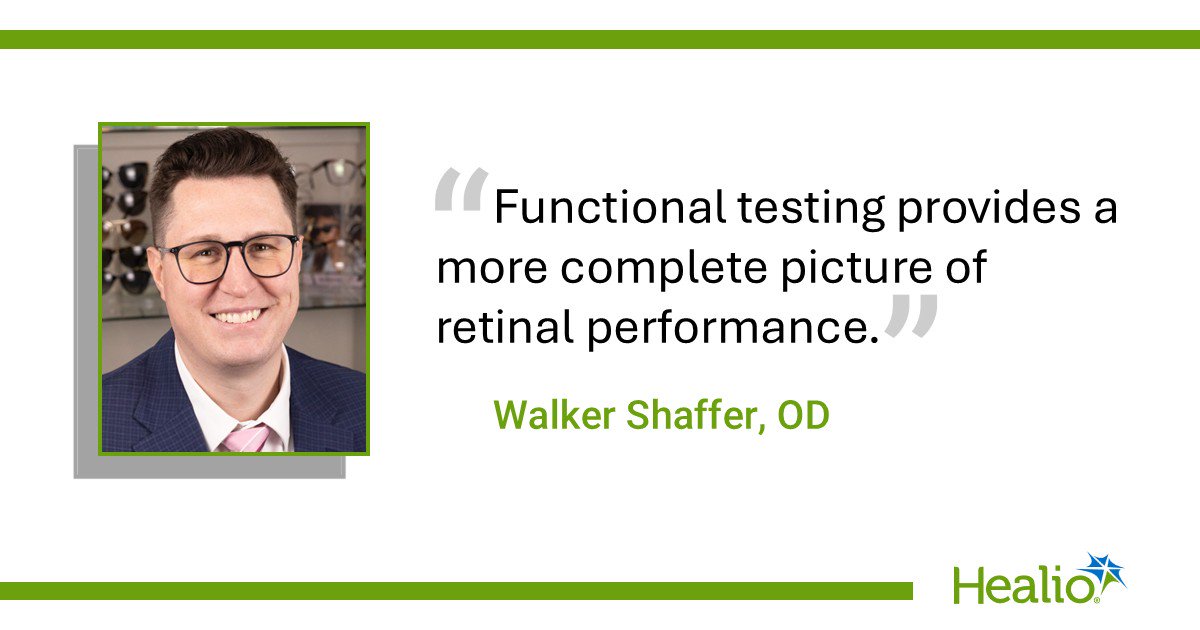
Functional testing provides a more complete picture of retinal performance. Tools such as contrast sensitivity, dark adaptation and electroretinography allow clinicians to detect early decline that OCT alone may miss.
Clinically, implementation can remain simple. Adding one functional test for at-risk patients and tracking changes over time transforms testing into a longitudinal assessment rather than a single diagnostic snapshot. Trends become more meaningful than isolated measurements.
Role of metabolic health
Retinal function is closely tied to metabolic stability. Mitochondrial dysfunction and oxidative stress play a central role in early retinal decline and are strongly implicated in age-related disease processes, often preceding detectable structural damage (Datta et al.).
While most practices do not yet directly measure metabolic function, this perspective supports earlier intervention and aligns with emerging technologies such as retinal oximetry. As these tools develop, they will further strengthen a multidimensional approach to retinal care.
This framework is particularly useful in patients who do not yet meet traditional diagnostic thresholds but demonstrate increased risk, such as those with early AMD, systemic vascular disease, family history or unexplained visual complaints.
These individuals often exist in a “pre-disease” state in which traditional models offer limited guidance. A practical starting point is to select one patient population and incorporate a functional test alongside OCT, tracking changes over time and using discordance to guide earlier intervention.
Interpretation, intervention
The clinical value of this model lies in interpretation. Normal structure with reduced function may indicate early decline in retinal reserve, while preserved function despite structural changes may reflect retained compensatory capacity. When both are abnormal, active disease is more likely.
This framework shifts clinical thinking from binary classification to a continuum of retinal health.
Earlier identification enables earlier intervention. Although long-term data specific to a reserve model are still emerging, evidence from multiple studies supports the role of early intervention in preserving function (AREDS2 Research Group; Broadhead et al.).
Interventions may include nutritional support, systemic risk factor management and lifestyle modification, along with emerging therapies targeting mitochondrial health. These approaches are biologically aligned with maintaining retinal function before irreversible damage occurs.
Changing the patient conversation
Another benefit of this framework is improvement in how clinicians communicate with patients. Rather than stating that findings are “normal,” clinicians can explain that structural health is intact but early functional changes are present — creating an opportunity to act proactively.
This shift enhances patient understanding, improves adherence and fosters long-term engagement.
A proactive retinal care model supports more appropriate diagnostic utilization, structured follow-up and improved patient retention. It also differentiates the practice as one focused on preserving vision rather than reacting to disease.
Looking ahead
Retinal care is evolving toward earlier detection and proactive management. As functional testing becomes more accessible and metabolic-targeted therapies advance, clinicians who adopt a multidimensional approach will be better positioned to lead this shift.
Retinal reserve provides a practical framework for identifying dysfunction earlier, guiding intervention more effectively and preserving vision over time. By integrating structural, functional and metabolic perspectives, optometrists can move beyond reactive care toward a model that better serves both patients and the future of the profession.
For more information:
Walker L. Shaffer, OD, can be reached at drshaffer@eyecareoflehi.com.
Sources/Disclosures
Source:
Expert Submission
References:
Disclosures:
Shaffer reports being a commercial brand ambassador for Visionix and receiving honoraria from Newton for speaking engagements.

Ask a clinical question and tap into Healio AI’s knowledge base.
- PubMed, enrolling/recruiting trials, guidelines
- Clinical Guidance, Healio CME, FDA news
- Healio’s exclusive daily news coverage of clinical data
<











Leave a Reply