
Key takeaways:
- The study included more than 6.1 million children born between 2014 and 2023.
- Researchers said that not all women taking prenatal sterol biosynthesis inhibiting medications will have a child with ASD..
Researchers have uncovered a possible link between sterol biosynthesis inhibiting medications taken during pregnancy and an increased risk for autism spectrum disorder in offspring, according to a study published in Molecular Psychiatry.
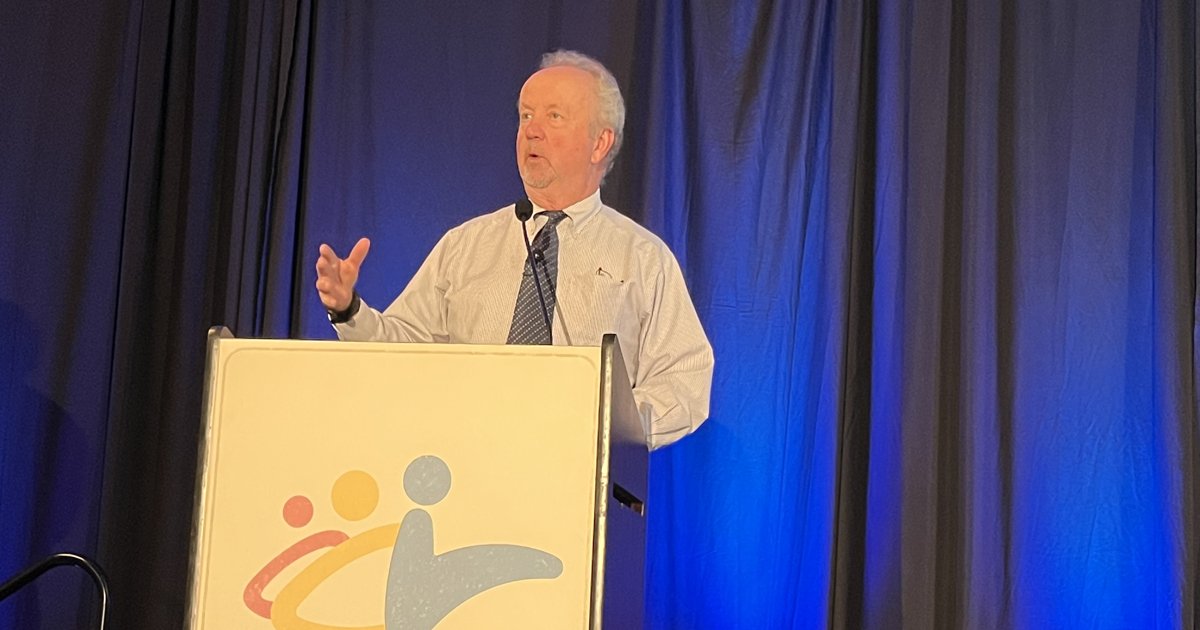
“Cholesterol is an essential building block of the developing brain. Some medications, intentionally or unintentionally, can inhibit cholesterol biosynthesis,” Karoly Mirnics, MD, PhD, dean and director of the Munroe-Meyer Institute and Hattie B. Munroe Professor of Psychiatry, Biochemistry & Molecular Biology at the University of Nebraska Medical Center, told Healio.

Data were derived from Peeples ES, et al. Mol Psychiatry. 2026;doi:10.1038/s41380-026-03610-7.
“We have been studying this sterol inhibition by prescription medications for almost 2 decades in cell cultures, pregnant mouse models and blood of exposed patients. The availability of the Epic Cosmos database allowed us to expand those studies into the realm of ASD.”

Karoly Mirnics
Mirnics and colleagues used data from March 2025 to January 2026 from the Epic Cosmos database, which includes more than 300 million patient records from 1,880 hospitals and 42,400 clinics.
The study included 6,135,213 children (52% boys; 54% white) with linked maternal health records who were born between 2014 and 2023 and had at least one health care follow-up at age 18 months or later. Mothers had a prescription of one of 15 sterol biosynthesis inhibiting medications (SBIM), including aripiprazole, atorvastatin, bupropion, buspirone, fluoxetine, haloperidol, metoprolol, nebivolol, pravastatin, propranolol, rosuvastatin, sertraline, simvastatin and/or trazodone during pregnancy.
The researchers used Cox proportional hazard modeling to determine a link between ASD diagnosis in offspring and use of maternal SBIM, with the primary outcome a diagnosis of ASD, defined as any of 51 diagnostic codes relating to the disorder.
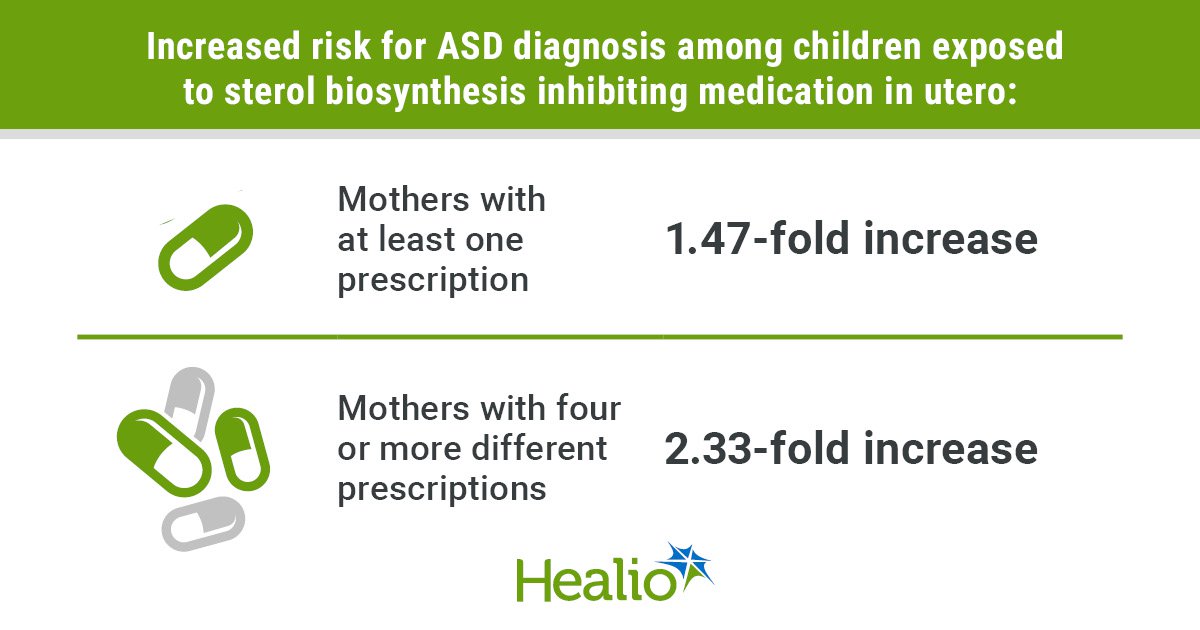
The study demonstrated a 1.47-fold (95% CI, 1.45-1.49) increased risk for an ASD diagnosis when mothers were exposed to at least one SBIM when pregnant. This risk increased 1.33 times (95% CI, 1.32-1.34) for each additional SBIM prescribed, with a maximum 2.33-fold (95% CI, 2.09-2.6) risk with four or more different SBIM prescriptions.
A total of 3.8% of children (n = 234,971) were diagnosed with ASD in the 10 years of the cohort. Of these children, 15% of their mothers (n = 35,152) were prescribed one or more SBIM while pregnant.
Mirnics told Healio the increase in SBIM utilization among pregnant women was significant, more than tripling over the decade of the study (2014, 4.6% vs. 2023, 16.8%).
He further advised clinicians to review pregnancy warnings that are disclosed in prescriber information leaflets, but “usually deeply buried in these leaflets.”
“Also, be aware that different medications are prescribed by different specialties (eg, psychiatrists vs. cardiologists) to the same patients, and the effects of polypharmacy on the developing baby brain are rarely known,” Mirnics said.
“Finally, if a woman plans to become pregnant, have a frank discussion about potentially unwanted medication side effects on the baby vs. the benefits to her own health so they can make an informed decision.”
Mirnics also highlighted that while the study shows a link between prenatal SBIM use and an ASD diagnosis in offspring, it does not mean all women taking these medications will have a child with ASD. Further, “many women not taking SBIM will have a child with autism,” he said.
“We believe that the most impacted population would be when both the mother and the developing fetus have a genetic vulnerability in a sterol biosynthesis gene, and they are prescribed one or more SBIMs during pregnancy,” Mirnics told Healio. “This is a hypothesis right now, and this should be proven in follow-up studies.”
For more information:
Karoly Mirnics, MD, PhD, can be reached via the University of Nebraska Medical Center PR office at john.keenan@unmc.edu.
Perspective
Back to Top

Andy Shih, PhD
Chief Science Officer, Autism Speaks
Disclosures: Healio could not confirm relevant financial disclosures at the time of publication.

Ask a clinical question and tap into Healio AI’s knowledge base.
- PubMed, enrolling/recruiting trials, guidelines
- Clinical Guidance, Healio CME, FDA news
- Healio’s exclusive daily news coverage of clinical data
<









Leave a Reply