
Frequently Asked Questions
How does sunscreen work?
As beauty journalists, at least one person on our staff chats with a dermatologist on a near-daily basis, and nearly every single one emphasizes the importance of wearing a proper broad-spectrum sunscreen with an SPF rating of, at the very least, 30. Wearing one daily (and reapplying every two hours) protects your skin from harmful UVA and UVB rays. As a refresher, too much exposure to the sun’s rays can result in long-lasting damage, leading to concerns like sun spots, skin sagging, fine lines and wrinkles, and so on. (UVA rays, for good measure, penetrate more deeply than UVB rays and can potentially lead to more aggressive skin cancers, including melanomas.)
As a reminder in regards to efficacy, let’s talk SPF, short for sun protection factor. SPF 30 guards against 97% of UVB rays, and SPF 50 is about 98%, and so forth. (SPF 15 only protects against 93%, which is why most dermatologists—and the Allure team—recommend at least 30.) The evidence is crystal-clear, so do yourself a favor, slather up, and consistently reapply facial sunscreen every few hours to minimize the effects of sun exposure—which, at its worst, can culminate in a skin cancer diagnosis.
What’s the difference between mineral and chemical sunscreens?
Sure, there are thousands of SPF products to sift through, but finding the right sunscreen for your skin tone and type can be tricky. Like any other skin-care product, personal preferences run the gamut. Those with sensitive skin may prefer mineral or physical sunscreens, which are formulated with zinc oxide and/or titanium dioxide and “reflect ultraviolet rays off of them before the rays penetrate skin cells,” as Loretta Ciraldo, MD, a Miami-based board-certified dermatologist, previously explained.
On the other hand, those who prefer their SPF to feel more like a lightweight serum or moisturizer (that’s also more likely to induce zero white or gray cast) will turn to chemical sunscreens, which “use chemicals that absorb damaging UV rays and convert them to non-damaging heat,” says Sejal Shah, MD, a New York City-based board-certified dermatologist. Heads up: Common chemical UV filters include avobenzone, homosalate, octocrylene, octisalate, and ensulizole. Oxybenzone and octinoxate are two other chemical filters banned in Hawaii, and many companies have followed suit to keep them out of their ingredient lists.
Meet the experts
- Sherry Backman, a cosmetic chemist based in Brattleboro, Vermont
- Loretta Ciraldo, MD, a board-certified dermatologist based in Miami
- May Hall, DO, a double board-certified dermatologist based in Asheville, North Carolina
- Shari Marchbein, MD, a New York City-based board-certified dermatologist based in New York City
- Sejal Shah, MD, a board-certified dermatologist based in New York City
- Jane Yoo, MD, a dual board-certified dermatologist and Mohs surgeon based in New York City
How we test and review products
When Allure tests a product, our editors look at it from every angle in an effort to best serve you. We review ingredients, scrutinize brand claims, and, when necessary, examine peer-reviewed scientific and medical studies. In addition to testing each and every product that’s included in each and every review, we rely on experts who shape their fields, including dermatology, cosmetic chemistry, and medicine, to help us vet the ingredients and formulas.
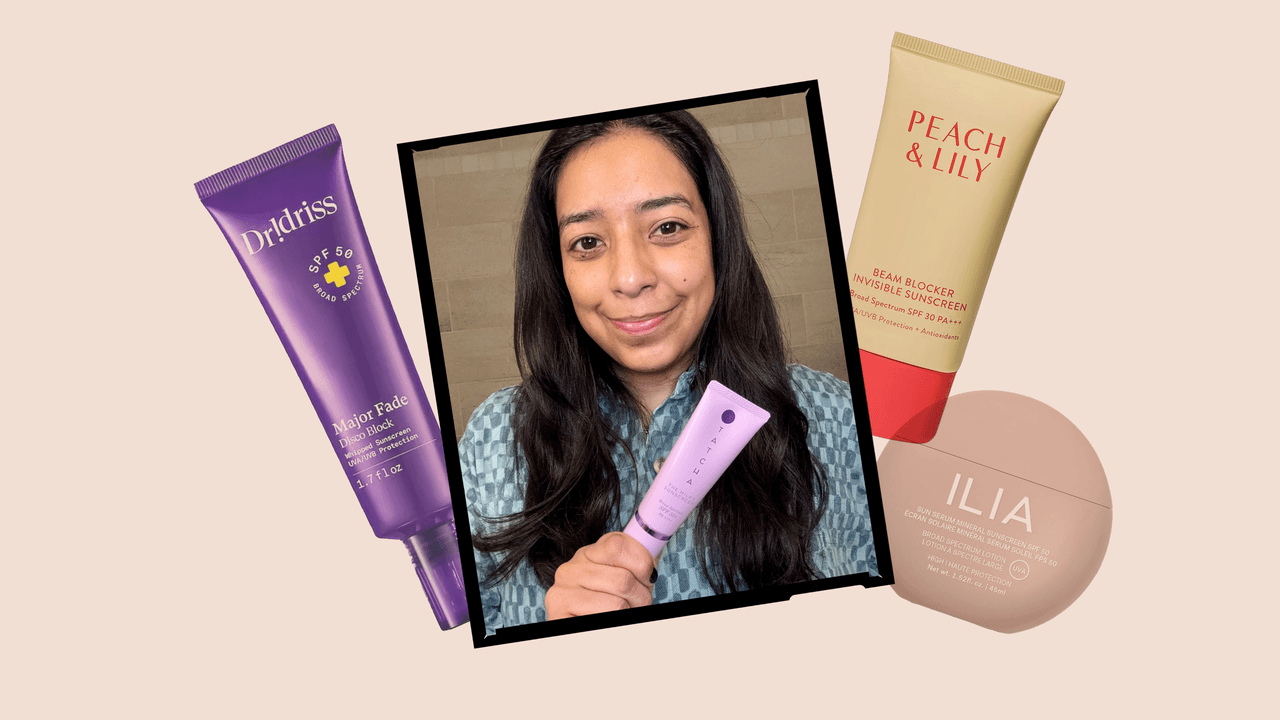
For our list of the best sunscreens, we considered each product’s performance across five primary categories: product ingredients and efficacy, packaging, fragrance, texture, and product wear. Every product was determined to have excelled in each category by our editorial team, which is composed of in-house writers and editors as well as contributors—along with special consideration from dermatologists. To learn more information on our reporting and testing processes, read our complete reviews process and methodology page.
Our staff and testers
A beauty product is a personal purchase. You might be searching for a face cream to address persistent dryness or a new nail product to add to your Sunday self-care routine; you may simply be browsing around for the latest launches to hit the hair market. No matter what you seek or your individual needs and concerns, Allure wants to ensure that you love anything we recommend in our stories. We believe that having a diverse team of writers and editors—in addition to the wide range of outside testers and industry experts we regularly call upon—is essential to reaching that goal.
After all, can we really say a skin-care product is the “best” for people over 50 if the only testers we’ve solicited opinions from folks who have yet to hit 30? Can we honestly deem a high-end diffuser worthy of your hard-earned cash if it’s never been tested on curls? We’re proud that our staff spans a wide range of ages, skin tones, hair textures, genders, and backgrounds, which means that we are able to fairly assess any beauty product that comes into the beauty closet.
<>














Leave a Reply