
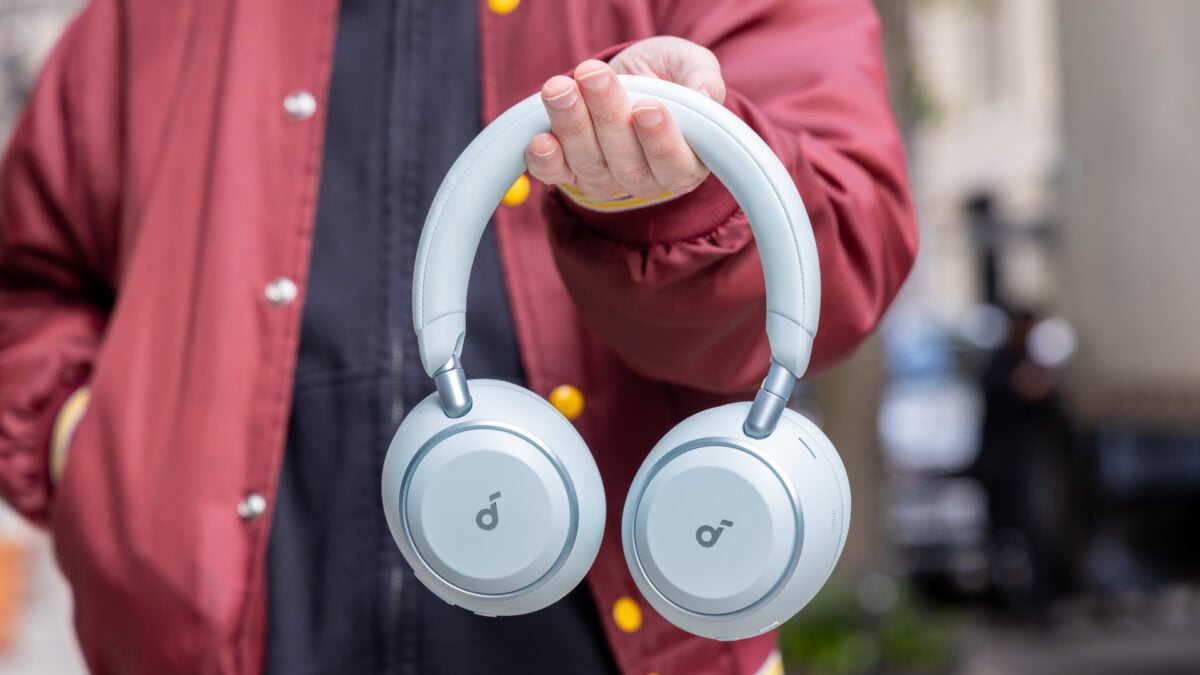
If there’s one thing gadgets could use more of right now, it’s value. There’s a time and a place for premium products, don’t get me wrong, but in a world where RAM prices are sending MSRPs for lots of tech through the roof, getting more for not that much feels borderline radical.
And in that way, Soundcore’s Space 2 are about as radical as a pair of wireless headphones can be right now.
Soundcore Space 2
The Space 2 are a great value with good ANC, sound, and excellent battery life.
- Amazing battery life
- Good ANC
- Solid sound that gets better with software
- Price is very right
- They feel slightly cheap
- Sound is good but not great
- Requires EQing to get the best experience
Exciting in a midrange kind of way
The first thing you need to know about the Soundcore Space 2 is that they cost $130. That is, objectively—going off the rest of the personal audio field—not that much money. In fact, it’s very little. For context, I recently reviewed the AirPods Max 2, which clock in at an eye-watering $550, a lofty price even by Apple’s standards. Recent releases like the Fender Mix and the Nothing Headphone 1, both of which are interesting and surprisingly good, cost $299. Sure, they’re great, but both of those companies are still relatively new in the wireless headphones space, so $300 is nothing to balk at.

In most cases, a steep price cut would mean significant tradeoffs in quality, but in Space 2’s case, the quality-to-cost ratio feels pretty damn ideal. The first place you might notice that you’re getting a good deal is in active noise cancellation (ANC). Though the Space 2 aren’t quite elite ANC headphones like the Bose QuietComfort Ultra Headphones (2nd Gen) or the AirPods Max 2, they’re better than a lot of midrange wireless headphones I’ve used, including those from Fender and Nothing that I mentioned.
On the subway and on the sidewalks in New York, I was shocked by how well the Space 2 shut out noise even when listening to less noisy audio, like a podcast. I wouldn’t hesitate for a second to bring the Space 2 on a plane or another environment where ANC could end up being a high priority. In quieter settings, the Space 2 is more than enough—I couldn’t even hear myself typing as I wrote these words, and the wireless headphones were only at 50% volume.
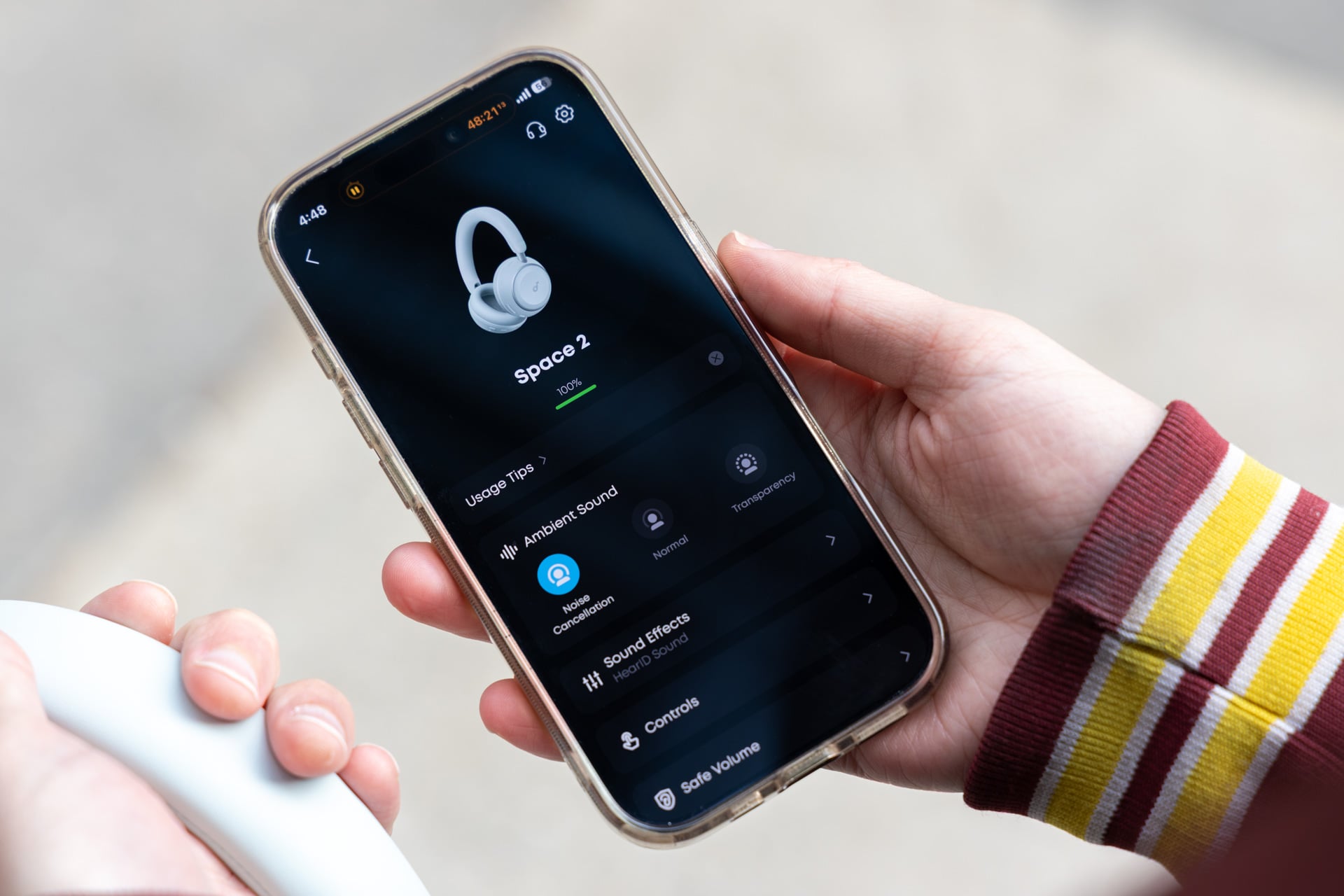
A big part of that immersion is ANC, but also, based on my testing, the Space 2 do a great job creating a passive seal. When using the Soundcore app to switch back and forth between noise cancellation and “normal” mode, I still got a pretty high degree of ANC. It’s nowhere near enough to provide a buffer against subway noise, but it definitely blocked out noise at the GIzmodo office.
If ANC and non-ANC modes aren’t your thing, there’s also a transparency mode, which is headphone-speak for using the onboard mics to provide audio passthrough. I’m not going to lie, most transparency modes on wireless headphones are pretty bad (especially after you hear AirPods Max level of transparency), but the Space 2 impressed here, too. Soundcore’s Space 2 transparency mode is surprisingly not tinny-sounding and allows you to hear your environment fairly well, though not perfectly. Again, it stops short of being elite but excels even beyond lots of midrange transparency modes I’ve used and probably all of the budget pairs I’ve tested.
If ANC and different noise modes are a big selling point for you, the Space 2 are an impeccable value, but those modes are only good if you actually like listening to the sound they’re helping you immerse yourself in. On that front, I have more good news, though with one small caveat.
Good sound that needs a helping hand
It’s unreasonable to put the Space 2 on your head and expect that they’re going to sound as good as the AirPods Max 2 or another super-premium pair of wireless headphones. As much as some would like to convince themselves that there’s no difference between premium and budget wireless headphones, that’s just objectively not the case.
That being said, you should still be satisfied with your sound even if the price tag is on the budget side, and with the Space 2, I was definitely satisfied, though there’s a caveat (a good one) that I’ll get into momentarily.
Out of the box, the Space 2, which come with 40mm drivers, sound pretty solid. I wasn’t blown away by the soundstage, but I wasn’t disappointed either. Listening to rock songs like the Rolling Stones’ “Waiting on a Friend” at 50% volume, the tuning was good, with vocals up front and clear, and bass and low end that were audible but not overpowering. Sound doesn’t feel as wide as premium headphones or even the aforementioned Nothing Headphone 1, but it doesn’t sound muddy either.
In more bass-heavy songs like Daft Punk’s “Da Funk,” I was slightly less impressed. Some of the midrange frequencies sounded a bit dull and drowned out—a subtle reminder that these are budget ANC wireless headphones and not premium ones. Even with that reminder, though, I think the Space 2 blow competitors from CMF like the Headphone Pro out of the water in terms of sound quality and a natural out-of-the-box tuning.
So, that’s it, right? The sound on the Space 2 is just okay? Not quite. I’ve written it before, and I’ll probably write it a million more times, but you should always take advantage of personalized EQ when you have the option, and Soundcore’s Space 2 are a perfect example why. Using the Soundcore app, I was able to personalize the Space 2 tuning to my specific hearing, and the results were much better after taking the plunge.
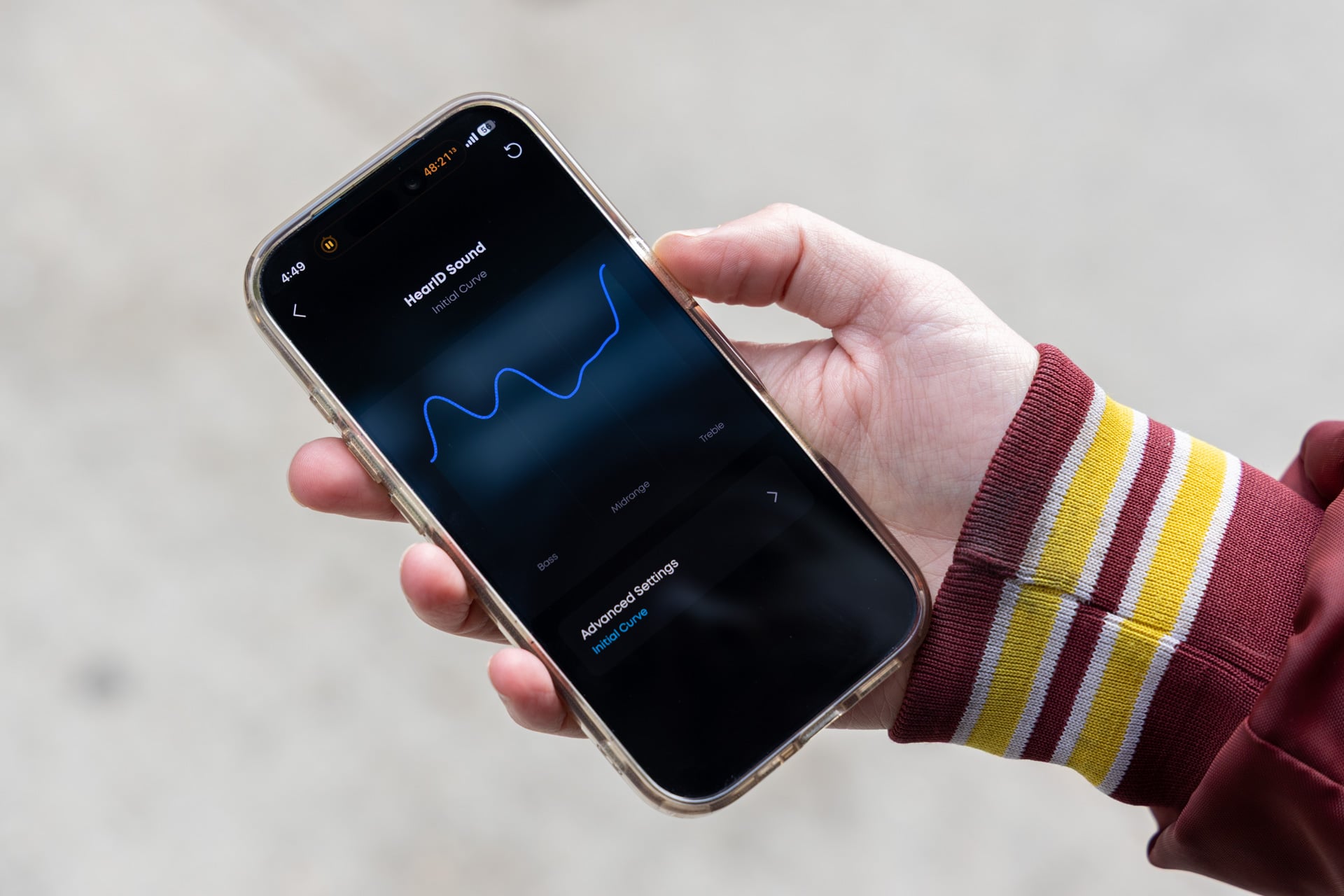
Soundcore’s hearing test is similar to others. You listen to frequencies and then report in the app when you hear them, so the app can get a read on which ranges to augment. Soundcore’s method also adds another twist. After the frequency test, Soundcore’s app actually lets you A/B test sound tuning by playing music. You listen to a brief snippet and then select which profile—A or B—sounds better. I like that, since it gives you some choice in the matter and also helps hammer home the personalization. I like it even more because the results are really noticeable.
After personalizing my EQ, my opinion of the Space 2’s sound quality went from “alright” to “surprisingly good.” I still don’t think it rises to the level of midrange/flagship competitors like the Headphone 1, but with personalized EQ, it’s in a fair fight. In songs like Daft Punk’s “Da Funk,” which I mentioned before, the drowned-out midranges are much improved, and the soundstage sounds a lot less flat. I can’t guarantee that everyone who personalizes their EQ through Soundcore’s app will have the same results, but it’s definitely worth giving it a try—you might just end up squeezing out even more value from an already value-rich pair of wireless headphones.
Solid, but nothing fancy
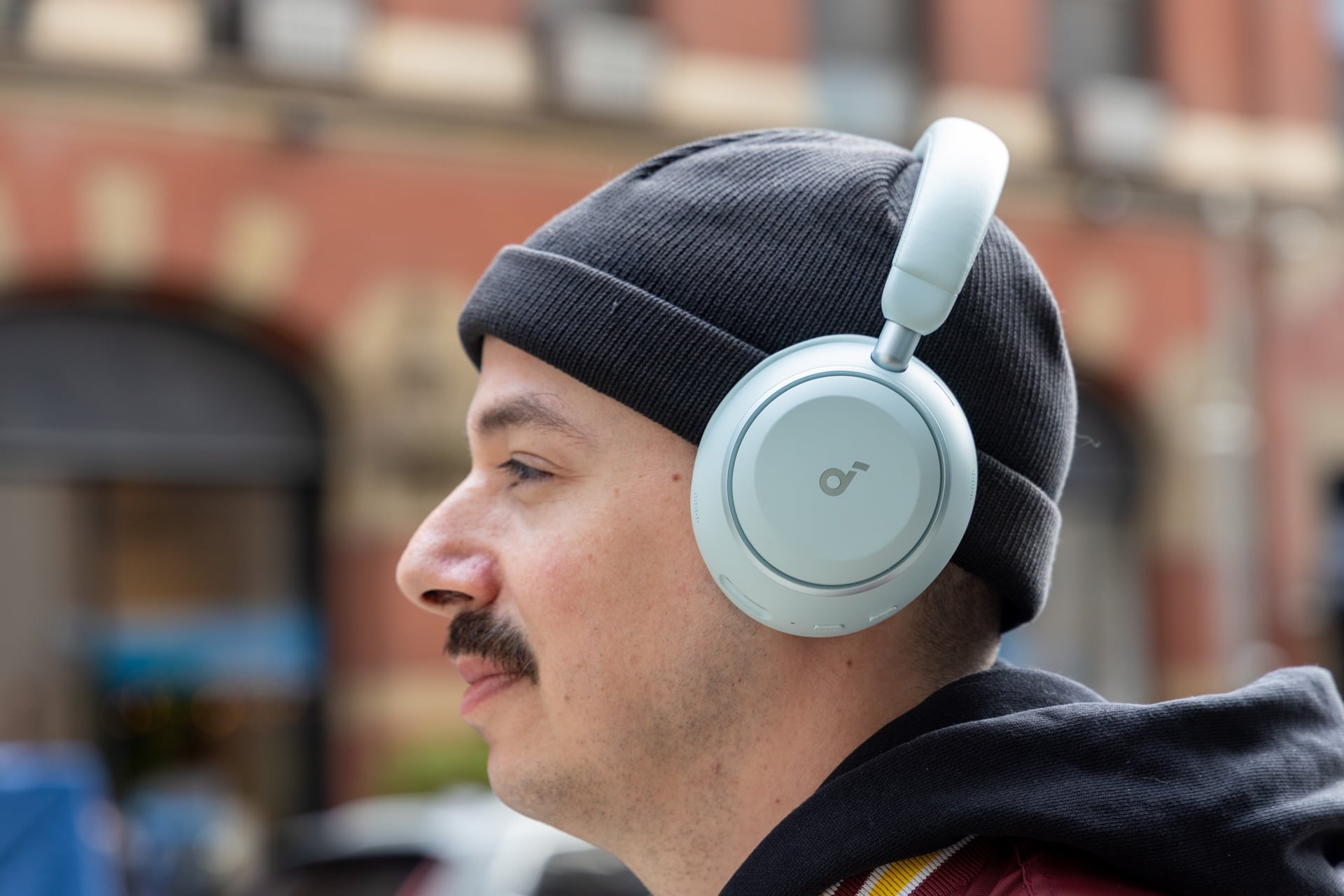
If there’s one area in which the Space 2 feel decidedly on the budget side, it’s materials. There’s lots of plastic and pleather, just like you’d expect, and while the look is inoffensive, it definitely leans towards a generic vibe. If style isn’t high on your priority list, that’s fine, but if you want something more unique, you should look elsewhere.
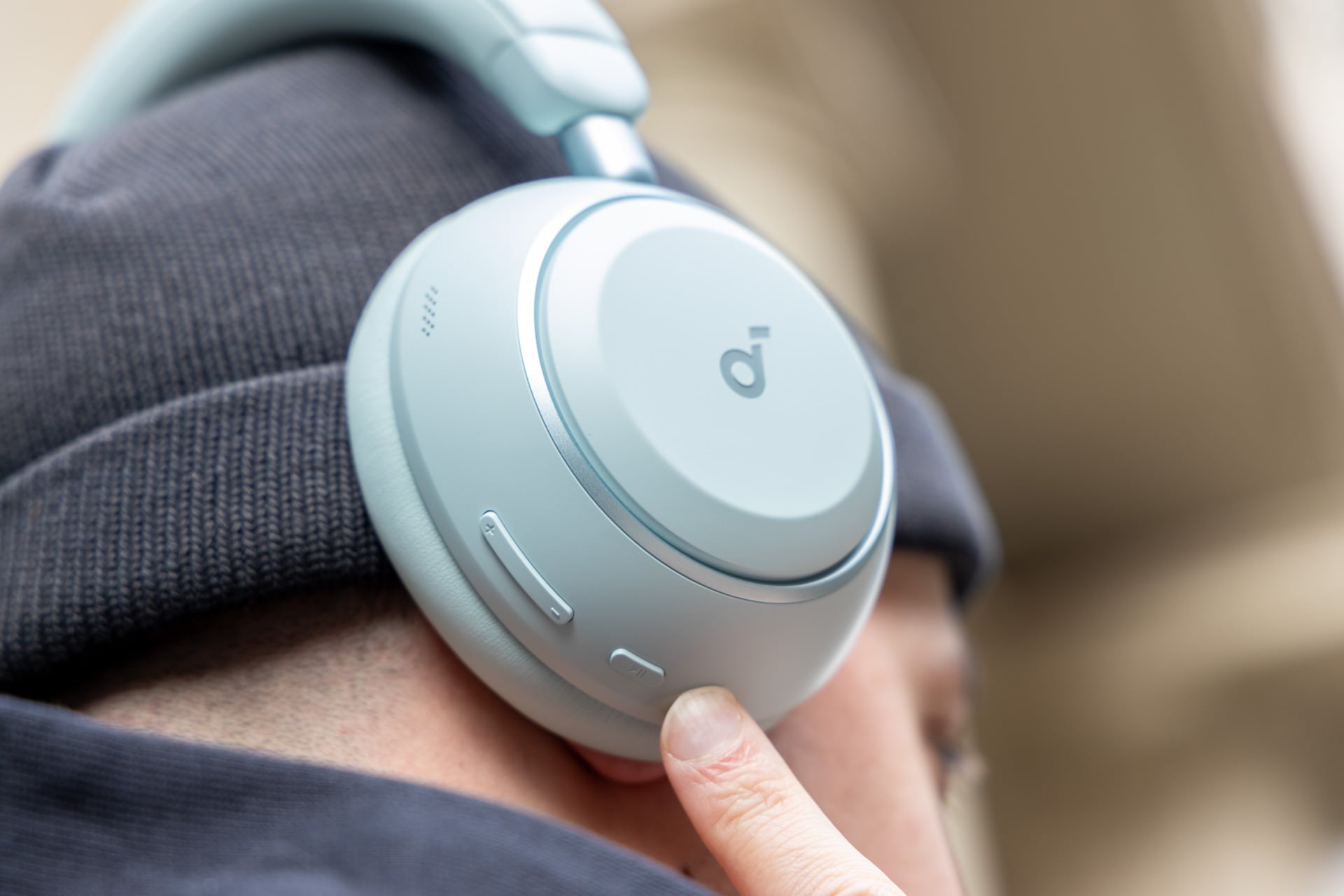
The bright side of a cheaper build is that the Space 2 are lightweight at 264g, making them comfortable to wear for longer periods. I also like that the fit is fairly tight around my ears, so it makes a solid seal and provides passive noise cancellation.
There are a few buttons built into the ear cups as well, including a play/pause button, a volume rocker, a power button, and a programmable multi-function button that changes noise-canceling modes by default, though it can be programmed to do other stuff like activate a voice assistant in the Soundcore app. I have no complaints about the buttons—they’re not the most tactile-feeling buttons I’ve used, but they get the job done.
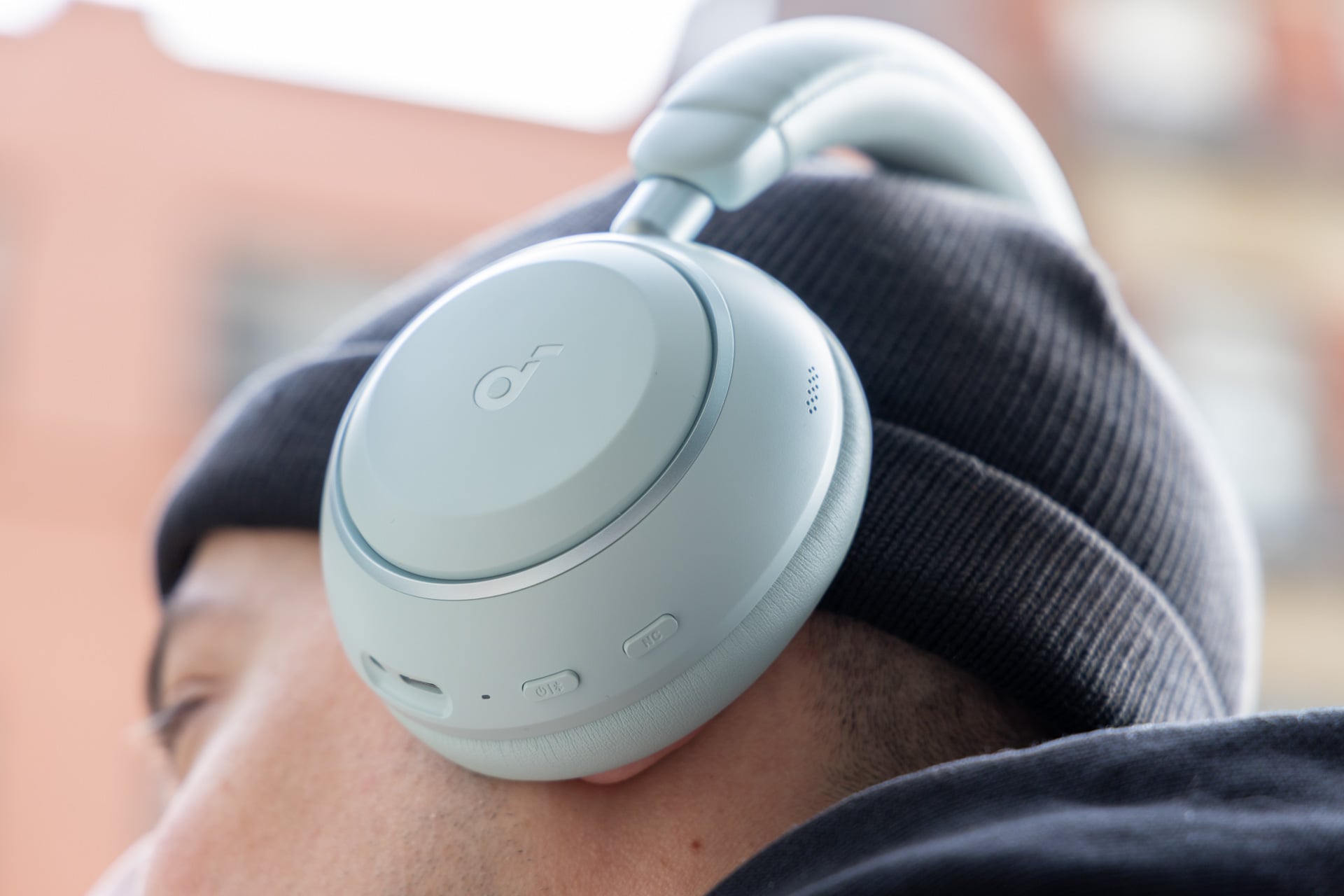
There are two ports as well—a USB-C and a 3.5mm headphone jack, so that you can listen to the Space 2 wired if you like. There are a few features in the app, too. One, called HearID Sound, I already mentioned—that one personalizes EQ. There’s also preset EQs for bass boost, bass reduction, acoustic, classical, and about a dozen more that are genre-specific. To be honest, the options are a bit overwhelming, and while they definitely adjust EQ from preset to preset, I can’t see myself going into an app and changing EQ every time I listen to a new genre.
There’s also 3D sound, which is supposed to add a sense of spatiality to what you’re listening to, but I barely noticed a difference with the feature on. Either the 3D nature is very subtle, or it’s not working as intended. I’ve rarely been impressed with 3D sound or spatial sound anyway, so I don’t feel like I’m missing much, but it would be nice to know that it works or actually does something.
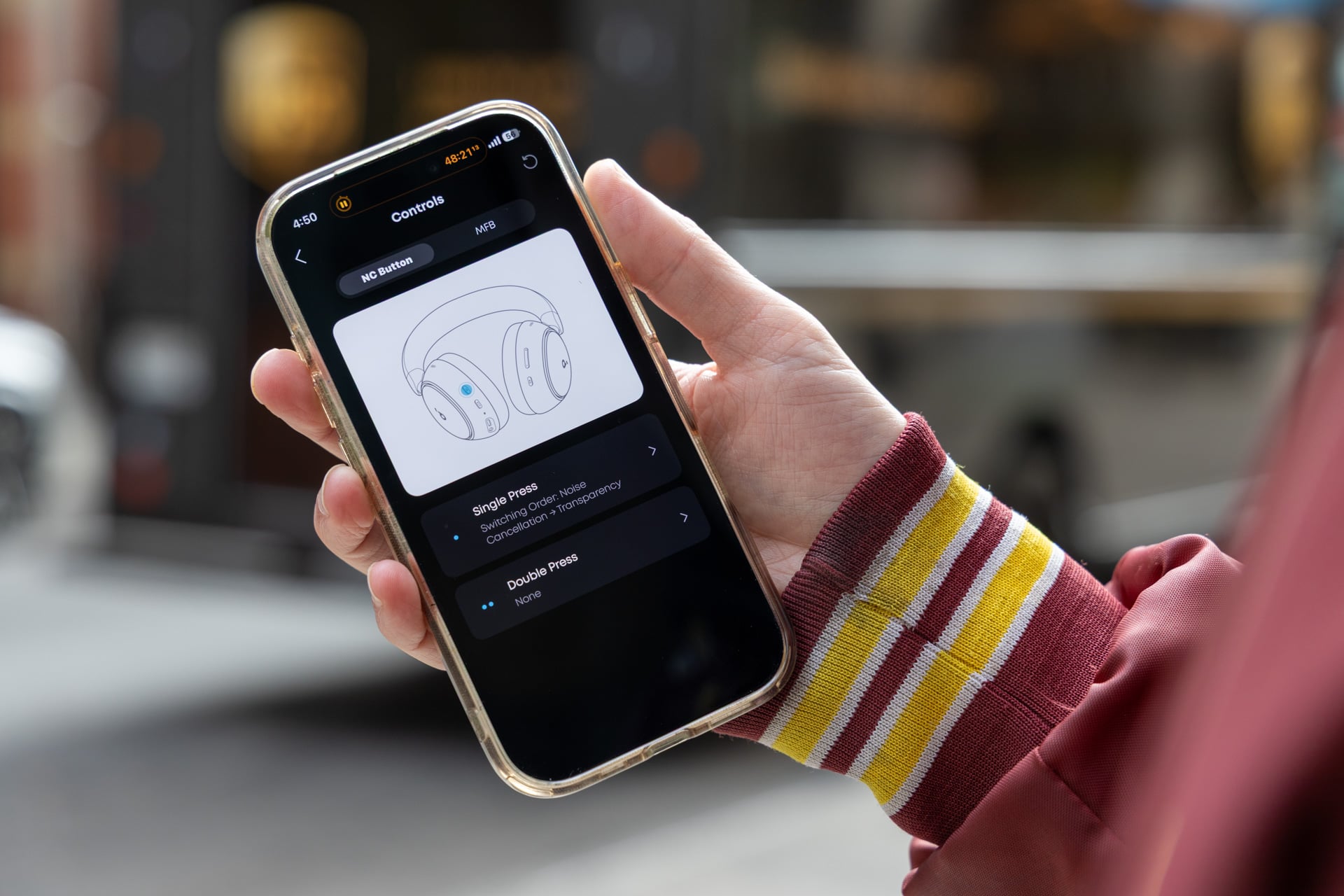
Like other products, you can also avail yourself of things like white noise in the Soundcore app, which is great for when you’re trying to block out noise or just zone out.
Battery life, like sound and ANC, punches above its weight class with an advertised 50 hours with ANC activated. According to my testing, that estimate seems fairly accurate. The Soundcore app seems to judge battery in increments of 10%, and it took me a little more than three hours to get from 100% to 90% with ANC activated and volume at 60%. If 50 hours is the advertised battery life with ANC activated, it should equate to about 2% drop every hour, but that’s dependent on volume and other factors. My best guess is that you should get somewhere in that ballpark, which is pretty damn good considering lots of pairs that cost double the price might only get around 30 hours on average if you’re lucky.
Time 2 Space out?
Soundcore’s Space 2 are pretty much the pinnacle of budget when it comes to headphones. At $130, they deliver better-than-expected sound coupled with better-than-expected ANC that’s topped off by better-than-expected battery life.
Are they the best wireless headphones I’ve used in any of those categories individually? No. No, they’re not. But that being said, they deliver high marks that exceed similarly priced competitors in the space and even manage to hold their own against pairs that are double the price.
Budget wireless headphones aren’t for everyone, but if you’re looking to get the most out of spending around $150 or less, I see no reason not to look to the stars on this one and go with the Space 2.













Leave a Reply