President Donald Trump and Chinese President Xi Jinping could meet up to four times in 2026 as the United States and China inch toward the finalization of a comprehensive trade agreement, according to Treasury Secretary Scott Bessent.
The cabinet official on Thursday that the leaders—who earlier agreed to a meeting in April in Beijing—could potentially reconvene during the summer in Washington, D.C. or Mar-a-Lago, as well as at the G20 Summit in Miami in December. Trump has also hinted that he would be willing to attend the Asia-Pacific Economic Cooperation meeting in Shenzhen, China, Bessent told Politico.
More from Sourcing Journal
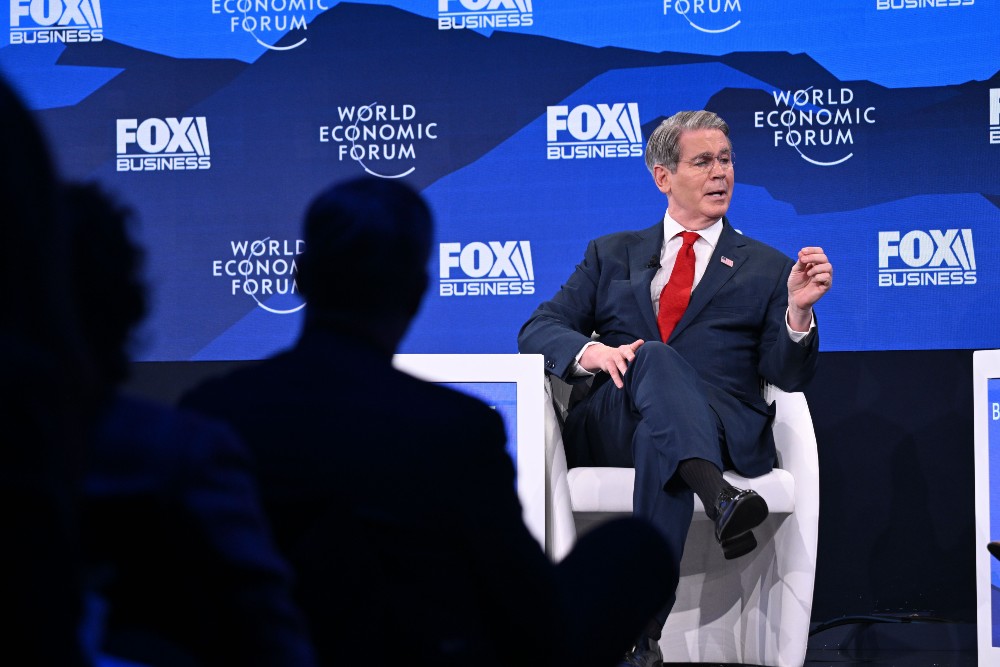
The trade relationship between the two nations has reached “a very good equilibrium” as talks have progressed in recent months, the Treasury Secretary told the outlet. Bessent met with China’s Vice Premier, He Lifeng, on the sidelines at the World Economic Forum this week and the official relayed China’s commitment to moving forward with the agreement reached by Trump and Xi in October.
According to Bessent, the Trump administration is “going to hold their feet to the fire” in pursuit of the terms laid out by the president last fall. “But they have done everything that they said they were going to do. They actually completed their soybean purchases last week—their full allocation,” he said.
China fulfilled its initial commitment to purchase 12 million metric tons of soybeans from U.S. farmers—a key tenet of the deal. Those orders began being delivered in December and will continue to be deployed through May, according to Reuters. China committed to buying 25 million tons of soybeans by the end of 2028 after pulling back precipitously on its orders during the first eight months of 2025.
U.S. Trade Representative Jamieson Greer, who also spoke to reporters at the World Economic Forum, hinted that another round of negotiations with Chinese officials might take place before Trump travels to China in April.
“There’s a chance that we might meet before then and try to have some kind of further agreement on things we can trade between us that are non-sensitive,” he said.
There’s no telling what Trump’s tariff leverage will look like by the time that visit happens.
The Supreme Court, which heard oral arguments on the International Emergency Economic Powers Act (IEEPA) tariffs in November, could release a ruling on their legality anytime between now and June. The justices are currently on recess until Feb. 20, the next possible date that a decision could be released.
With a ruling looming but uncertain, Democratic members of Congress are reviving an effort to terminate the national emergency declared by Trump on April 2, 2025, which saw the president impose sweeping duties on dozens of American trade partners.
Republican House leaders this week declined to extend an edict prohibiting snap votes to repeal Trump’s national emergency authority past Jan. 31. Now, any member can force such a vote upon the House’s return from recess in February—and the Democrats have found their opening.
Congressman Gregory Meeks (D-N.Y.), Ranking Member of the House Foreign Affairs Committee, demanded a vote on the House floor for S.J. Res.88, which would halt the national emergency the president used to justify the imposition of IEEPA tariffs.
The legislation passed in the Senate in October with a 51-47 vote and subsequently moved to the House where it was held at the desk for consideration.
“We should be voting today to end these tariffs and lower costs for everyday Americans. Instead, this house majority is paralyzed by fear, making it one of the least effective in modern American history,” Rep. Meeks told his colleagues on Thursday.
“The American people sent us to Washington to address affordability. To lower the cost of health care, housing, and groceries. Yet this Congress has taken fewer votes in 2025 than in any non-pandemic year this century. Apparently, the Majority doesn’t think affordability is important enough to vote on,” he said.
The Congressman took aim at the administration’s priorities, which he said have strayed far from addressing the cost pressures being felt by American consumers.
“Instead of focusing on prices, the White House has spent the past week talking about invading Greenland or using your taxpayer dollars to buy an island that isn’t for sale,” he said. “To advance this fantasy, President Trump threatened yet another round of tariffs that would raise prices even further, only to walk the threats back after the stock market tanked yesterday.”
Rep. Meeks urged Congress to pass the resolution to terminate the tariffs and assert its role as a “co-equal branch of government,” highlighting the unorthodox role that the current administration has played in administering taxes and tariffs—traditionally, a Congressional imperative.
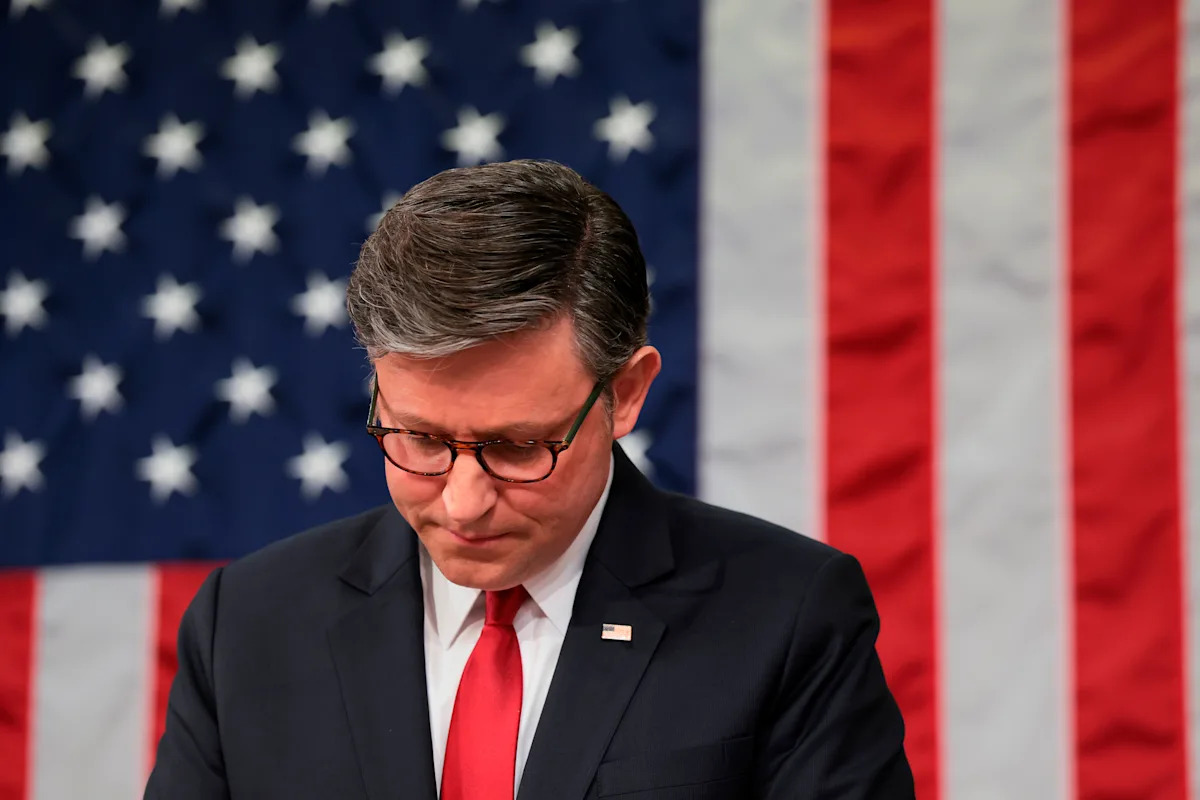
“When asked to explain why we are not doing everything we can to lower costs for American families, the Speaker responded that the President is exercising Article II powers to impose tariffs,” he said, referring to comments from Speaker of the House Mike Johnson (R-La.). “Only there’s one problem; the President has no Article II powers to tax or tariff. Those powers are explicitly assigned to Congress under Article I of the Constitution.”
“So, the Republican Majority, more interested in providing cover for Donald Trump than honoring their oath to the Constitution, is deliberately avoiding doing its job to lower costs for Americans,” Rep. Meeks concluded. “I urge my colleagues to defeat the previous question, demand a vote on terminating the tariffs, and yield back the balance of my time.”











Leave a Reply