
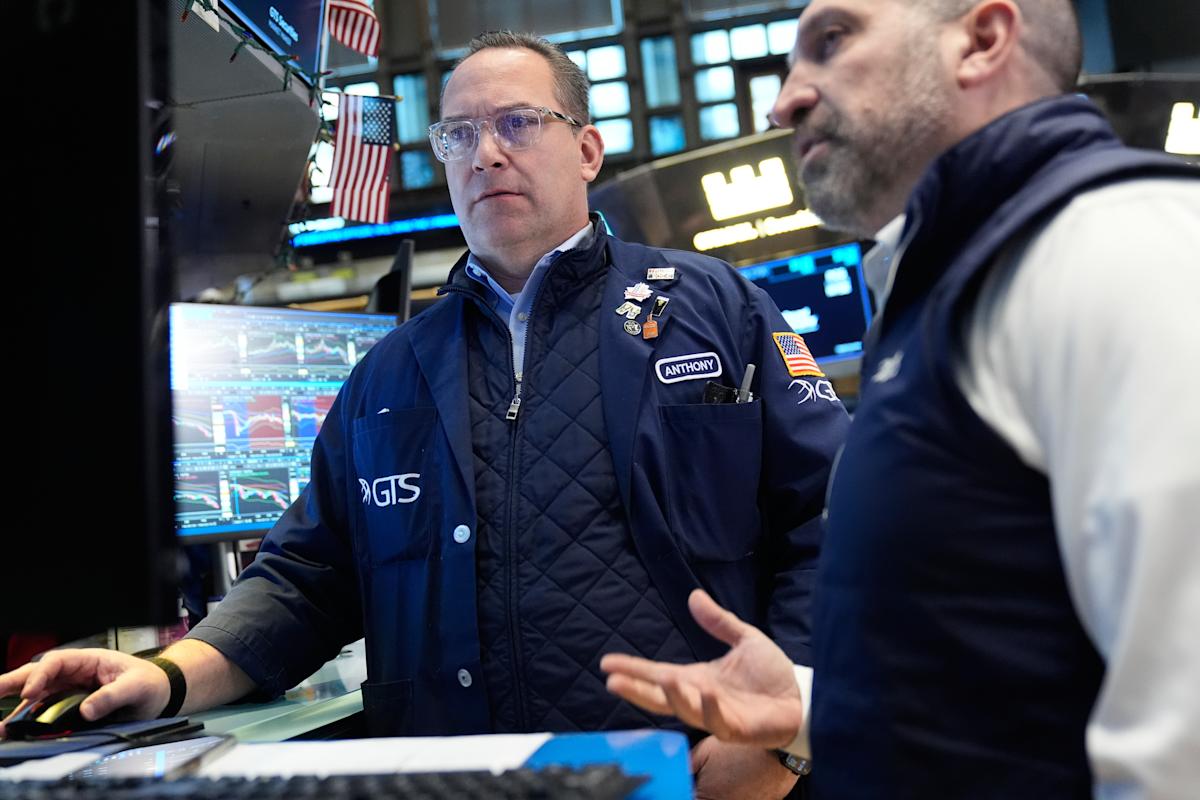
NEW YORK (AP) — A roller-coaster day for oil prices showed how they’re dictating where financial markets and maybe even the global economy are heading. Stocks tumbled in Europe and Asia when oil prices shot higher early on Thursday, but U.S. stocks pared their sharp losses as the day progressed and oil prices fell back.
The morning began with the shock of Brent crude, the international standard, briefly rising above $119 per barrel, up from roughly $70 before the war with Iran began.
The jump followed intensified attacks by Iran on oil and gas facilities around the Persian Gulf in response to an Israeli attack on an important Iranian natural gas field. They worsened fears that the war could knock out oil and gas production in the Middle East for a long time, which would mean high prices could last a while and cause inflation to rip higher around the world.
Stock indexes dropped 3.4% in Japan, 2.8% in Germany and 2.7% in South Korea. But oil prices pared their big gains as the day progressed, the latest in their hour-to-hour swings since the war began.
Brent oil settled at $108.65, up only 1.2% from the day before, and then eased further as trading continued. After briefly topping $101, a barrel of benchmark of benchmark U.S. crude settled at $96.14 and then fell toward $94.
That helped stocks on Wall Street pare their own losses, which were already more modest than in Europe and Asia because U.S. companies are less reliant on oil from the Middle East.
The S&P 500 finished with a dip of 0.3% after coming back from an early loss of 1%. It even briefly turned higher in the last hour of trading. The Dow Jones Industrial Average dropped 203 points, or 0.4%, and the Nasdaq composite fell 0.3%.
President Donald Trump and countries around the world have made moves to stem the spike in oil prices. But they’re mostly short-term fixes, and markets want to see less risk for oil and gas fields around the Gulf and a clearance of the Strait of Hormuz off Iran’s coast, where a fifth of the world’s oil typically sails.
Late on Thursday, Israeli Prime Minister Benjamin Netanyahu said his country will hold off on any further attacks on the Iranian gas field, at Trump’s request.
Uncertainty about what will happen in the war has led to manic back-and-forth swings in the oil and stock markets since the war began nearly three weeks ago. The yo-yo movements also hit the bond market Thursday, as Treasury yields jumped in the morning with the price of oil and then eased back.
The two-year Treasury yield got as high as 3.96% before receding to 3.79%, which is a major move for the bond market. The two-year yield tends to follow expectations for what the Federal Reserve will do with short-term interest rates.









Leave a Reply