By Lauren Young
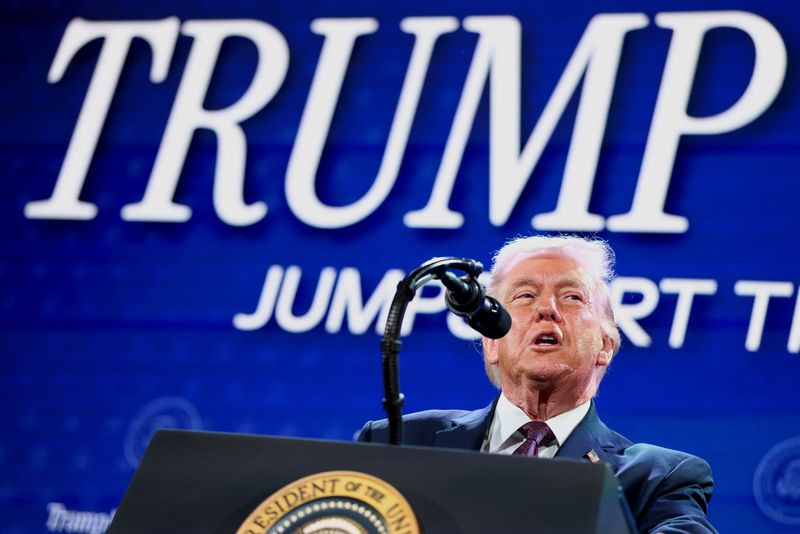
NEW YORK, Jan 28 (Reuters) – “Trump Accounts” are tax-advantaged investment accounts designed to boost the savings of U.S. citizens under the age of 18. More than 500,000 families have signed up for the program, which the government will roll out this summer.
HOW TRUMP ACCOUNTS WILL WORK
The government will launch the program in July. The U.S. Treasury will deposit $1,000 of seed money into investment accounts for all children born between 2025 and 2028 with a valid Social Security number. The government will invest the money in low-cost index funds that grow tax-deferred. Income taxes are due upon withdrawal.
Parents, guardians, an employer or another entity could add more funds to a child’s account. The program limits these contributions to $5,000 per year, with the employer portion expected to be limited to $2,500 per year.
At age 18, the child will take control of the account.
HOW CAN I OPEN AN ACCOUNT?
First, fill out IRS Form 4547, which can be filed at any time. Later this year, you will be able to set up an online account at trumpaccounts.gov.
WHO IS FUNDING THE INITIATIVE?
Last December, entrepreneur Michael Dell and his wife, Susan, announced they will deposit $250 in the individual investment accounts of 25 million American children in a $6.25 billion philanthropic pledge.
Children who live in ZIP codes where the median family income is $150,000 or less will receive the money, according to a spokesperson for the Dells.
JPMorgan Chase said Wednesday it will match the U.S. government’s one-time $1,000 contribution to children of eligible U.S. employees.
Bank of America also plans to offer a $1,000 match to eligible employees, according to an internal memo seen by Reuters. BofA will let eligible employees make pre-tax contributions to these accounts through payroll deductions, it said in the memo.
Trump said Wednesday dozens of major employers have signed up to add Trump Account contributions to their employee benefit packages, including Uber, Charles Schwab, Charter Communications and “many, many others.”
While seed money makes Trump Accounts more appealing, it does not fundamentally change the math or the financial planning considerations, says Doug Boneparth, president of Bone Fide Wealth, a New York financial advisory firm.
“A one-time or modest ongoing contribution can help with engagement and early momentum, but long-term outcomes will still be driven by consistency, contribution limits, investment choices and market returns,” Boneparth says.
WHAT ARE THE TAX IMPLICATIONS?
Trump Accounts are essentially a custodial retirement account, known as a Custodial IRA, overseen by a parent or legal guardian, says Alex Caswell, a certified financial planner at Wealth Script Advisors in San Francisco. When the child turns 18, the account converts into a traditional IRA.
The tax implications can be complex, however, since a portion of the account is funded by tax-free distributions, but it can also include taxable investments, Caswell says. “It gets messy,” he notes.
Withdrawals from a Trump Account also face IRA-style treatment, including penalties for early or non-qualified use, explains John Iselin, associate director of economic research at the Budget Lab at Yale.
“Help is broad and shallow rather than targeted and large,” Iselin says.
HOW MUCH CAN YOU SAVE?
Andrew Herzog, a certified financial planner at the Watchman Group in Plano, Texas, calculates that if you leave the $1,000 seed money alone for 28 years, with an assumption it will earn 10% per year, you will end up with $16,000. Since 1957, the S&P 500 has delivered an average annual return of 10.54%.
“For new parents it’s a deal to get $1,000 from the federal government — take it,” Herzog says.
Herzog’s calculations show that investing the seed money, plus $100 a month until age 18 (the age limit for contributions), then letting the account grow for another 10 years, would result in approximately $180,000.
For those with the ability to save more aggressively, the outcome is even more dramatic. Investing the seed money, plus maxing out contributions each year at $5,000 up until age 18, then letting the account grow for another 10 years, would yield a portfolio worth $698,000 by the time the child turns 28.
CAN TRUMP ACCOUNTS BOOST FINANCIAL LITERACY IN THE US?
“There are some teachable moments when kids have investments in their name as they get older,” says Jackie Cummings Koski, a certified financial planner and financial educator. “Like what is an index fund? What stocks do they own in the fund? How much will it grow? What will they use it for?”
Seed money is a useful nudge, says Tomas Geoghegan, founder and family wealth adviser at Beacon Hill Private Wealth in Summit, New Jersey. “The real impact will come from whether families develop the habit of contributing regularly,” Geoghegan says.
Research shows automatic deposits, immediate matches and clear rules are better methods to boost savings among lower-income households, says Melissa Caro, a certified financial planner in New York.
“You put money in now and get the benefit at tax time,” Caro said. “That’s not how you move behavior for the families this is aimed at.”
WHAT DETAILS STILL NEED TO BE ANSWERED?
Several pieces are still unclear, including how the account will be treated when families apply for federal student aid. Other questions: Who will manage the accounts? How will custodians handle compliance, investment restrictions and employer funding?
“I’ve had a few clients who just gave birth last year or this year. I also had a child,” Caswell says. “We’re just sitting put, waiting to get more guidance.”
(Reporting by Lauren Young; Additional reporting by Andrea Shalal; Editing by Lisa Shumaker)









Leave a Reply