
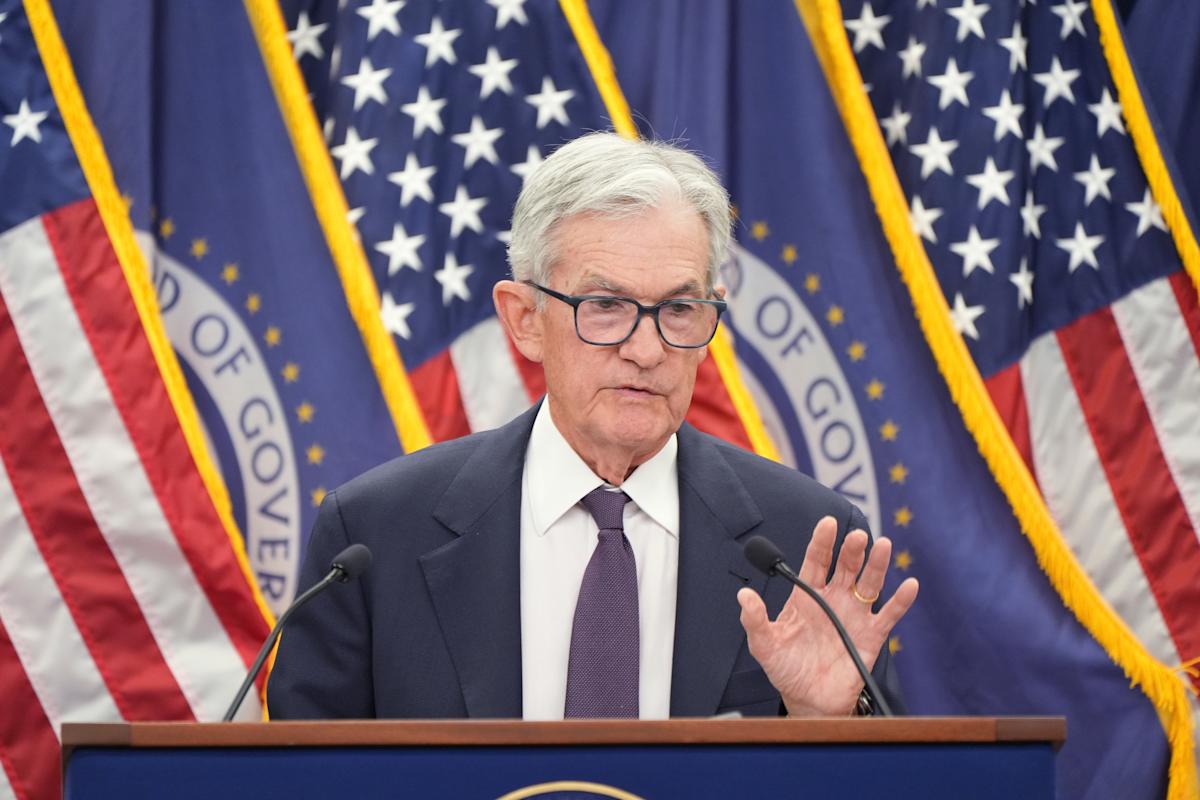
The Federal Reserve voted Wednesday to hold its benchmark interest rate in the range of 3.5% to 3.75%, following three straight rate cuts last fall. Fed Governors Chris Waller and Stephen Miran disagreed with the decision, preferring to cut rates by a quarter percentage point.
Before the meeting, Waller — one of President Trump’s finalists to be the next Fed chair — cited ongoing concerns about the health of the job market.
Central bank officials upgraded their assessment of the economy to “solid” from “moderate” on the back of a strong third quarter GDP reading and expectations for a strong fourth quarter.
In their policy statement, officials said they still see inflation as “somewhat elevated,” but said the job market is showing “some signs of stabilization” and removed language that “downside risks to employment rose in recent months.”
Policymakers reiterated “in considering the extent and timing of additional adjustments to the target range for the federal funds rate, the Committee will carefully assess incoming data, the evolving outlook, and the balance of risks.”
Read more: How a Fed rate cut affects your bank accounts, loans, credit cards, and investments
In a press conference following the meeting, Powell reaffirmed that meeting-by-meeting approach to interest rate decisions.
“We’re not trying to articulate a … test for when to next cut or whether to cut at the next meeting,” Powell said. “What we’re saying is we’re well positioned as we make decisions, meeting by meeting, looking at the incoming data, evolving outlook and all that.”
The December jobs report indicated payroll growth remains soft, though the unemployment rate dropped to 4.4% after ticking up in November. The Fed cut rates three times last year to try to cushion weak payroll numbers.
At the same time, recent data shows inflation is still stuck above the Fed’s 2% goal. The Consumer Price Index for December on a “core” basis, which excludes volatile food and energy prices, stands at 2.6%, holding the same level seen from September through November.
Powell cited December figures for the Personal Consumption Expenditures index, the Fed’s preferred inflation gauge. He said total PCE prices rose 2.9% in December, and core PCE prices rose 3.0%.
The outlook for economic activity has clearly improved since the last meeting,” Powell said. “And that should matter for for labor demand and for employment over time.”
The decision to hold rates steady comes as Trump continues to call for lower rates, and tensions between the White House and the Fed reached new heights.








Leave a Reply