
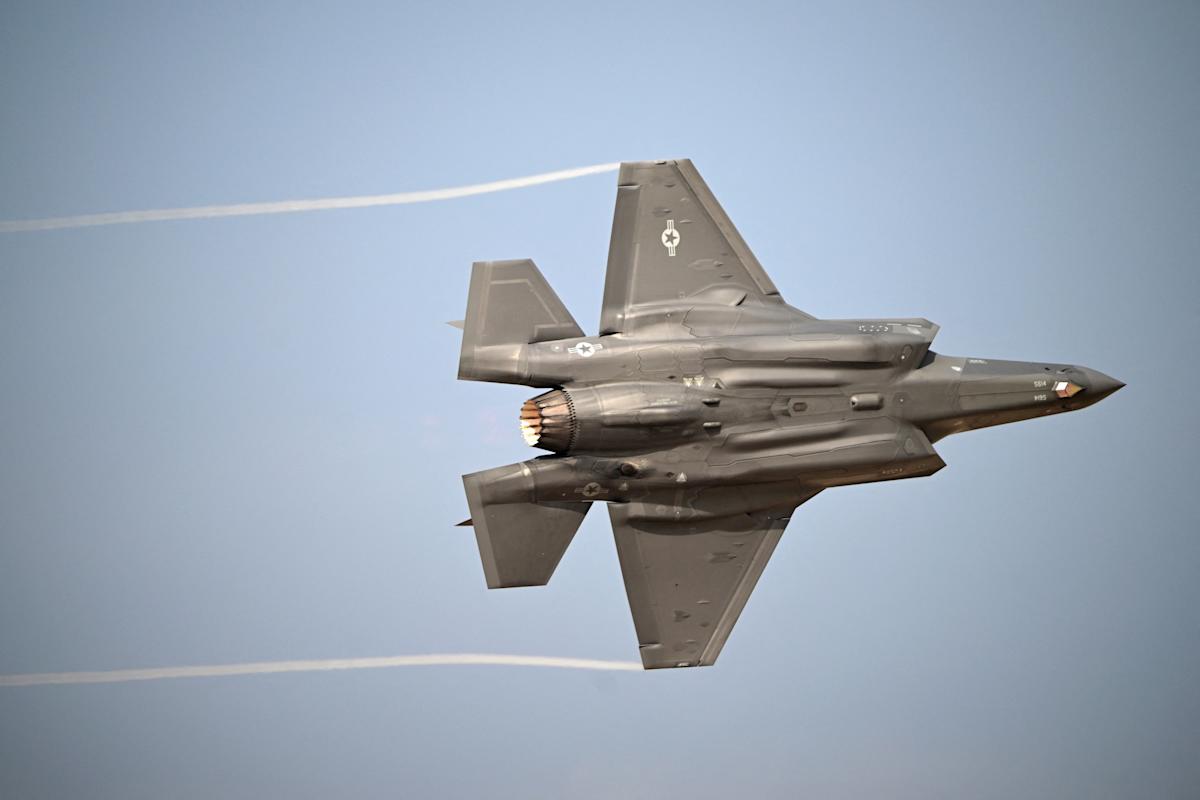
(Bloomberg) — An increasingly unstable global geopolitical order has turbocharged stocks of military contractors in recent months. Now, with some of the biggest names in the industry set to report earnings this week, investors are eager for evidence that the rally is rooted in reality.
Most Read from Bloomberg
An index of aerospace and defense shares notched a 42% gain last year, more than double the returns of the technology-heavy Nasdaq 100 Index (^NDX), amid expectations for heavier government spending on fighter jets and missiles, as well as newer military technology like drones and sophisticated software.
The sudden US ouster this month of Venezuelan President Nicolas Maduro and President Donald Trump’s threats about taking over Greenland have further intensified the rush to own defense stocks, propelling valuations to levels typically reserved for high-flying tech names.

If, as analysts and industry bulls argue, the surge in defense spending is only getting started, those soaring multiples are justified. Investors will get a key read on this in the days ahead as firms including Lockheed Martin Corp. (LMT), L3Harris Technologies Inc. (LHX), Northrop Grumman Corp. (NOC) and RTX Corp. (RTX) report their quarterly earnings and provide their outlook for the year ahead.
“I don’t think that the valuations are out of line in the defense sector,” said Tom Hulick, chief executive officer of Strategy Asset Managers, which owns Lockheed Martin (LMT) and General Dynamics (GD), as well as the State Street SPDR S&P Aerospace & Defense ETF. “These are companies that are critical to the current business cycle” in defense manufacturing, he said.
Historically, stocks in the sector have been seen as classic “defensive” bets, meaning investors prefer them during times of uncertainty and ignore during bull runs. Events over the past year, though, led a change in that thinking, with Trump vowing to beef up US defense capabilities even as he upended decades of diplomacy by backing away from traditional US allies, prompting a scramble in Europe to rearm.
Meanwhile, the continuing conflict between Russia and Ukraine has highlighted how physical warfare has changed, with greater use of technologies like drones.
Together, these factors have led to a shift of market valuations as defense companies integrate cutting-edge technologies, including advanced software, sensors, artificial intelligence and sophisticated missile defense systems into their core structures. Investors have latched on to the trend, with some calling it a “new dawn” for the sector.










Leave a Reply