
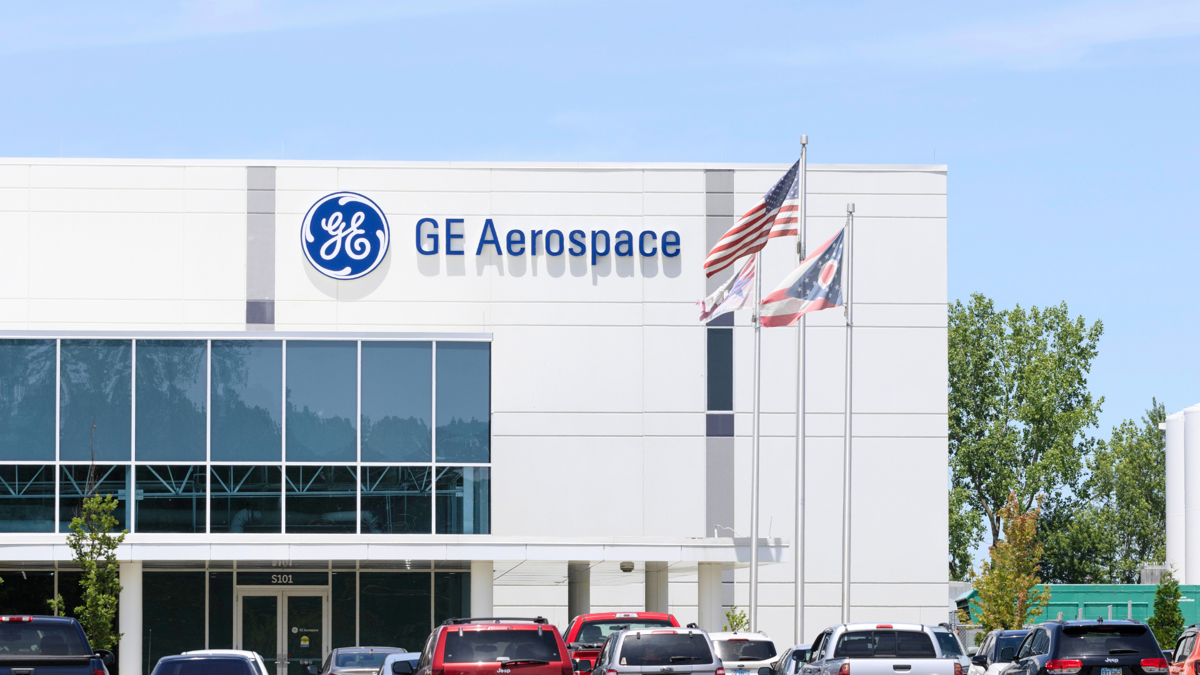
GE Aerospace (GE) just delivered the kind of quarter that usually sends a stock higher. The company beat on earnings, revenue, and free cash flow, and demand remains strong across its core aerospace business. But the stock fell, wiping out roughly $20 billion in market value for the company.
The disconnect stems from management not raising its 2026 outlook, leaving investors questioning whether the company’s improving fundamentals are actually translating into higher long-term earnings power.
GE Aerospace delivered strong first-quarter results. Adjusted EPS came in at $1.86, well above the roughly $1.60 consensus, while revenue and free cash flow also topped expectations.
But management held 2026 guidance steady. The company kept its adjusted EPS outlook at $7.10 to $7.40 and free cash flow at $8.0 billion to $8.4 billion, even after a clean beat across key metrics. Orders skyrocketed 87% to $23.0 billion, and deliveries rose 43% year over year, which confirms demand remains strong.
Yet that demand did not translate into stronger margins. Operating margin came in at 21.8%, down 200 basis points from a year earlier, pouring cold water on the idea that higher output is already driving operating leverage.
Top Investing News:
That decline is where most investors’ concern lies.
The bull case assumes that as production scales, incremental margins improve and earnings accelerate. Instead, GE delivered a sharp increase in volume yet weaker profitability.
Analysts seemed to believe that GE would turn that backlog into higher-margin earnings, given consensus earnings per share estimates are $7.46 for 2026. Since the company did not move to close that gap, analysts may have to adjust their models and lower outlooks.
The clearest strength in the quarter came from GE’s commercial aftermarket business. Commercial Engines & Services revenue rose 34% to $8.92 billion, while management highlighted a services backlog now totaling over $210 billion.
That backlog is at the core of the investment case because it ties a significant portion of future earnings to an installed engine base, rather than to the timing of new aircraft deliveries. Airlines can delay new orders, but they still need to maintain engines already in service.

This dynamic makes services revenue structurally more valuable. It carries higher margins, better visibility, and less cyclicality than original equipment sales. It also provides a buffer if OEM deliveries remain uneven.







Leave a Reply