
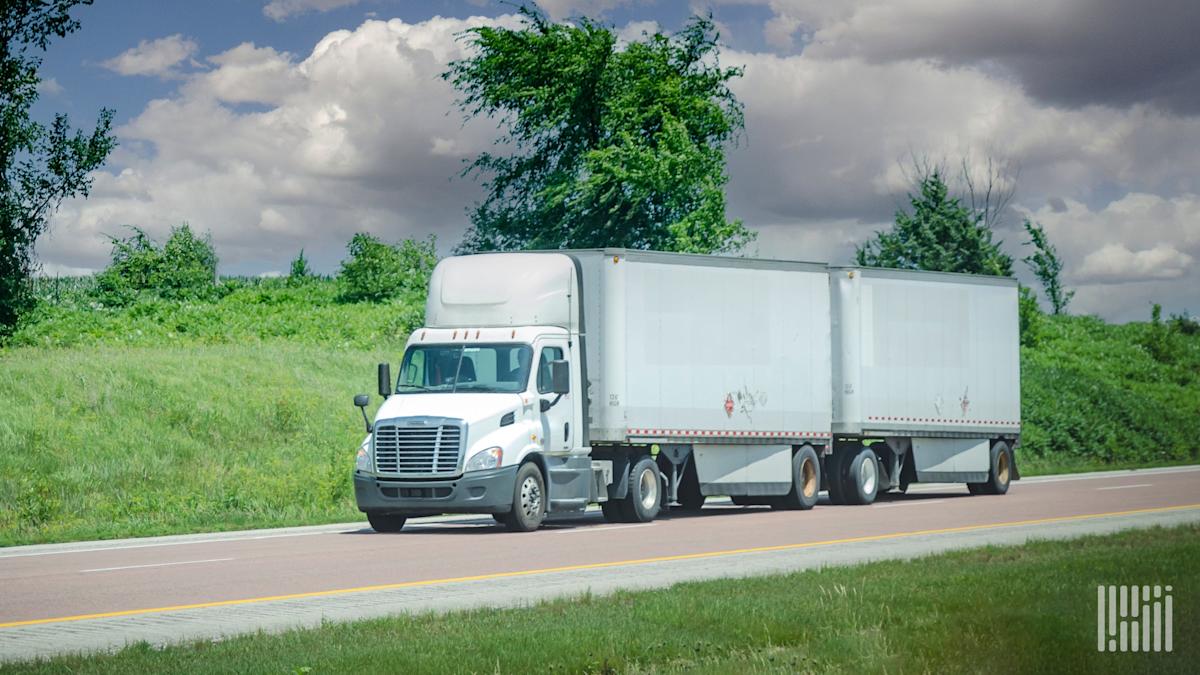
Missed pickups have long been an accepted cost of doing business in less-than-truckload shipping. They’re frustrating, inefficient and expensive, but for an industry built on shared capacity and tight scheduling, they’ve often felt unavoidable. C.H. Robinson is betting that doesn’t have to be the case.
The logistics provider has rolled out a new set of AI agents designed specifically to tackle missed LTL pickups. When one pickup fails, it can trigger a cascade of delays across terminals, routes and other customers’ freight. By automating how missed pickups are identified, investigated and resolved, C.H. Robinson says it’s already seeing measurable gains in speed, efficiency and network reliability.
The company’s AI agents now automate 95% of missed pickup checks, eliminating more than 350 hours of manual work each day.
Freight is moving as much as a full day faster, and unnecessary return trips, when carriers are dispatched only to find freight still unavailable or already collected, have dropped by 42%. For an LTL network where a single truck may handle freight from 20 different shippers, those reductions translate into fewer disruptions for everyone sharing that capacity.
Missed pickups are rarely simple. Freight may not be packaged or staged on time. A carrier may be delayed by traffic or terminal congestion. Sometimes the pickup already happened, but the confirmation never made it through fragmented systems.
As Greg West, vice president for LTL at C.H. Robinson, puts it, “A missed pickup isn’t just a minor inconvenience. When a truck arrives and the freight or packaging isn’t ready, or the carrier couldn’t make it because they got stuck in traffic, it forces another truck to come back the next day. That might not even be our shipper’s freight, but it creates a domino effect for other freight that was supposed to get picked up and for all the other trucks down the line.”
C.H. Robinson’s new approach replaces much of that manual work with coordinated AI agents. One agent contacts carriers to gather information on missed pickups, while another uses that information to determine the next best action. Working in parallel, the agents can make hundreds of calls and decisions at the same time, compressing what once took hours into minutes. The result is faster resolution, earlier visibility for shippers and receivers, and fewer wasted trips across LTL networks.
So far, the system is resolving hundreds of shipments each day across more than 11,000 customers. West says the impact extends beyond C.H. Robinson’s own operations. By aggregating and sharing missed-pickup data with carriers daily, the company is giving them insight into issues they previously struggled to isolate, from communication breakdowns to terminal-level operational constraints.








Leave a Reply