
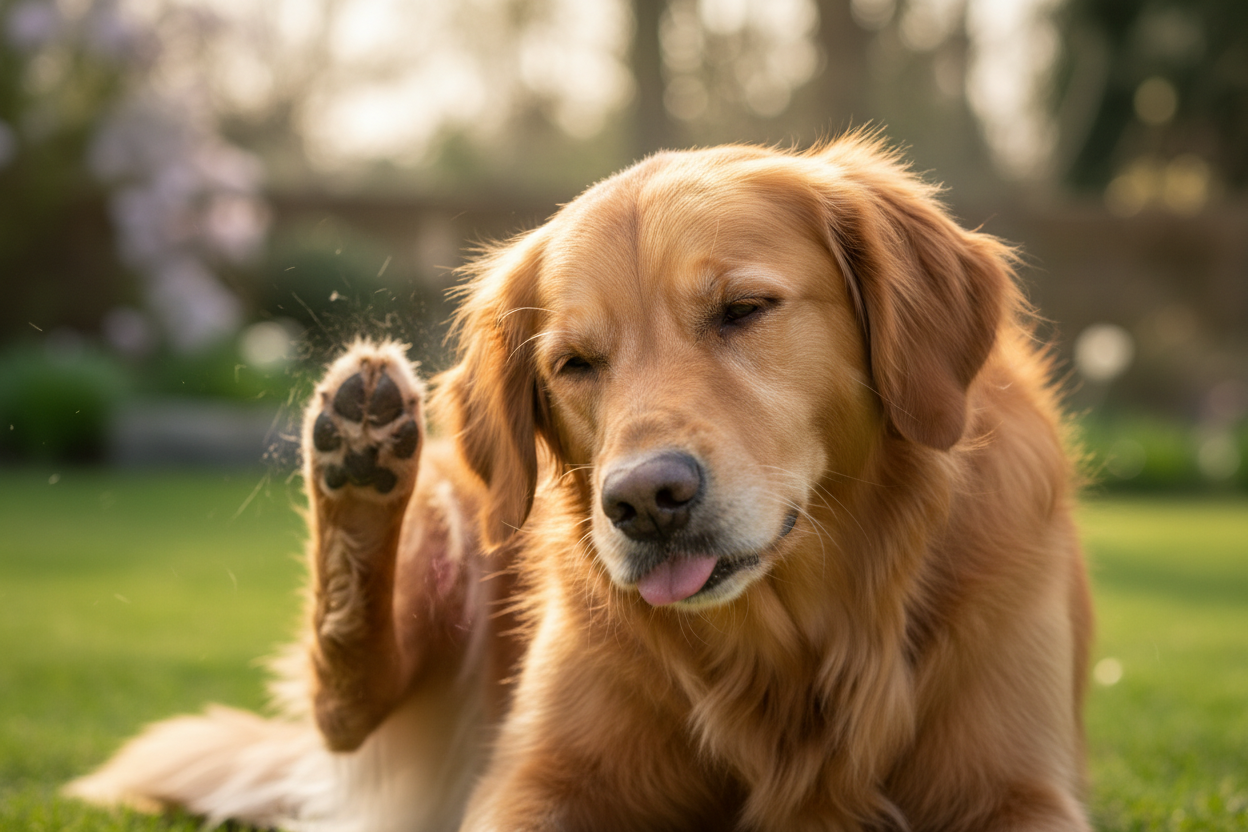
Spring is a beautiful time of year, but for many dogs, it marks the beginning of itchy skin, constant scratching, and seasonal discomfort. Both people and pets can suffer from spring allergies, which may cause your dog to suddenly start licking their paws or rubbing their face on the carpet.
Approximately 20 million adults in the U.S. suffer from seasonal allergies, with symptoms often peaking during the spring due to tree pollen.
In this guide, we’ll break down everything you need to know about dog seasonal allergies, including causes, symptoms, and the best ways to soothe your pup, starting with their skin.
What Are Spring Allergies in Dogs?
Spring allergies (also known as seasonal or environmental allergies) occur when your dog’s immune system overreacts to substances like pollen, grass, or mold.
Unlike humans, dogs typically don’t show allergy symptoms through sneezing or congestion. In humans, common spring allergy symptoms include sneezing, itchy or watery eyes, congestion, runny nose, and coughing caused by tree and grass pollen, and these symptoms are often referred to as hay fever.
Instead, dog allergies almost always show up on the skin.
That means itchiness, irritation, and inflammation are the biggest red flags.
What Causes Spring Allergies in Dogs?
Spring allergies typically begin in February and last until early summer in many areas across the United States.
During spring, your dog is exposed to a surge of environmental allergens, and exposure to these substances can trigger allergic reactions. The most common triggers include:
The timing and intensity of pollen seasons can vary based on your location and local weather patterns.
In March and April, tree pollen dominates the allergy season, with tree pollen peaking in April. By May, both tree and grass pollen counts are high across the U.S., and in June, grass pollen peaks while tree pollen levels drop.
🌼 Pollen
Tree pollen and grass pollens are the #1 cause of seasonal allergies in dogs, especially during peak spring bloom. Major tree pollen culprits include birch, oak, maple, cedar, pine, and cottonwood, with tree pollen peaks typically occurring from February through May. Grass pollen typically becomes a major allergen in the summer, with Timothy and Johnson grass being notable examples.
🌱 Grass & Outdoor Irritants
Even walking through grass can trigger reactions. Dogs can absorb allergens through their skin or paws, leading to skin irritation. Inflamed skin is a common symptom of allergic reactions in pets during seasonal changes like spring.
🍃 Mold & Dust
Warmer, damp weather creates the perfect environment for mold spores and dust mites.
🐜 Fleas (Yes, Even in Spring)
Even a single flea bite can trigger allergic reactions that worsen during warmer months. Proteins in flea saliva are responsible for these allergic reactions in dogs, leading to intense itching and skin inflammation. Flea allergy dermatitis is the most common skin disease caused by flea bites, and effective flea control is essential for managing this allergy.

Environmental Allergies and Atopic Dermatitis
Your dog can have an environmental allergic reaction to any substance they may encounter, such as grass, mold, pollen, and dust. These allergens are typically inhaled, although some dogs will develop contact allergies to things like shampoos, plants, or specific chemicals. Affected dogs are often very itchy and will lick, chew, and scratch all over. Symptoms can vary depending on the specific allergens and the individual dog. Symptoms of spring allergies typically persist as long as the individual is exposed to the allergen, and can disrupt daily life, affecting sleep quality and productivity.
We recommend: THE SENSITIVE ONE, formulated with ingredients aimed to soothe and regulate the skin and follicles of dogs suffering from allergies and sensitive skin.
Sensitive skin in dogs is far more common than many pet parents realize. Learn the true causes + signs, plus the proper tools, thoughtful grooming practices, and how to choose better products for dogs with sensitive skin in The Ultimate Guide to Dogs With Sensitive Skin!
Typically, dogs that have allergies to multiple environmental factors, have severe symptoms, and/or are affected for multiple seasons of the year are termed “atopic.” These dogs often require more aggressive management and most have to stay on allergy medications year round.
It is often difficult to determine the specific cause of a dog’s allergies. Keeping a log of the seasonality of your dog’s allergies may help identify patterns and guide a treatment plan. The key to treating environmental allergies is to be proactive. Utilizing maintenance medications to prevent itching before symptoms are severe will keep your pet comfortable and you will avoid frequent visits to the veterinarian for secondary skin infections. Untreated allergies can lead to more severe health issues. It is also important to keep in mind that we can never cure allergies. We can only manage the symptoms for the duration of the dog’s life.
Food Allergies in Dogs
Food allergies are way less common than environmental allergies in dogs, but are still present in 10–15% of canine allergy patients. Symptoms of food allergies include chronically soft stool, chronic anal gland inflammation (pets frequently “scoot” at home), chronic ear infections, itching, frequent vomiting, and sometimes diarrhea. Did you know dogs can even be allergic to some of the same things humans are allergic to, such as nuts?
Many dogs will occasionally “react” to something they ate, but acute, short-term, or infrequent episodes of stomach upset do not necessarily represent food allergy or intolerance. In an allergic reaction to food, antibodies are produced against some part of the food, usually a protein or complex carbohydrate. Since antibody production is required for an allergy to develop, food allergies usually manifest after eating the same food for a long time.
Diagnosing allergies in dogs often involves specific allergy tests, such as intradermal allergen testing for environmental allergies and elimination diets for food allergies. There is no reliable test for food allergies. Saliva and blood tests that claim to detect food allergies have not been proven to consistently predict real allergies. The only way to diagnose a food allergy is with a food trial. A food trial may consist of a limited-ingredient diet with a “novel” protein (a protein source the dog has never eaten, such as venison or rabbit). If the first food trial is not successful but your veterinarian is still suspicious of a food allergy, a trial with a different type of food may be suggested. This is why food allergies can take so long and be so difficult to diagnose.
Signs Your Dog Has Spring Allergies
If your dog is dealing with seasonal allergies, you’ll likely notice skin-related symptoms first. Dogs may experience symptoms when exposed to allergens that trigger allergy symptoms, such as pollen from trees, grasses, and weeds.
Common signs of spring allergies in dogs include:
-
Itchy skin (scratching, licking, or chewing)
-
Red, inflamed skin
-
Hair loss or bald patches
-
Ear infections or head shaking
-
Watery eyes
-
Sneezing
-
Runny nose
-
Throat irritation
In humans, seasonal allergic rhinitis (hay fever) can lead to symptoms such as itching in the nose, throat, and eyes, sneezing, stuffy or runny nose, tearing eyes, and dark circles under the eyes.
Common Symptoms:
-
Excessive scratching or itching
-
Constant paw licking or chewing
-
Red, inflamed, or irritated skin
-
Hair loss or thinning coat
-
Ear infections or head shaking
-
Face rubbing on furniture or floors
-
Hives (itchy, red, swollen rash)
-
Swelling
-
Facial swelling
Facial swelling can be part of the clinical signs indicating an allergic response that may require medical attention.
In more severe cases, dogs may develop hot spots or secondary infections from scratching.

Why Spring Allergies Affect Your Dog’s Skin
Spring allergies are closely linked to a condition called canine atopic dermatitis, where allergens trigger an immune response in the skin.
When exposed to allergens, your dog’s body releases histamines, which cause:
This is why topical care (what you put on your dog’s skin) is just as important as internal treatments.
How to Treat & Manage Spring Allergies in Dogs
While there’s no permanent cure for seasonal allergies, there are simple, effective ways to manage symptoms and keep your dog comfortable. Treatment depends on the specific allergy, its severity, and your dog’s individual needs.
Your veterinarian may recommend a combination of the following:
-
Medication: Various medications can help control allergic reactions, including anti itch medications such as oral tablets, injections, or topical treatments to relieve itching and inflammation.
-
Immunotherapy: Allergy shots or oral drops (immunotherapy) can provide long-term relief by desensitizing your dog to specific allergens after allergy testing.
-
Flea control: Preventing flea infestations is crucial, as flea bites can trigger or worsen allergies.
-
Dietary changes: If a food allergy is diagnosed, your vet may recommend keeping your dog on a specific diet long-term to avoid triggers and manage symptoms.
-
Bathing and grooming: Regular baths and grooming help remove allergens from your dog’s coat and skin.
-
Environmental management: Keeping your home clean, changing air filters regularly, and using air purifiers can reduce indoor allergens.
For humans, corticosteroid nasal sprays are considered the most effective for nasal congestion and inflammation. Antihistamines relieve sneezing, itching, and runny nose, with second-generation options preferred as they are less sedating. Nasal saline irrigation can flush allergens and mucus from nasal passages. When performing outdoor activities, wearing sunglasses and face masks can provide additional protection against allergens. If over-the-counter treatments are ineffective or symptoms significantly impact sleep or quality of life, consult a healthcare provider. Allergy shots (immunotherapy) and sublingual immunotherapy tablets have been proven to provide long-term relief of allergic rhinitis symptoms.
Avoiding allergy triggers is the best way to reduce symptoms. This includes limiting outdoor activities during high pollen counts and keeping windows closed to prevent pollen and environmental allergens from entering your home.
1. Bathe Your Dog Regularly (This Is Huge)
Bathing helps remove pollen, allergens, and irritants from your dog’s coat and skin before they cause a reaction.
Frequent, gentle bathing can:
👉 This is where using the right shampoo matters.
2. Use a Soothing, Sensitive-Skin Shampoo
For dogs with allergies, harsh shampoos can actually make things worse by stripping the skin barrier.
That’s why we recommend PRIDE+GROOM’s “THE SENSITIVE ONE” shampoo specifically designed for dogs with delicate, reactive, or allergy-prone skin.
Why it works:
-
Gently cleans without over-drying
-
Helps calm itchy, irritated skin
-
Supports a healthy skin barrier
-
Ideal for frequent use during allergy season
Think of it as relief in a bottle for dogs who can’t stop scratching.
3. Wipe Paws After Walks
Your dog’s paws are one of the biggest entry points for allergens.
After walks:
-
Wipe paws with a damp cloth or grooming wipes like THE SWIPE
-
Remove pollen and grass residue
-
Prevent licking and irritation
4. Keep Your Home Allergen-Light
Reducing indoor allergens can make a big difference.
5. Talk to Your Vet for Severe Cases
If your dog’s symptoms are persistent or worsening, or if your dog is experiencing a severe allergic reaction or anaphylaxis, immediate emergency veterinary care is necessary. Your vet may recommend:
-
Antihistamines
-
Prescription medications
-
Allergy testing
Allergies often require ongoing management, not a one-time fix.
The Bottom Line: Healthy Skin = A Happier Dog
Spring allergies can be frustrating—for both you and your dog, especially as dogs may continue to experience symptoms like itching or redness throughout allergy season. But with the right approach, you can dramatically reduce discomfort.
The key is consistency:
-
Remove allergens regularly
-
Soothe and protect the skin
-
Use gentle, effective grooming products
Because when your dog’s skin feels good, everything else follows.
Give Your Dog Relief This Spring
If your dog is scratching more than usual, don’t wait.
Start with something simple and powerful: A better bath.
PRIDE+GROOM’s THE SENSITIVE ONE is designed to calm, soothe, and support allergy-prone skin, so your dog can get back to feeling like themselves again.
WHO IS PRIDE+GROOM?
PRIDE+GROOM was born because a group of New York City dog lovers wanted the same level of grooming products for their dogs that they themselves enjoyed. They looked (hard) but nothing was up to snuff. Or sniff. Like so many, we love our families and take pride in our homes, and we consider our pets to be integral parts of those entities. That said, we could not find an effective way to coif them that was on par with the way we tended to our children, our homes, or ourselves. These beloved pets are allowed on the furniture and in our beds, and yet even when fresh from the groomer, we knew they did not smell or feel as good as they could.
With the development of our coat-specific shampoos, conditioner and deodorizing spray, we think we found just the way to say thanks for being the best and the sweetest MVP of the house. Skin and coat health is very important to us.
PRIDE+GROOM is the first dog grooming brand launched under a beauty platform, with formulas made in a clean beauty and scent lab. We know beauty is not only skin deep. We did a ton of research to create the entire line. Each product is formulated with its own unique blend of essential oils sourced from around the world.
IN DOG WE TRUST
Shop our entire line: www.prideandgroom.com











Leave a Reply