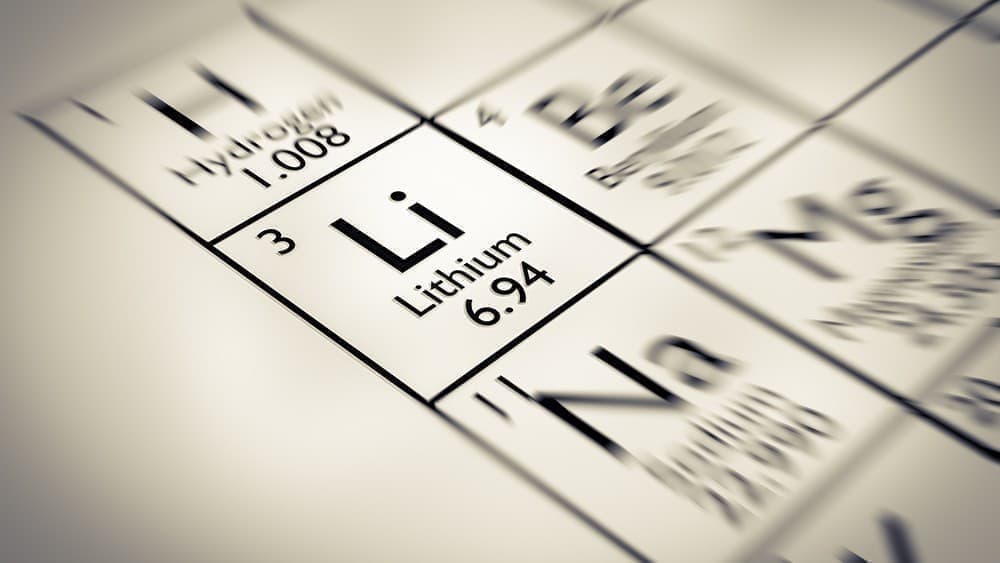
The world is ramping up its lithium production in a bid to meet the growing global demand for critical minerals, being driven by renewable energy deployment and the higher uptake of electric vehicles (EVs) and other electronics. Lithium production from mining increased from 31,500 metric tonnes in 2015 to 82,500 tonnes in 2020 and 290,000 tonnes in 2025. While China remains the world’s biggest lithium producer, as production expands, several new players are entering the market, which is helping to diversify operations.
The global lithium-battery market exceeded a value of over $150 billion in 2025, marking a 20 percent increase compared to 2024. “Batteries are becoming a cornerstone of the automotive sector, a critical source of flexibility for power systems, and an increasingly important source of back-up power for digital infrastructure, including data centres and artificial intelligence,” according to the International Energy Agency (IEA). Lithium-ion batteries are also used for industrial and strategic applications, such as in defence.
South America is the most well-known region for lithium production and is home to the lithium triangle, an area with vast lithium reserves connecting Bolivia, Argentina, and Chile. The region holds approximately 53 percent of the world’s lithium reserves. The three countries, along with Peru, contain about 67 percent of proven lithium reserves and produce around half of the global supply, according to the U.S. Geological Survey.
China dominates global lithium production, having invested in some of the world’s largest mines, as well as increased its domestic production of the white gold. By 2027, China is expected to contribute around 32 percent of global lithium production from domestic projects and another 18 percent of production from overseas operations, giving Chinese companies control of around half of the global lithium market. However, China holds a much larger control of the lithium refining market and is expected to manage around 81 percent of lithium refining activities by 2027.
Western powers are, therefore, highly dependent on China for their lithium supply. Its strong hold of the lithium market has also led China to dominate global lithium-ion battery production, which has bolstered its electronics industry. In January, the United States announced plans to boost self-sufficiency and reduce its reliance on China for its lithium by rapidly expanding domestic mining activities.
In October, the U.S. Department of Energy took a 5 percent stake in Lithium Americas Corp and a separate 5 percent stake in the company’s Thacker Pass joint venture with General Motors, which is expected to be the largest lithium source in the Western Hemisphere.
At the time, the U.S. Energy Secretary Chris Wright stated, “Despite having some of the largest deposits, the United States produces less than 1% percent of the global supply of lithium. Thanks to President Trump’s bold leadership, American lithium production is going to skyrocket.” Wright added that the move is aimed at reducing U.S. dependence on foreign adversaries for critical minerals by strengthening domestic supply chains.
The United Kingdom is also looking to develop its domestic lithium production through the development of a mine in the south-west county of Cornwall, to be operated by Cornish Lithium. While traditional mining methods will be used to extract the lithium, such as drilling and blasting in a quarry, the project’s operators are adamant that environmental permits are very strict, meaning that the firm will be expected to be sustainable where possible and dispose of waste appropriately.
Meanwhile, certain byproducts attained from the extraction process can be useful, such as silica for cement, sulphate of potash for fertiliser, and gypsum for plasterboard. The firm aims to develop more sustainable mining practices where possible, such as in the use of electric trucks. This is particularly important for the project’s success, as several other European lithium projects have faced backlash from locals and environmentalists concerned about the impact of mining on the environment, as seen in both Portugal and Serbia.
Canada also has its sights set on sustainable lithium mining. At present, Canada produces around 6,000 tonnes of lithium a year, compared to Australia’s 88,000. In Western Canada’s Alberta, which is well known for its oil production, researchers are hoping to use a new extraction method to produce lithium more sustainably. The direct lithium extraction (DLE) method does not require solar evaporation – which is used in South American lithium mining – to extract the lithium, instead, it relies on chemicals to extract the lithium directly.
Ngai Yin Yip, a professor of earth and environmental engineering at Columbia University, recently published a study about a solvent that researchers believe can be used to extract lithium from brine. So far, this method has only been practised in the lab, but the promising lab results have encouraged a company called Piepgrass to test the method at scale, in real-world conditions.
As the global lithium market continues to grow, several new players are entering the industry. Although China will likely maintain its market dominance, the United States is expected to make strides in lithium extraction and processing in the coming years, while some European companies develop smaller projects. In addition, a greater emphasis is expected to be placed on sustainable lithium production to help governments achieve decarbonisation aims in line with a green transition.
By Felicity Bradstock for Oilprice.com
More Top Reads From Oilprice.com
Oilprice Intelligence brings you the signals before they become front-page news. This is the same expert analysis read by veteran traders and political advisors. Get it free, twice a week, and you’ll always know why the market is moving before everyone else.
You get the geopolitical intelligence, the hidden inventory data, and the market whispers that move billions – and we’ll send you $389 in premium energy intelligence, on us, just for subscribing. Join 400,000+ readers today. Get access immediately by clicking here.








Leave a Reply