During his five years as a Fed governor, Kevin Warsh routinely raised concerns about inflation and protecting central bank credibility by ensuring inflation expectations remained anchored, even as he voted throughout most of his tenure to either hold interest rates steady or lower them.
Warsh, President Trump’s nominee to be the next chair of the Federal Reserve, served on the Fed from 2006 to 2011. A review of his speeches during that time and transcripts of policy meetings paints a picture of an inflation hawk by philosophy but a data-driven practitioner.
“In all likelihood, he’ll follow the pattern that the FOMC has shown for years, and that is let the data tell you what’s the right policy,” former Atlanta Fed president Dennis Lockhart said in an interview. “He understands that.”
As a governor on the Federal Open Market Committee, Warsh joined the committee’s consensus on every vote and never dissented.
That included three rate hikes when he first came on in 2006, then holding steady, and finally cutting rates with the onset of the financial crisis. The Fed held rates near zero well past Warsh’s time at the Fed board as ripples from the deep recession persisted.
During the Fed’s April 2008 policy meeting, just four months before Lehman Brothers failed, Warsh expressed concern about inflation and the health of the job market.
While Warsh voted for a 25 basis point cut at that meeting, he warned that continuing to cut rates could foster the perception that the Fed has a greater tolerance for inflation than is prudent, which could push up inflation expectations.
“I’d say we also have to be prepared when we next meet to hold the line, even if we see a retracing of some of the improvements in financial markets,” Warsh said at the meeting.
President Trump’s Federal Reserve chair nominee, Kevin Warsh, second from left, sits on a panel at the Semafor 2024 World Economy Summit on April 18, 2024, in Washington, D.C. (Tasos Katopodis/Getty Images for Semafor) ·Tasos Katopodis via Getty Images
He noted that officials should telegraph after the meeting that the Fed was cutting, with the expectation of holding rates steady after that day.
After the worst of the crisis had passed, in September 2009, the Fed indicated it would hold rates at near zero for an “extended period.” Warsh, striking a hawkish note, warned that if they waited to raise rates until the economy returned to normal growth, they would “almost certainly have waited too long,” creating an inflation problem.
Read more: How jobs, inflation, and the Fed are all related
This past year, confronting both a weaker job market and higher inflation, the central bank has grappled with which side of its dual mandate was farther off course. With inflation down but still elevated, a divided Fed opted to cushion much weaker payroll growth by cutting rates three times last fall.
In March 2010, Warsh addressed this policy stance, arguing that accepting a little more inflation for lower unemployment was the primary basis for high inflation in the 1970s.
“By definition, an increase in an implicit inflation target would lead to an upward shift in inflation expectations,” Warsh said. “And how would a central bank make credible its promise that such a shift would be only a one-time event?”
More recently, Warsh has advocated for lower interest rates, arguing that the Fed should “discard its forecast of stagflation” and predicting that AI will be a “significant” force that boosts productivity and pushes down inflation, which will allow for lower rates.
He has said he doesn’t believe stronger economic growth necessarily translates to higher inflation.
“He’s going to have to build a consensus for whatever direction he thinks policy is going to go,” said former Cleveland Fed president Loretta Mester, who was a research director during Warsh’s tenure. “I don’t think we can say today necessarily what he’s going to advocate at the first meeting he attends as chair. We know his broad view of the economy from what he’s told us, but that’s different than what he might advocate at any particular meeting.”
Mester said she believes Warsh will make the case to the rest of the Fed for lower rates on the basis of lower inflation due to productivity from AI, but that he will have to build support for that view over the course of multiple meetings.
Read more: How the Fed rate decision affects your bank accounts, loans, credit cards, and investments
Jeffrey Roach, chief economist for LPL Financial, said a Warsh‑led Fed would likely mark a decisive pivot toward a more disciplined and more rules‑based central bank, with major implications across capital markets.
“A Fed under his leadership would likely emphasize price stability as the supreme objective, scale back discretionary interventions, and reduce reliance on large‑scale asset purchases,” Roach said.
That could push up long‑term interest rates as markets adjust to a world with a less interventionist central bank, Road added. With the Fed stepping back from suppressing yields, investors would demand higher compensation for risk, steepening the yield curve and enforcing a more market‑driven allocation of capital.
Warsh was also vocal during his tenure about protecting the central bank’s independence by keeping inflation expectations in check and not yielding to the “whims” of politicians.
In a speech on March 26, 2010, Warsh said the Fed’s credibility required “fierce independence from the whims of Washington and the wants of Wall Street, and from a pernicious short-termism that can undermine the proper conduct of policy.”
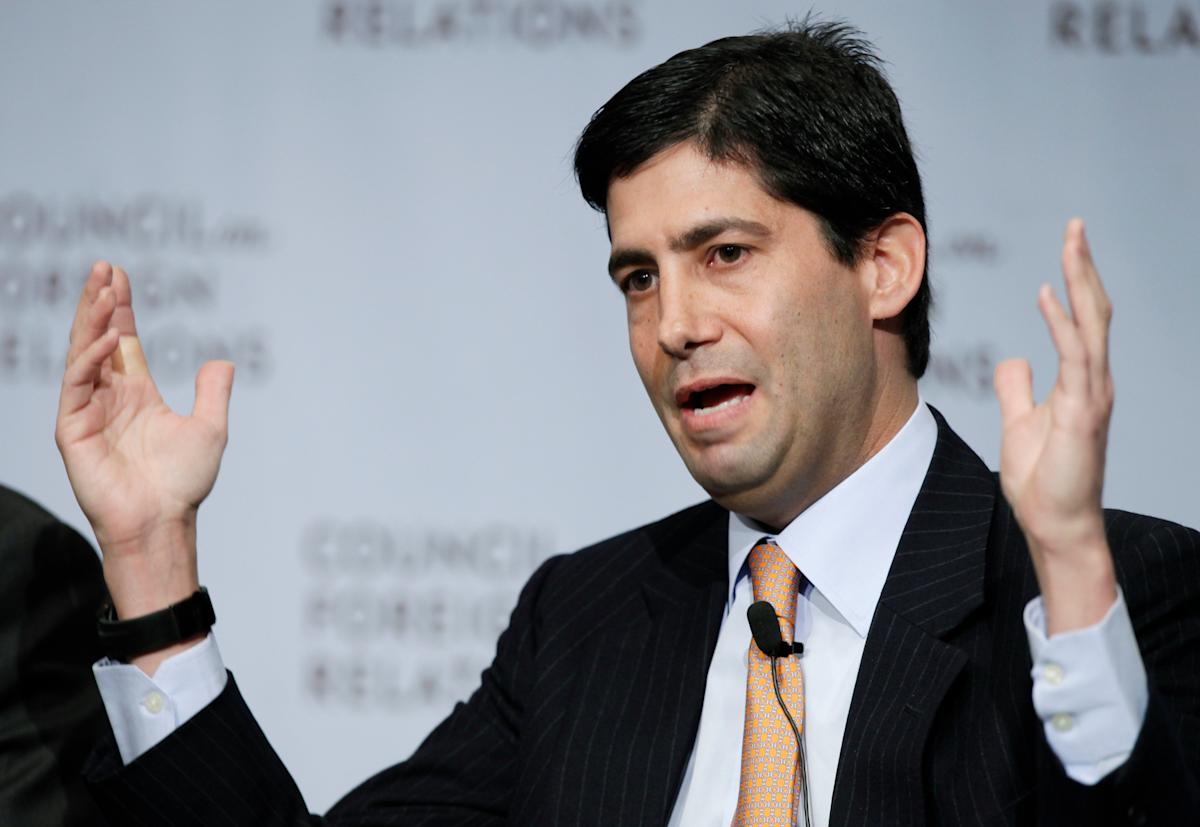
Kevin Warsh speaks during the Sohn Investment Conference in New York City on May 8, 2017. (Reuters/Brendan McDermid) ·Reuters / Reuters
Warsh will undoubtedly be under enormous heat from President Trump to lower rates, as well as possibly competing pressures from a divided Fed committee.
“He will have to show a certain amount of independence in order to keep the committee responsive to his preferences,” Lockhart said. “But at the same time, he is sort of expected to please the White House.”
Lockhart added, “It’s a very, very tricky tightrope that he’s going to have to walk, depending, of course, on the economic conditions that develop between now and June when he takes over.”
If the situation when Warsh takes over this summer is anything like today, Lockhart said Warsh will face real tension between the desires of the White House and the preferences of the committee.
“The Fed operates as scientifically as it possibly can, and therefore it means the decisions depend a lot on what the data tell you about the state of the economy and the direction of things,” Lockhart said. “I think he will have to respect that or he will lose his committee.”
Jennifer Schonberger is a veteran financial journalist covering markets, the economy, and investing. At Yahoo Finance, she covers the Federal Reserve, Congress, the White House, the Treasury, the SEC, the economy, cryptocurrencies, and the intersection of Washington policy with finance. Follow her on X @Jenniferisms and on Instagram.
Click here for the latest economic news and indicators to help inform your investing decisions
Read the latest financial and business news from Yahoo Finance




Leave a Reply