
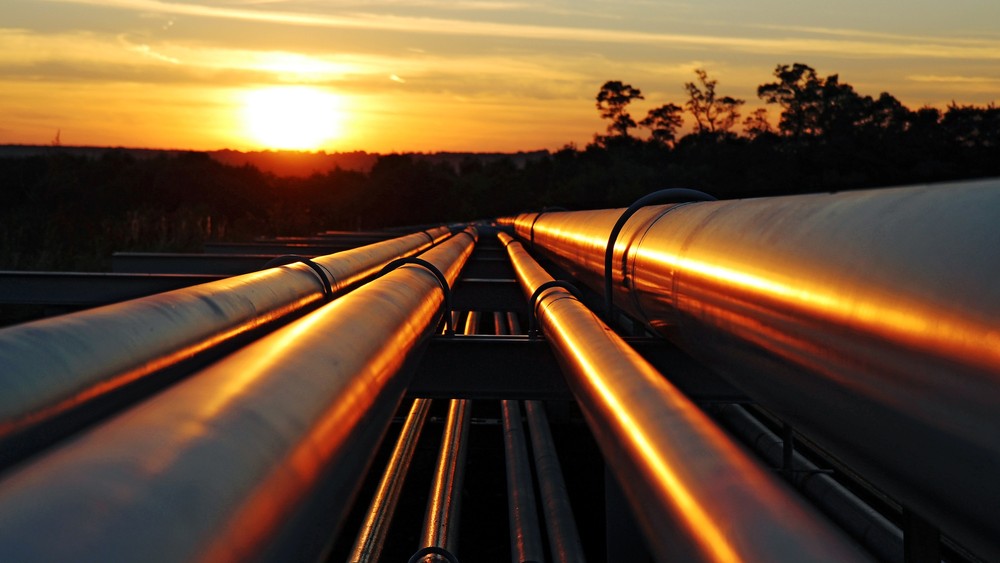
Kinder Morgan delivered a robust set of first-quarter results, underscoring the strength of its natural gas-focused midstream business as demand for U.S. gas infrastructure continues to expand.
The Houston-based pipeline giant reported net income of $976 million for the first quarter of 2026, up from $717 million a year earlier, while adjusted net income climbed 39% to $1.06 billion. Earnings per share rose 38% to $0.44, with adjusted EPS up 41% to $0.48. Adjusted EBITDA increased 18% to $2.54 billion.
The company also approved a quarterly dividend of $0.2975 per share, a 2% increase year-on-year, reinforcing its commitment to steady shareholder returns.
Its performance was primarily fueled by its Natural Gas Pipelines segment, which benefited from a combination of structural demand growth and weather-related tailwinds. Transport volumes rose 8% year-on-year, while gathering volumes increased 15%, reflecting stronger throughput across key systems.
Cold weather during the quarter, particularly winter storm activity, boosted demand for gas-fired power generation, while LNG-related flows also supported volumes, highlighting the growing linkage between U.S. gas infrastructure and global energy markets.
The company emphasized that its largely fee-based business model, underpinned by long-term take-or-pay contracts, continues to shield it from commodity price volatility, even as geopolitical tensions, from the Middle East to Ukraine, create turbulence in global energy markets.
Its backlog reached $10.1 billion at the end of the quarter, with roughly 92% tied to natural gas projects and nearly 60% linked to power generation and local distribution demand.
The company is advancing multiple large-scale pipeline and expansion projects across Texas and the Gulf Coast, including the Trident Intrastate Pipeline and South System Expansion projects, both aimed at boosting capacity to meet rising industrial, LNG, and power sector demand.
In addition, Kinder Morgan agreed to acquire the Monument Pipeline system for $505 million, expanding its footprint in the Houston area and strengthening its connectivity to LNG exporters and industrial users.
Beyond natural gas, other segments also contributed to the earnings uplift. Terminals benefited from higher rates and fees at key hubs like the Houston Ship Channel, while the Products Pipelines segment saw gains from favorable pricing dynamics and regulatory outcomes.
However, some areas showed mixed trends. Refined product volumes declined slightly, and crude and condensate volumes fell due, in part, to asset conversions, reflecting ongoing portfolio optimization.








Leave a Reply