
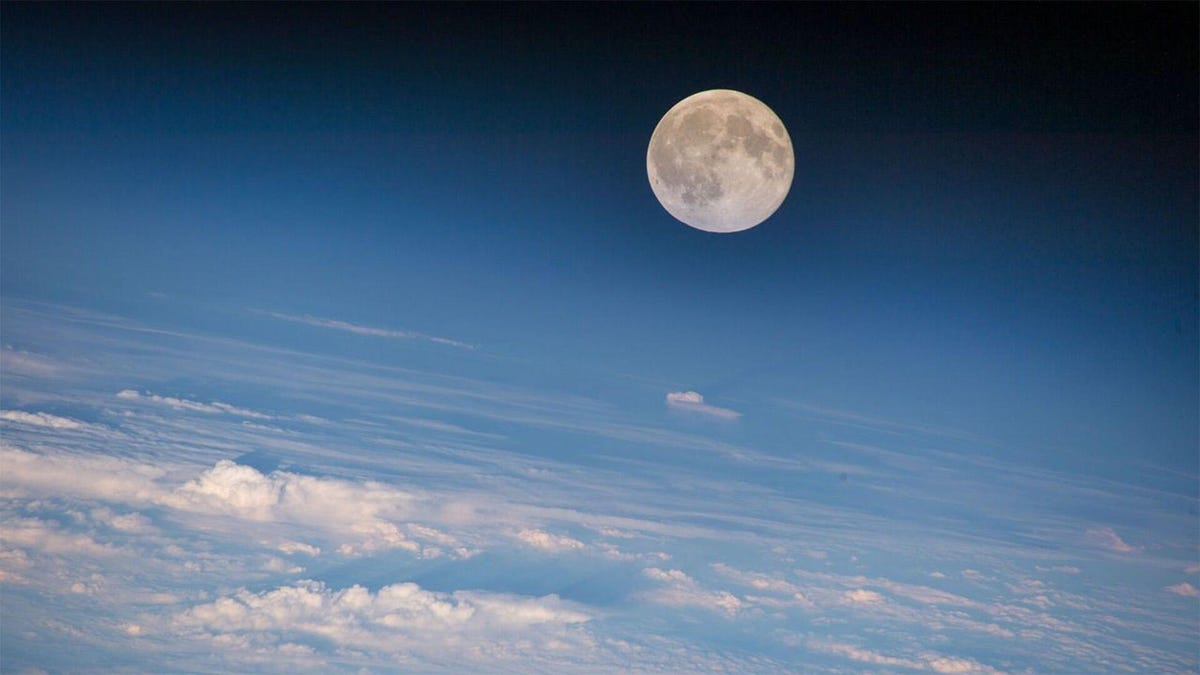
May is hosting one of the most interesting lunar events of the 2026 calendar year: two full moons. Its first full moon is on May 1, leaving just enough time for a second full moon on the last day of the month, May 31. The second full moon in a single month is known as a blue moon, which inspired the “once in a blue moon” saying for something rare.
According to The Old Farmer’s Almanac, the first full moon in May reaches its peak brightness at 1:23 p.m. ET, or right in the middle of the day. The best time to see the full moon is the evenings of April 30 and May 1. You won’t need any help; it’ll be the brightest thing in the night sky. This moon is commonly called the Flower Moon, named in honor of the spring flowers blooming right now.
The second full moon reaches its peak brightness at 4:45 a.m. ET on May 31. Since it’s the second full moon of the month, it is called a blue moon.
Supermoons appear up to 14% larger and 30% brighter than micromoons.
Both moons are also micromoons, which means they are smaller and less bright than a regular full moon. This happens because the moon is in apogee, the point in its elliptical orbit when it is farthest from Earth. The moon stays in apogee for three to four months every year, and both of May’s full moons take place during this time. When the opposite occurs, it’s called perigee, and that’s when Earth gets a supermoon.
It takes a whole month for a blue moon to occur, but there are some other things you can look out for in the meantime. The week before and the week after May’s new moon is prime viewing time for Earthshine, a phenomenon where you can see the dim part of the moon. That gives May four lunar events to enjoy for your viewing pleasure.
Two kinds of blue moons
The last blue moon of this type occurred in August 2023. But if you think you remember the term being tossed around more recently, you’re right. There’s also a seasonal blue moon, which refers to the third full moon in an astronomical season of four, and that happened in 2024.
One season typically spans three months and therefore usually gets only three full moons. But because the seasons don’t begin and end on the first and last of particular months, it’s possible to get a fourth full moon in a single season. That fourth full moon in the season is known as a seasonal blue moon. The next seasonal blue moon is expected to hit in May 2027.
When the above happens with new moons instead of full moons, it’s known as a black moon, which most recently occurred in August.
Monthly blue moons occur when one calendar month gets two full moons instead of the usual one. The moon orbits Earth every 27.3 days, and goes from one new moon to the next new moon in about 29.5 days. Since all but one month are 30 days or longer, that means there’s the opportunity for two full moons to occur in a single month in any given month not named February.
Since the moon cycle is 29.5 days, that means each successive full moon happens earlier and earlier as the months go by. This continues until the full moon happens on the first day of a month that is long enough, therefore giving the moon enough time to circle the Earth and become full again before the month ends. Blue moons are mostly quirks of the calendar system, so the moon isn’t doing anything terribly special. The timing is pretty cool, though.
This cycle takes approximately 29 months to repeat. The next monthly blue moon is slated for December 2028, followed by September 2031. So, if you’re ever asked how often something occurs if it happens “once in a blue moon,” you now know the answer.














Leave a Reply