Luxury’s comeback? Why one leading bank thinks the sector is about to rebound Proactive uses images sourced from Shutterstock
After two years of disappointing growth, a new report from HSBC argues that luxury’s slowdown is ending. The surprising driver is not just China. It is the US consumer, wealth effects from stock markets, and a long-overdue reset in pricing and creativity.
Luxury has had a rough couple of years. Sales growth stalled in 2024 and barely improved in 2025, leaving investors questioning whether the industry’s long golden era had finally peaked.
But according to a new global sector report from HSBC, the worst may already be behind it. The bank expects luxury sales to rebound meaningfully in 2026, with growth returning to levels much closer to the industry’s long-term average.
If HSBC is right, luxury could soon move from being one of the market’s most doubted sectors back to one of its most attractive.
A sector coming out of a self-inflicted slowdown
HSBC’s thesis is simple but blunt: luxury’s recent slowdown was not primarily macroeconomic.
It was largely self-inflicted.
Over the past few years, many brands pushed aggressive price increases while offering limited product innovation. This phenomenon, sometimes labelled “greedflation”, left consumers feeling that prices were rising faster than perceived value.
At the same time, creative stagnation and constant leadership changes across major houses weakened brand momentum.
The result was a sector that looked increasingly tired just as macroeconomic uncertainty was rising.
Now, HSBC believes that cycle is reversing. Pricing has become more reasonable, merchandising pipelines are improving, and several brands have refreshed creative leadership.
In short, the industry is rebooting.
The US wealth effect is back
The biggest surprise in the report is the role of the United States.
While much attention in luxury always focuses on China, HSBC argues that US wealth creation may be the strongest driver of growth in 2026.
The logic is straightforward. Luxury spending has historically been tightly correlated with equity market performance in the US.
When stocks rise, wealthy consumers feel richer and spend more.
With equity markets near record highs and consumer confidence among high-income households improving, HSBC expects American luxury demand to grow at high single-digit rates this year.
That alone could significantly lift global sales.
China is stabilising rather than collapsing
China remains the most debated market in luxury.
Despite concerns about property weakness and youth unemployment, HSBC’s view is that the Chinese luxury consumer is not disappearing.
Instead, demand is stabilising and gradually improving.
New product launches and retail initiatives have already started to lift performance at several brands. The report notes that many investors may be overly pessimistic about China’s trajectory.
Rather than a dramatic rebound, HSBC expects steady growth driven by higher-income consumers.
A return to normal growth
Putting the pieces together, HSBC forecasts around 7% organic sales growth for the luxury sector in 2026.
That would represent a meaningful acceleration after two years of stagnation.
The growth drivers are expected to break down roughly as follows:
United States: around 10% growth
China: about 8% growth
Rest of Asia: low double-digit growth
Europe: modest growth supported by tourism
Importantly, most of the growth is expected to come from volume rather than price increases, signalling a healthier demand environment.
HSBC’s stock recommendations
Beyond the macro story, HSBC is also making a strong call on luxury equities.
The bank now has buy ratings on nearly the entire sector, arguing that investors may be underestimating how quickly sales momentum could return.
Among its preferred names are:
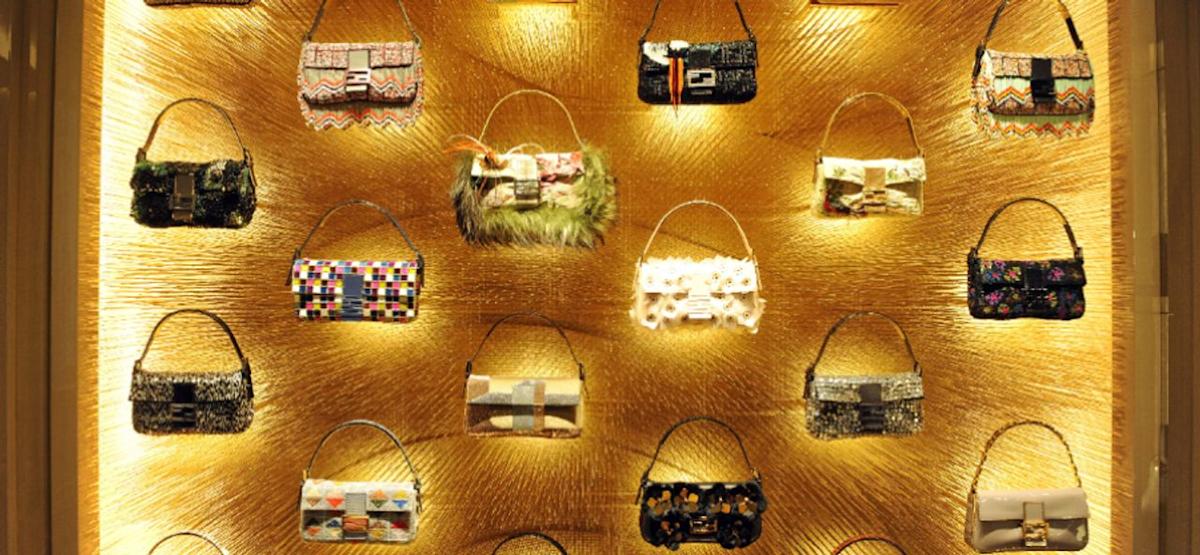
Hermès Still the benchmark for pricing power and brand strength. HSBC expects the company to return to around 10% organic growth in 2026, supported by price increases and continued demand for leather goods.
Moncler One of the fastest expected growers in the sector, with forecast sales growth of roughly 10%. HSBC believes concerns about slowing demand in China have been overstated.
Richemont The owner of Cartier and Van Cleef & Arpels continues to benefit from strong jewellery demand, which tends to be more resilient than fashion.
Prada Viewed as one of the most undervalued luxury names, despite concerns around the potential acquisition of Versace and fears of a slowdown at Miu Miu.
HSBC also recently upgraded Hermès, Kering and Moncler to Buy, signalling a more broadly positive stance on the industry.
Burberry: a turnaround story
One of the most interesting calls in the report is Burberry.
The British brand has struggled over the past two years, with declining sales, heavy discounting and collapsing margins damaging investor confidence.
HSBC argues that much of the recent period has been a clean-up phase.
New CEO Joshua Schulman has been working to reposition the brand through a strategy known as Burberry Forward, focused on restoring the company’s heritage strengths in outerwear and reducing promotional activity.
Early signs of improvement are beginning to appear. Comparable retail sales returned to positive growth in late 2025, supported by improving demand in China and stabilising performance in Western markets.
HSBC expects Burberry’s recovery to be gradual:
Sales stabilising in 2026
Margins rebuilding over the next two years
Stronger operating leverage emerging by 2027–2028
Because the starting point is so depressed, even modest improvement could drive a meaningful rebound in profitability.
That is why HSBC still maintains a Buy rating on the stock, seeing significant upside if the turnaround gains traction.
The paradox: investors are still sceptical
Perhaps the most interesting observation in the report is the timing.
Luxury stocks rallied in 2025 when investors were hopeful about recovery. But as signs of improvement began to appear, many investors moved away from the sector.
HSBC argues that this scepticism may create an opportunity.
Luxury valuations are not cheap, but the sector is historically momentum-driven. Once sales growth begins to accelerate again, earnings upgrades and renewed investor interest tend to follow.
If the bank’s outlook proves correct, luxury could be entering the early phase of its next growth cycle.
And after two frustrating years, the industry may finally be ready to justify the phrase investors have long used to describe it.






Leave a Reply