
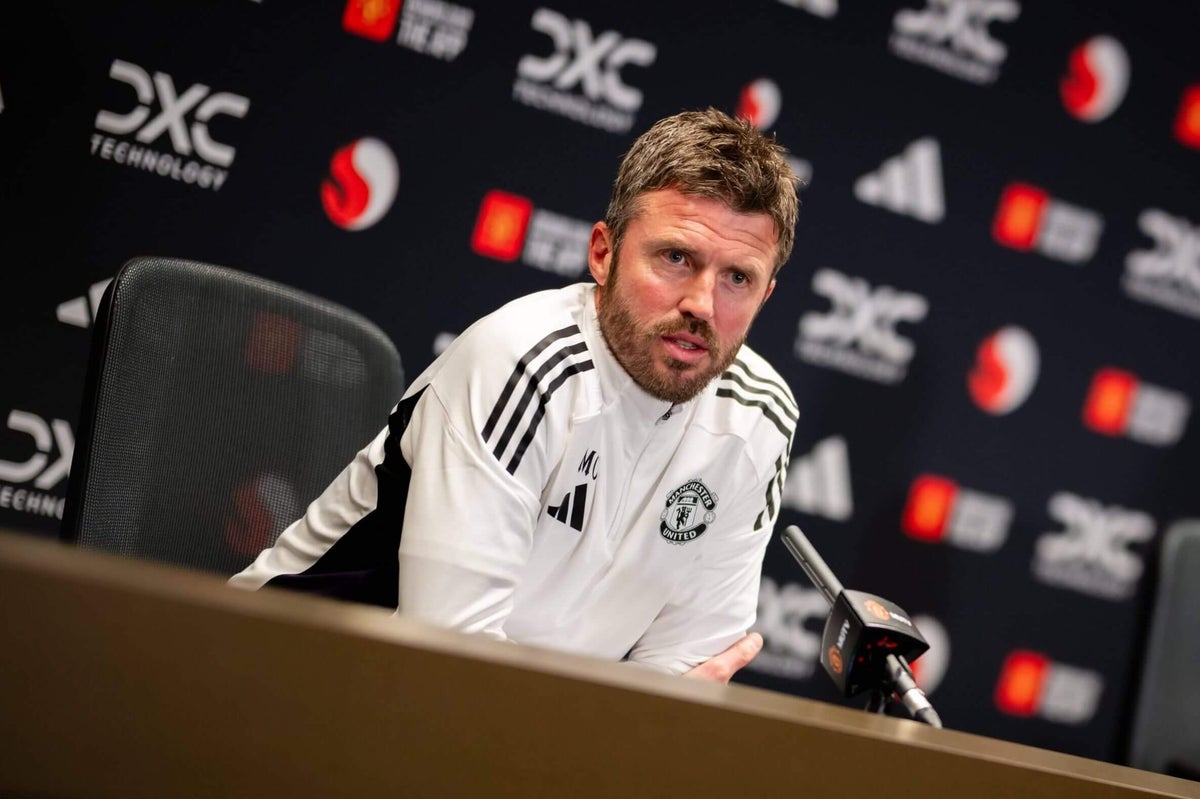
It is probably safe to conclude, after Michael Carrick’s debut press conference as Manchester United’s head coach, that his final days in charge will not be played out in public like his predecessor’s.
While Ruben Amorim rocked the boat in his last appearances as a United employee, Carrick’s instinct is to steady the ship and keep it on course. For that, those in power at United, who are now under more scrutiny than ever, will be thankful.
Carrick carries himself in coaching as he did during his playing days, picking his words like he picked his passes: steady, unflustered, astute.
Certainly, he expressed a collegiate mindset when the subject of team selections was raised, a key matter that triggered the end of Amorim’s reign. Amorim felt encroachment onto his area of expertise when questioned by director of football Jason Wilcox about the way the side was lining up.
Asked whether such conversations had taken place, Carrick said: “Nothing different to any other team in terms of putting players on the pitch that we think will fit, and a good balance, and depending on who we’re playing against, what it looks like, where’s our strength.
“That’s on me and my coaches and the staff to put that together. I’m flexible at times. But it’s obviously up to me and my staff to find that formula.”
Carrick’s position as ‘interim’ head coach puts him at a different status to Amorim, so his collaboration and adaptability is only natural, even though he will, of course, pick the side. He knows it is still he who must account for selections and results.
His three-game stint in caretaker charge of United in 2021 showed his tactical flexibility, but also a certain steel.
In United’s 2-0 win at Unai Emery’s Villarreal, Carrick put Marcus Rashford and Bruno Fernandes on the bench, with Fred given licence to get forwards out of possession to win the ball high up.
Carrick then dropped Cristiano Ronaldo for the 1-1 draw at Thomas Tuchel’s Chelsea, with United operating mostly a 4-4-2 diamond. Ronaldo was back, scoring twice, in a 4-2-3-1 in Carrick’s final game, the 3-2 win over Mikel Arteta’s Arsenal.

Michael Carrick with Cristiano Ronaldo during his 2021 spell as interim (Clive Rose/Getty Images)
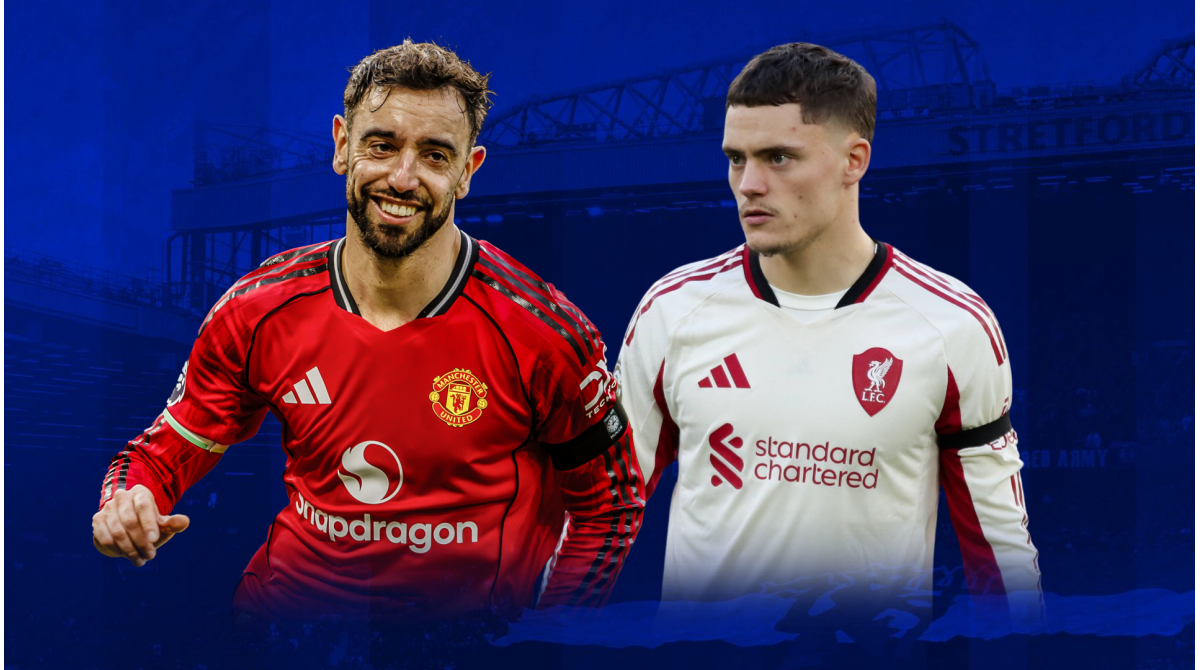
Ahead of the Manchester derby, he has an immediate conundrum against Pep Guardiola — quite the quartet of opening opposition managers for Carrick in United’s dugout — now that Bryan Mbeumo and Amad are back from AFCON and vying for the front four spots with Fernandes, Benjamin Sesko and Matheus Cunha.
This time, Carrick has 17 games in charge, with Wilcox telling players the aim should be Champions League qualification, given the fluctuating form, and European participation, of several rivals.
Carrick’s only previous role of this type came at Middlesbrough in the Championship, where he instigated a rise to the play-offs in his first season before finishing eighth and 10th in his subsequent campaigns.
His United heritage — which includes assistant roles under Jose Mourinho and Ole Gunnar Solskjaer, as well as a glittering playing career — won him this job, but he insisted he is ready for the challenge.
“I’ve never really thought about it like that; I just feel comfortable, I feel at home,” he said. “Not comfortable in the fact that it’s nice and everything’s great. It’s comfortable in the fact that I’m happy in my skin, happy in this role, I know what it takes. I’ve worked closely with Jose and Ole for some time, so when I took over, it felt quite a natural step.
“I understand the questions and that’s how it is, you always question until you’ve achieved something. All I can say is I feel I’m ready and I’m really looking forward to getting to work.”
As far as snuffing out any risk of making this a theatrical opening address, he declined the invitation to equate finishing outside the Champions League places as failure.
“You’ve got to be careful about what’s a success and what’s a failure. It’s not as clear-cut as that; I think success is building and improving. There’s no getting away from the fact that this club should be there.”
Carrick also took the sting out of the inevitable Roy Keane question. Keane used Gary Neville’s Overlap as his platform to take vengeance on a 12-year grudge with Carrick’s wife over his previous criticism as a pundit. “Honestly, it didn’t bother me,” Carrick said of the man from whom he inherited United’s No 16 shirt.

Michael Carrick said he was not bothered by comments from Roy Keane (Ash Donelon/Getty Images)
Carrick’s coaching staff of Steve Holland, Jonathan Woodgate, Jonny Evans, and Travis Binnion also drew Keane’s ire.
Carrick responded: “There are a lot of opinions, a lot can be said. It is the way of the world, I’m not going to pay too much attention to most of that.”
In fairness, even Amorim sidestepped the barbs of Keane.
All this baggage that comes with management is perhaps why Carrick has previously expressed to friends he would be reluctant to dive back in. He will lean on Holland especially for running sessions but he is happiest out on the field, firing passes into players as a coach. His quality to demonstrate his demands drew him admiration from United’s squad when he was last at the club.
How his time in charge goes now will dictate the mood among the fanbase, which is febrile at the turn of events. There is significant attention on Sir Jim Ratcliffe, chief executive Omar Berrada, and Wilcox for hiring Amorim, knowing his system, backing him through terrible results, only to dismiss him amid disputes over a system change. Fans are also protesting the Glazers for their ruinous regime that has drained the club of more than £1billion ($1.3bn).
Carrick spoke to Ratcliffe, and Joel and Avram Glazer during their visit to Carrington on Thursday. “They wished us all the very best,” said Carrick.
He might well need that luck, but Carrick is adamant that United still carries a special feeling. Indeed, he transmits the energy of someone who has won all there is to win.
“I certainly don’t think it’s soulless, I think there’s a magic around this place,” he said. “Part of my role and responsibility is shaping what we want to look like going forward as a group.
“What happens on the pitch and the tactical side and the performances is one thing, but certainly the culture as well and how we think, how we act, how we behave, what it means to us to be here, that’s something that is part of my responsibility to spread in the right way.”




Leave a Reply