
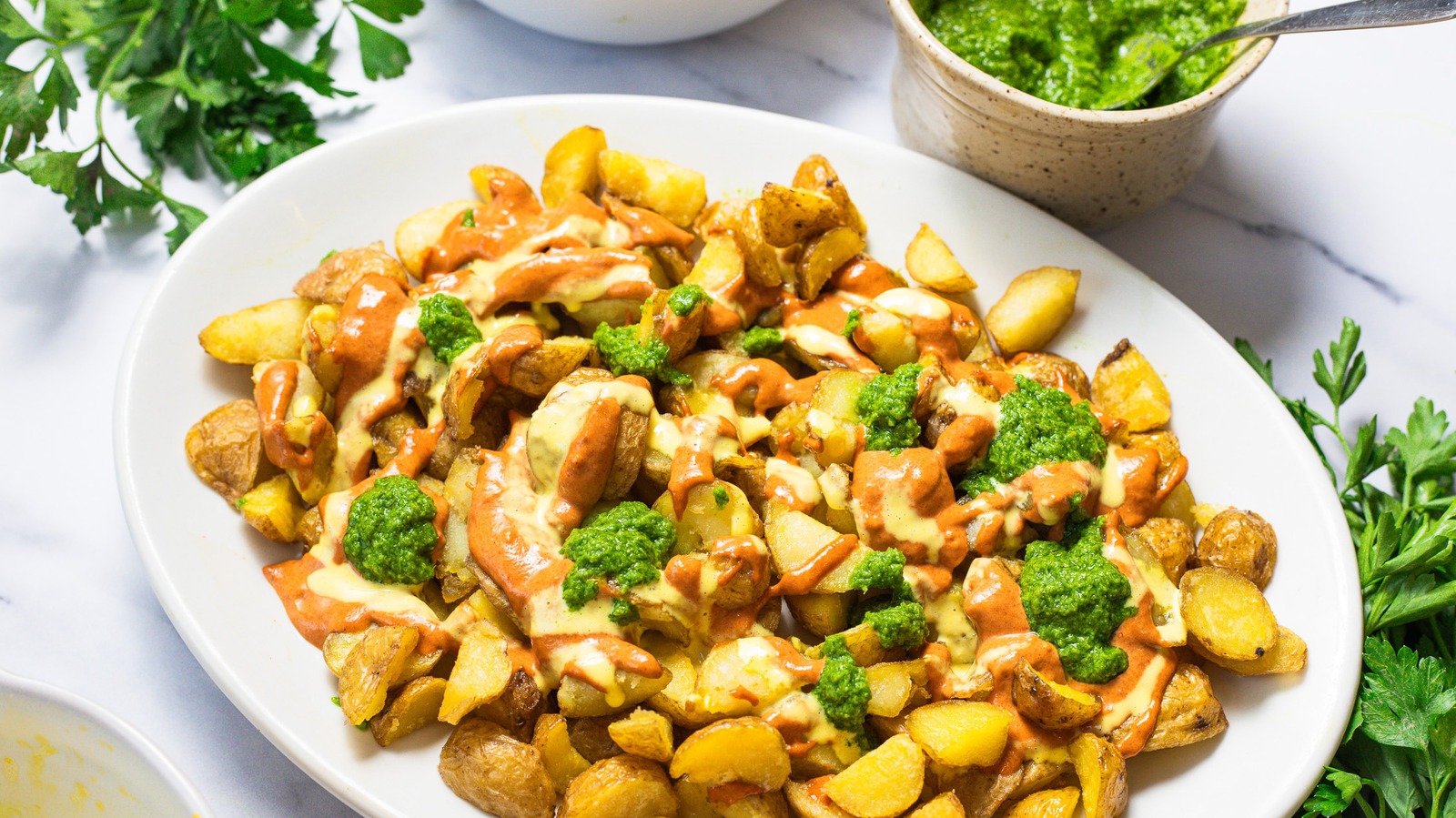
As a food blogger who has been to Barcelona many times, my attempt at nailing “the best” version of classic patatas bravas spread across a few areas: the potatoes themselves, cooking method, and the sauces. For the potatoes, we tested out potatoes large and small, red, white, and yellow, creamy and crunchy. We found that the best for the dish are yellow, preferably creamy, and ideally small potatoes, in that order of importance. This achieved the best texture both for a tender inside and for the crispiest exterior. We also loved quartering the small potatoes because each piece could be eaten in one bite. As for how they’re cooked, the answer to that was classic: blanching and then frying in oil was the best approach.
For the sauces, we went fairly traditional with the raw yolk alioli and the pimentón, or smoked paprika, sauce. Where we deviated was the green sauce. Having tried plenty of patatas bravas that simply added a few leaves of parsley, and then a few select recipes that turned the parsley into a zesty, tangy sauce, we greatly preferred the latter. For our best classic variation, we knew we had to offer a version of parsley sauce that would lift up the entire dish. The resulting dish is a creamy, spicy, and tangy nod to the original.
Our best classic patatas bravas recipe transforms the essential Spanish tapas dish into a dish any home cook can whip up in their own kitchen. All you need is a bit of attention to detail.
Gather the ingredients for our best classic patatas bravas recipe
For the fried potatoes that form the base of this dish, we’re going to go with baby creamer potatoes, salt for water, and vegetable oil for frying. If you cannot find baby creamer potatoes, Idaho gold, also known as chef Jose Andres’ preferred potato for patatas bravas, also work.
For the pimentón sauce, you’ll need mayonnaise, tomato paste, pimentón (smoked paprika), sherry vinegar, garlic, cayenne pepper, and salt. For the alioli, garlic, egg yolk, vegetable oil, lemon juice, and salt are all you need. And for our ultimate green sauce, you’ll want to grab fresh parsley, vegetable oil, garlic, sherry vinegar, and salt. If you cannot find sherry vinegar and wonder if you actually need this Spanish original, then know that you can also use your preferred red wine vinegar variety, but it will lack some of the well-roundedness and sweetness.
Step 1: Boil the potatoes
Boil the potatoes in salted water for 8-10 minutes until they’re fork-tender but still holding their shape.
Step 2: Dry the potatoes
Drain the potatoes and pat them dry.
Step 3: Preheat the oil for frying
Add oil to fill a heavy pot or deep fryer about an inch deep, and heat it to 350 F.
Step 4: Fry the potatoes
Fry the potatoes in batches for 8-10 minutes until golden and crispy.
Step 5: Drain the potatoes
Drain the potatoes on paper towels, and season them with salt.
Step 6: Make the pimentón sauce
For the pimentón sauce, whisk the mayonnaise, tomato paste, pimentón, vinegar, garlic, and cayenne. Season with salt.
Step 7: Make the alioli
For the alioli, whisk the garlic and egg yolk together. Slowly drizzle in the oil while whisking constantly until emulsified. Whisk in lemon juice and salt.
Step 8: Make the green sauce
For the green sauce, blend the parsley, oil, garlic, vinegar, and salt until smooth.
Step 9: Garnish the patatas bravas
Transfer the potatoes to a serving bowl. Drizzle them with pimentón sauce and alioli. Top with dollops of green sauce.
Step 10: Serve the patatas bravas
Serve the patatas bravas immediately.
What can I serve with patatas bravas?
Our Best Classic Patatas Bravas Recipe
Our best classic patatas bravas recipe tops tender-crispy potatoes with 3 piquant sauces: a garlic alioli, a smoky pimentón sauce, and a zesty parsley sauce.
- For the potatoes
- 2 pounds baby creamer potatoes, quartered
- 1 tablespoon salt for water
- Vegetable oil for frying
- ½ teaspoon salt
- For the pimentón sauce
- ½ cup mayonnaise
- 2 tablespoons tomato paste
- 1 tablespoon pimentón (smoked paprika)
- 1 tablespoon sherry vinegar
- 1 clove garlic, minced
- ¼ teaspoon cayenne pepper
- ½ teaspoon salt
- For the alioli
- 3 cloves garlic, minced
- 1 egg yolk
- ¾ cup vegetable oil
- ½ tablespoon lemon juice
- ¼ teaspoon salt
- For the green sauce
- 1 cup fresh parsley
- ¼ cup vegetable oil
- 2 cloves garlic, minced
- 1 tablespoon sherry vinegar
- ¼ teaspoon salt
- Boil the potatoes in salted water for 8-10 minutes until they’re fork-tender but still holding their shape.
- Drain the potatoes and pat them dry.
- Add oil to fill a heavy pot or deep fryer about an inch deep, and heat it to 350 F.
- Fry the potatoes in batches for 8-10 minutes until golden and crispy.
- Drain the potatoes on paper towels, and season them with salt.
- For the pimentón sauce, whisk the mayonnaise, tomato paste, pimentón, vinegar, garlic, and cayenne. Season with salt.
- For the alioli, whisk the garlic and egg yolk together. Slowly drizzle in the oil while whisking constantly until emulsified. Whisk in lemon juice and salt.
- For the green sauce, blend the parsley, oil, garlic, vinegar, and salt until smooth.
- Transfer the potatoes to a serving bowl. Drizzle them with pimentón sauce and alioli. Top with dollops of green sauce.
- Serve the patatas bravas immediately.
What is the origin of the three sauces in this recipe?
The three sauces that make up this patatas bravas recipe represent three different facets of Spanish culinary tradition. At their base level, they represent three main ingredients — namely smoked paprika, garlic, and parsley — which are paramount to Spanish cuisine. But in reality, they go much further.
Alioli is the Spanish variation on aioli, which is a variation of one of the French five mother sauces, an emulsification of fresh garlic and olive oil. This sauce can take different forms across Spain, sometimes with the addition of raw yolks, and sometimes going without. In our version, we chose the version with eggs, tempering it with lemon juice, as we feel this additional creaminess adds a lot to the flavor of the potatoes. The pimentón sauce uses smoked paprika, which is made out of a local pepper that is grown around and deeply tied to the Basque region. You simply cannot have patatas bravas without the combination of these two sauces.
Our modern addition, the green parsley sauce, enhances the dish’s already complex flavor with a bright, acidic note that cuts through all the creamy, pungent sauces. It’s the essential distillation of parsley, and we think that it truly heightens the flavor of this humble potato dish from a bar snack to a side worthy of a celebration.
What adaptations can you make to our best patatas bravas recipe?
If you want to change some elements of this classic patatas bravas recipe, you do have to tread lightly, as the dish is the product of a long tradition. And if there’s one thing European cuisine does not love, it’s change.
If you want to make a vegan version of this dish, using aquafaba as the base of a vegan mayonnaise is the best way to go. Make sure you keep the sauce garlic-heavy, and you should get the same body and emulsification as the original. Then you can use the same base in the pimentón sauce, adding more flavors while emulsifying in a blender to maintain the structure. You can also try to increase the heat in the dish by adding more cayenne pepper or harissa.
For the potatoes, while not traditional, making this with sweet potatoes adds a whole new dimension of caramelized flavor. The contrast between the vinegary parsley sauce and the orange tubers makes all the components sing, and the dish becomes even more layered and fascinating. We also sometimes love to simplify the dish by using small baby fingerling potatoes and frying them whole, then serving them with toothpicks for a real tapas vibe.









Leave a Reply