

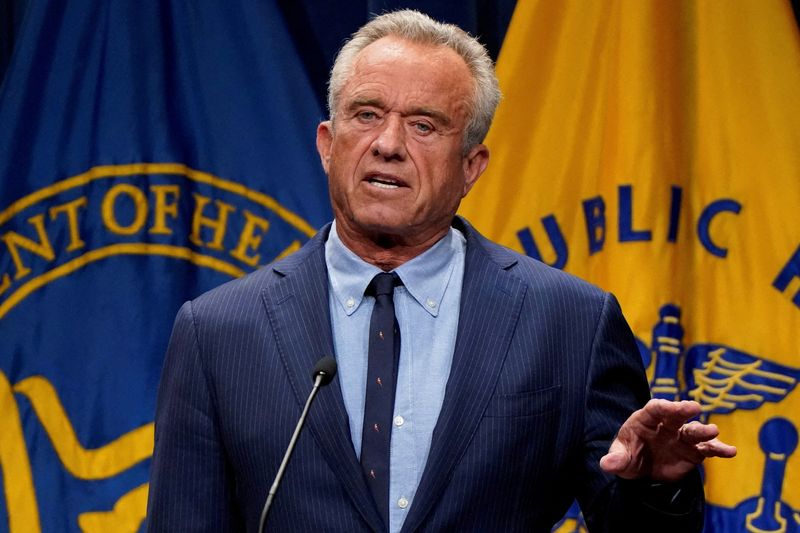
Although experts generally support the stated goals of programs targeting rural areas in HHS Secretary Robert F. Kennedy Jr.’s “Make America Healthy Again” initiative, many have questioned whether the actual policies are up to the task.
“Overall, the growing attention on rural health care and the barriers faced by rural residents is music to our ears,” Rebecca J. Schmidt, DO, FACP, FASN, assistant dean for rural outreach and community engagement, and professor of medicine in the division of nephrology, at West Virginia University School of Medicine, told Healio. “It is refreshing to note that the problems with access to care for rural residents are being recognized and that efforts to address access to care issues have entered the national dialogue.”

In December 2025, CMS announced all 50 states would receive awards as part of the Rural Health Transformation Program, a $50 billion initiative established under the One Big Beautiful Bill Act.
The awards ranged from $147 million to $281 million, with the average award being $200 million.
“Overall, I think the initiatives are welcomed in rural communities, where there are disproportionately high rates of conditions such as type 2 diabetes, heart disease and obesity,” Jessica Jolly, senior director of practice advancement at the American College of Lifestyle Medicine, told Healio.
However, she added that the awards’ impact must be considered in the context of recent reductions in federal and state health care funding.
“While the Rural Health Transformation Program’s focus on the specific needs of rural communities is exciting, those needs are great and the funding is less than the reductions states have experienced recently,” she said.
Similarly mixed opinions on the current administration’s efforts to improve rural health can be found across medicine.
“In general, these initiatives are well-intended,” Stephen M. Lindsey, MD, MACR, of the Louisiana State University Health Science Center, in New Orleans, told Healio. “They want to move the focus from treating disease to prevention of chronic illness. They want to address behaviors like diet and exercise to reduce obesity. All of this will improve health in rural communities.

Stephen M. Lindsey
“However, there is nothing in the MAHA policy where they really address expanding rural health care or how to improve assistance in Louisiana,” he added. “What I am seeing is private systems are doing expansions by buying smaller hospitals. They are not doing it as part of the MAHA initiative, they are doing it as profit sources. In the long run, it may be helping rural patients, but it is hard to say.”
Meanwhile, Terry L. Moore, MD, FACP, FAAP, MACR, director of the divisions of adult and pediatric rheumatology at Cardinal Glennon Children’s Hospital in St. Louis, Missouri, and professor of internal medicine, pediatrics and molecular microbiology and immunology at Saint Louis University Medical School, suggested that other messages that have emerged from Kennedy’s office and the MAHA movement in general, including vaccine skepticism, could be counterproductive to the rural health.

Terry L. Moore
“Missouri is a very red state,” he said. “We have young patients coming into our clinic with juvenile arthritis and connective tissue disease on immunosuppressives and they have had no flu shot, no COVID shot — they are reluctant to do any immunization. We have seen a few cases of measles. This is going to impact patient outcomes regardless of the other measures that are part of this initiative.”
A close look at the language of the initiative and its specific components could hold clues to how rural communities and patient populations will be impacted.
‘Just rhetoric’
The Rural Health Transformation Program contains several platforms that aim to bring health care to places that are difficult to reach.
“States will advance Make Rural America Healthy Again goals by expanding preventive, primary, maternal and behavioral health services, and creating new access points that bring care closer to home and help preserve strong local health systems,” HHS said in a statement.
“Many states are implementing evidence-based, outcomes-driven strategies — such as physical fitness and nutrition programs, food-as-medicine initiatives, and chronic disease prevention models — to address root causes of diseases and manage chronic conditions,” the statement continued. “States will also strengthen rural emergency care through improved emergency medical services (EMS) communication, treat-in-place options, and coordinated transfers.”
The program also includes provisions to upgrade the rural clinical workforce, drive structural efficiency and empower community providers, modernize rural health infrastructure and technology, and advance innovative care models and payment reform, according to the statement.
“In general, the need for a nationwide commitment to strengthen rural health care cannot be overemphasized,” Bethany Pellegrino, MD, division chief of nephrology and nephrology fellowship program director at the West Virginia University School of Medicine, said in an interview. “The components of this initiative are noble and signify the recognition that health care in rural America, particularly that which addresses chronic illness, could be greatly improved.”

Bethany Pellegrino
However, for some, the issue is not the platforms themselves but how they will work in practice. Many experts who spoke with Healio voiced concerns that the MAHA initiatives, as stated, are not enough to provide people the resources they need to be healthy.
“The MAHA initiative suggests that people should eat good food, but they can’t get it because they can’t afford it,” Lindsey said. “We need to reach these populations with healthy alternatives at affordable prices. I do not see a lot of action on that front. I hear a lot of rhetoric. It is good rhetoric, but it is still just rhetoric.”
According to Schmidt, failure to generate material improvements among these communities through concrete action could result in further declines in health and outcomes.
“The need for improvement is illustrated by the density of chronic illness found among rural residents, a sector of the population who face unique barriers to accessing health care,” she said. “Higher rates of chronic diseases and preventable conditions are common in rural regions, with rural residents being older and at higher risk for poor health outcomes, including a higher risk for death from heart disease, cancer, unintentional injury, chronic lower lung disease and stroke than their urban counterparts.”
According to Pellegrino, geographic and socioeconomic barriers for patients living in rural areas can be “dire.”
“Rural residents often travel long distances for basic health care and may face poverty and inadequate resources making it difficult to travel,” she said. “Bringing more care within reach is key to addressing these challenges.”
One way to address this barrier would be to expand the rural health care workforce.
Workforce investments ‘critical’
Training, residencies, recruitment and retention incentives are encouraged in the Health Transformation Program, according to HHS. Emerging professionals may have pathways to remain in practice in their own rural communities, while states are urged to invest in programs that will keep health care professionals local.
“Workforce investments are critical, given long-standing challenges with recruitment and retention of clinicians in rural areas,” Jolly said. “New funding and training opportunities would create a pathway for clinicians living in rural communities to access health care workforce training and help fill these roles, and also make these communities more attractive to outside health professionals.”
General practitioners and specialists alike are needed in rural communities, according to Pellegrino.
“The clinical workforce is tenuous in rural and medically underserved regions, which often lack a sufficient cadre of primary care and specialty providers, making access to even essential services difficult and the receipt of preventive care all but impossible, leading to delayed diagnoses and worse health outcomes,” she said.
All of the experts who spoke with Healio agreed that a workforce shortage exists in rural areas. What is not so clear, however, is how specifically to address the shortage and improve workforce figures in these areas.
That said, a recent program for training rheumatology fellows at Louisiana State University, which Lindsey helped create, may offer a new way forward.
“When you put a new program in a larger area, and when you train people there, they tend to stay in that area,” he said.
As part of the LSU program, the university has written contracts with rural hospital systems in the United States and abroad, wherein the hospitals provide financial support for the fellow. In return, the fellow commits to return and practice in a sponsoring institution for a prespecified period.
LSU has also implemented a similar program with an internal medicine student in an area of rural Idaho where there is not a rheumatologist within a 200-mile radius, according to Lindsey.
However, in the face of approximately 30 million people with osteoarthritis, 2 million with rheumatoid arthritis, millions more with fibromyalgia, gout and lupus, such initiatives on their own are insufficient, according to Lindsey.
“We have to spend a lot more time and effort on rheumatology,” he said.
Whether the MAHA initiative will generate enough practitioners to treat these patients across the vast rural areas across the United States is uncertain. As states develop their own workforce development programs, another possible solution to the same problem may be found in technology.
‘Difficult to implement’
The Rural Health Transformation Program aims to modernize facilities and equipment, bolster cybersecurity and interoperability, and expand access to telehealth, remote patient monitoring and digital tools. Efforts focusing on the use of AI to improve workflow for overworked clinicians are also recommended.
“Modernizing infrastructure and technology is likely needed in all rural areas,” Schmidt said.
These efforts will not be easy, according to Pellegrino.
“New and emerging technologies such as remote monitoring, artificial intelligence, robotics, and consumerfacing digital tools for chronic disease management may be difficult to implement,” she said. “In West Virginia, where broadband and digital literacy are not uniform across the state, it could be difficult to reach [chronic kidney disease] patients in remotely populated areas of the state who struggle with transportation to clinic visits or labs for blood draws.”
Although Jolly described the emphasis on technology as “encouraging,” she pointed to recent history — specifically the height of the COVID-19 pandemic — as an example of how uptake remains imperfect.
“Telehealth and remote patient monitoring expanded during COVID-19, but may still not always be fully integrated into routine care,” Jolly said. “The Rural Health Transformation Program creates an opportunity to more intentionally use these tools to close gaps in chronic disease care.”
For Moore, the rocky history of telehealth technology in rheumatology may signify ongoing challenges in the specialty.
“It is difficult to do virtual telehealth visits for many rheumatology patients,” he said. “It can be difficult to assess swelling in the joints and other components of the physical exam.”
That said, Moore added that routine visits for updating prescriptions, or for patients in stable condition, could be conducted virtually.
Alongside new and expanded technologies, the Rural Health Transformation Program also broaches payment reform and increased efficiency as ways to help improve chronic disease care in rural areas.
‘Transformative’ payment models
According to Jolly, flexibility in payment models — like the ability to use value-based care approaches — could be “transformative” for rural health clinics, independent providers, and small health systems.
“This kind of flexibility supports collaboration and allows care delivery models that better reflect the realities of rural communities,” she said.
Jolly additionally described sustainable Medicaid reimbursement for lifestyle interventions, chronic disease remission programs, and care models that support medication deprescribing as “essential.”
“Medicaid, in particular, plays a critical role in rural America,” she said.
Regarding structural efficiency, the HHS statement lists “streamlining operations,” “empowering providers to enhance coordination of care and resources,” and building partnerships across individual states, with the goal of keeping care local, as priorities.
“This includes establishing specialized hub-and-spoke models, rural regional centers of excellence, comprehensive data-sharing platforms, and rural clinically integrated networks,” the statement said.
According to Schmidt, empowering community providers with innovative care models “should improve efficiency and coordination of care for rural patients whose providers may be located far away.”
Schmidt and Pellegrino cited their own work developing a network of 17 rural outreach care sites dedicated to kidney care in north central West Virginia as one way to address the structural barriers confounding rural access to health care.
To improve rural health care, policymakers must tailor their proposals to the people who live in these communities and their unique challenges, Schmidt said.
“Structural barriers that uniquely affect rural nephrology — distance to dialysis, few nearby transplant centers, a small nephrology workforce — are more than just details,” Schmidt added. “These issues will require specific attention and recommendations that rural residents, many of whom have socioeconomic challenges, can realistically follow. Additionally, resources may be lacking in some rural regions, thus recommendations and potential solutions need to be tailored to local availability.”
The key question, then, is how these programs ultimately take shape once they ultimately make contact with rural communities across the country, and what material impacts will result.
‘It’s still early’
According to Jolly, it remains too soon to judge the program’s effectiveness.
“It is still early,” she said. “Funding was awarded only recently, and many states are still in the planning phase, issuing requests for applications and preparing for implementation.
“States appear engaged and creative in how they are approaching the program,” she added. “No two states are taking exactly the same approach, and many are tailoring strategies to meet their specific rural needs — whether that is workforce development, infrastructure and technology for critical access hospitals, or statewide chronic disease prevention efforts.”
In June 2025, Louisiana Gov. Jeff Landry signed a bill to coincide with the MAHA initiative, Senate Bill 14, banning multiple dyes, artificial sweeteners and other ingredients from school meals. Kennedy attended the bill signing ceremony at Pennington Biomedical Research Center in Baton Rouge.
“The bill contained sweeping changes in school nutrition, banning dyes and updating labels,” Lindsey said. “It made nutrition mandatory to get a teaching license for K-12 in Louisiana.”
Although Lindsey said he applauds such efforts, he added that they may be “too narrow” to tackle some of the state’s larger health care challenges, including the growing consolidation of local hospitals under larger health systems.
Other experts have expressed similar concerns.
“Unfortunately, the One Big Beautiful Bill seems to have hurt the state of Missouri,” Moore said. “Already, we have seen 12 small hospitals close in the last 2 years. The HHS statement says that Missouri will receive $216 million, but we have yet to see any movement on that.”
Dollar amounts aside, Jolly said she hopes everyone involved in enacting these programs considers the “upstream drivers of health” in rural communities.
“Rural residents face challenges related to housing, employment, transportation, education, access to healthy food, and safe spaces for physical activity,” she said. “Without considering these factors, even well-designed clinical interventions can fall short.”
Caring for patients across all specialties should also be considered as these programs are instituted, according to Moore.
“The initiatives may help the major subspecialties, like oncology, cardiology, pulmonology and GI,” he said. “I wonder how much they will help smaller ones like rheumatology, infectious diseases and immunology.”
According to Jolly, ensuring primary care and specialty clinicians are trained in evidence-based lifestyle interventions could improve outcomes as well as clinician and patient satisfaction, as would community outreach.
“Group medical visits or shared medical appointments, in particular, are well-suited to rural settings because they build community, reduce costs, and improve clinical outcomes,” she said. “Collaborations with schools, community colleges, YMCAs, farms, libraries, parks, and faith-based organizations can extend the reach of health interventions beyond clinic walls. Integrating healthy lifestyle behavior principles into schools, especially K through 12, is a powerful way to support long-term change in communities with limited resources.”
The final consideration is how long the funding, and the will to support rural communities, will last.
“The initial infusion of funding is an important first step, but payment and incentive structures need to support effective care models beyond the life of these grants,” Jolly said. “Sustainability matters.”
For more information:
Jessica Jolly can be reached at jjolly@lifestylemedicine.org.
Stephen M. Lindsey, MD, MACR, can be reached at slinds@lsuhsc.edu.
Terry L. Moore, MD, FACP, FAAP, MACR, can be reached at terry.moore@health.slu.edu.
Bethany Pellegrino, MD, can be reached at bpellegrino@hsc.wvu.edu.
Rebecca J. Schmidt, DO, FACP, FASN, can be reached at rschmidt@hsc.wvu.edu.

Ask a clinical question and tap into Healio AI’s knowledge base.
- PubMed, enrolling/recruiting trials, guidelines
- Clinical Guidance, Healio CME, FDA news
- Healio’s exclusive daily news coverage of clinical data
<









Leave a Reply