
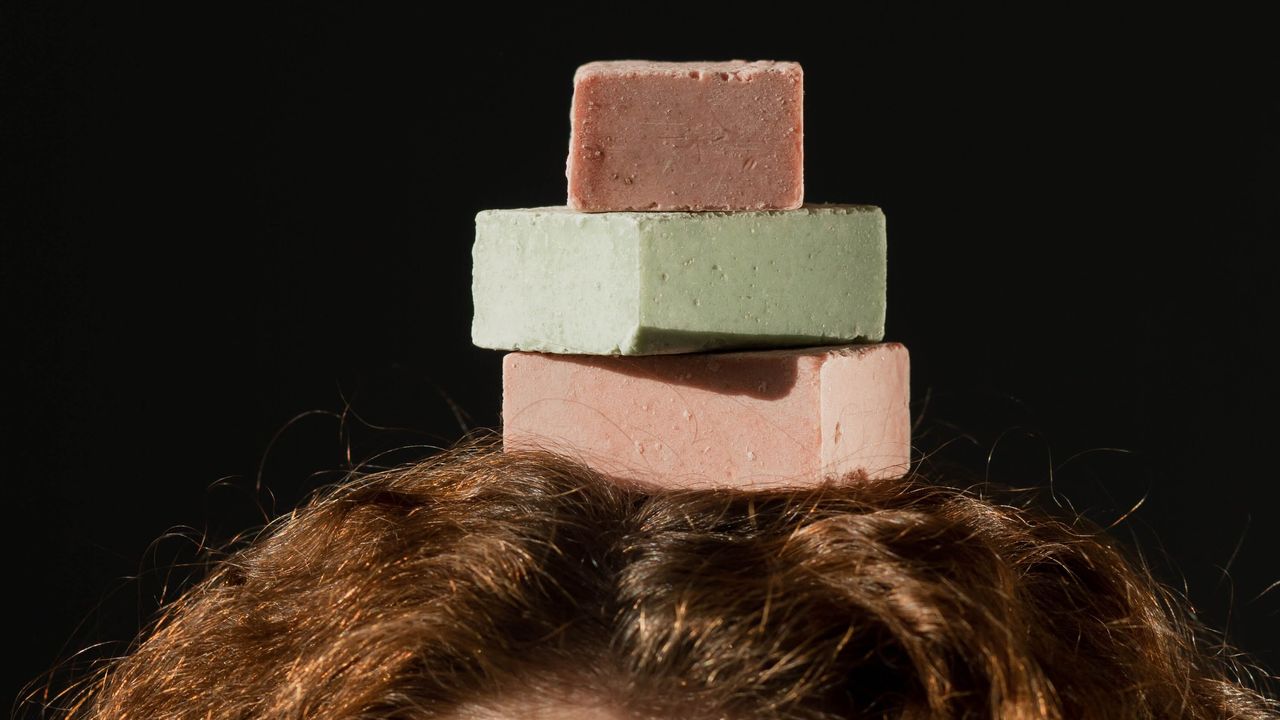
When people did give bars a try, they were often disappointed with the results. Reddit is riddled with posts from folks who felt solid shampoos had, at best, left their hair dry and frizzy or, at worst, caused it to fall out. Plus, these bars can get pretty nasty if you keep them in your shower between washes which, understandably, many people do. “The whole point is that it dissolves in water, which is why it works as a shampoo,” Bird says. “So if you leave it sitting in a shower in a dish of water, the darn thing is going to melt.”
In some cases, the issue probably was the formulation. “I’ve seen some brands just repackage traditional soap as shampoo bars,” says Ramya Viswanathan, another cosmetic chemist. For some people, maybe those with shorter hair, that might work just fine. But for others, “the pH on those bars is too high,” she explains. “It’s going to keep the cuticles open and make hair feel a little dry.”
Even if the formula is optimized for hair care, there’s a learning curve to switching to bars. Because solid shampoo is formulated without water, the ingredients are much more concentrated than what you get with a liquid. “You’re getting so much surfactant on your hair that you have to change how you wash your hair,” Sass says, noting that you should run the bar over your wet hair just two or three times, then use your fingers to work up a lather.
Either way, if you try one shampoo bar you hate, it might turn you off the category forever. “If you go buy a liquid shampoo and you use it and you don’t like it, you just go and buy another liquid shampoo,” Vanessa Sharpe, general manager for product and innovation at Ethique, says. “You’re like, ‘Okay, well, Tresemmé is not for me. I’ll go get Dove.’” She finds that consumers are less likely to try a bar from another brand if this happens.
That buildup of mediocre results is now colliding with a waning interest in sustainability across industries. Even Lush customers, who bought 12.2 million new shampoo bars between 2006 and 2025 and are theoretically more eco-conscious than your average consumers, are still buying more of the bottled version. In 2024, Lush sold just under £20M in shampoo bars and just under £30M in liquid shampoo.
“The plastic-free story is not the key winner for consumers,” Sharpe says. Viswanathan, who launched her own bar brand, Cmpressd, in late 2024, also says she doesn’t “lead with the plastic-free thing.” Anyone who hopes to sell shampoo bars might need to start “green hushing,” a phrase independent packaging consultant Allison Kent-Gunn Garibay says refers to the practice of working sustainability strategies into the production backend but leaving it out of marketing.
One big move Sharpe advised Ethique to make was to discontinue almost every other product it was making—including face wash, moisturizers, deodorants, and body scrubs—and just focus on the brand’s relatively much more successful shampoo and conditioner bar SKUs. Those bars got some formulation tweaks and new, more ergonomic designs to make them easier to hold on to in the shower. There have been some disgruntled customers lamenting the loss of their favorites online, but ultimately it was the more sustainable move for the brand. “When I started, I inherited 10 years worth of stock of [some of these] products,” Sharpe says. “It’s not sustainable if you have to throw [the product] out before it goes off.”
<>









Leave a Reply