
-
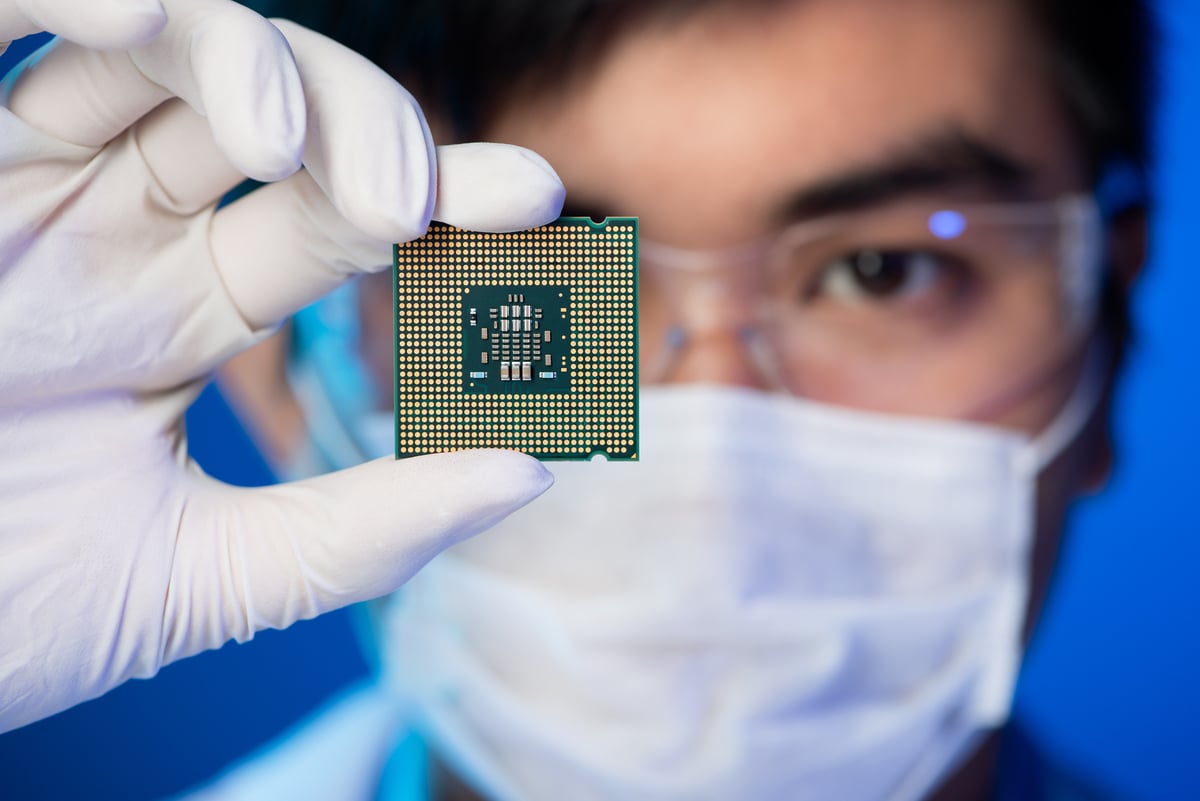
Micron Technology makes DRAM and HBM memory chips that are essential for AI computations.
-
The company sold out its entire 2026 inventory of such chips before the end of 2025.
-
Despite its massive share price jump, Micron is still reasonably valued.
-
10 stocks we like better than Micron Technology ›
When you think of artificial intelligence (AI) semiconductors, you tend to think about the graphics processing units (GPUs) from companies like Nvidia (NASDAQ: NVDA) that perform the actual computations that AI requires.
But not all semiconductor chips are the same, and not all of them are made by Nvidia. In fact, some of the most important resources for Nvidia’s GPUs are the memory chips that keep data accessible. And the memory chip company that’s quietly becoming a cornerstone of the AI boom is Micron Technology (NASDAQ: MU).

Old-school computer users may remember the two basic memory types: Random access memory (RAM) stores data that’s currently being used by the processor, while read-only memory (ROM) is for more permanent storage. But within these categories, there are plenty of subtypes.
One important RAM subtype is dynamic random access memory (DRAM). A DRAM chip consists of a series of simple memory cells, each containing just one capacitor. A charged capacitor indicates a one, and a discharged capacitor indicates a zero. Because each memory cell is so simple, DRAM is cheap to produce and can hold large amounts of memory in a single chip. However, capacitors leak charge quickly, so DRAM needs to be recharged every few milliseconds, making it very energy-hungry.
AI computations need fast access to more data than a single DRAM wafer can allow due to their massive data needs and high processor speeds. Luckily, by stacking DRAM wafers vertically and adding some extra electrical connections, you can create high bandwidth memory (HBM), which delivers incredible data retrieval speed for less power.
Only three companies currently manufacture almost the entire global supply of DRAM and HBM: SK Hynix and Samsung, both from South Korea, and Micron.
As you might expect from a resource that only three companies can provide, demand for DRAM and HBM far outstrips supply. That’s good for Micron Technology in both the short and the long terms.
From a short-term standpoint, the company is already raking in record high revenue, and it announced in December that its entire 2026 calendar year’s supply of HBM is already committed, with price and volume contracts complete. That’s right: Micron already sold out its entire 2026 supply before the end of 2025.










Leave a Reply