

(Bloomberg) — A quiet but telling shift is unfolding in the crypto derivatives market, as one of the most reliable money-making trades shows signs of breaking down.
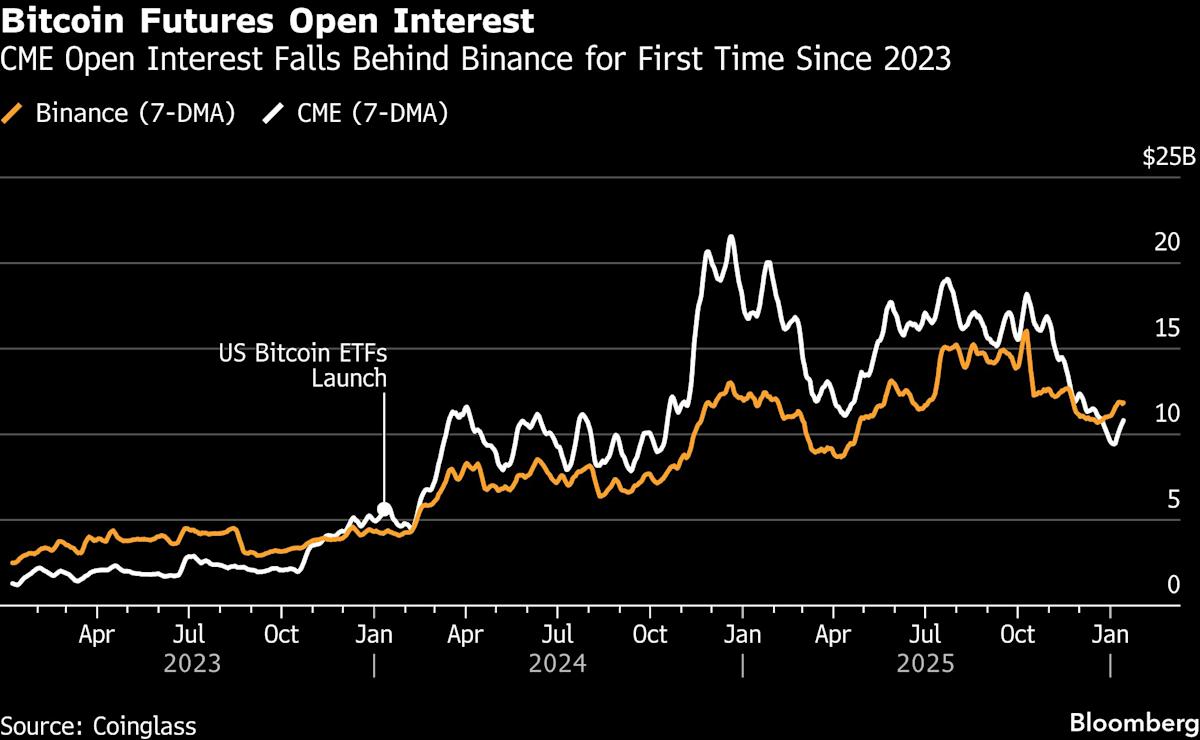
The cash-and-carry trade — in which institutions bought spot Bitcoin and sold futures to capture pricing gaps — is collapsing and signaling a deeper shift in crypto’s market structure. Open interest in Bitcoin futures on the Chicago Mercantile Exchange has slipped below Binance’s for the first time since 2023, underscoring how tighter spreads and more efficient market access are eroding a once-lucrative arbitrage.
Most Read from Bloomberg
The CME Group Inc.’s exchange had been the venue of choice for Wall Street desks running these trades after spot Bitcoin ETFs launched in early 2024. The setup, mirroring the basis trade in traditional markets, was simple: buy spot Bitcoin via ETFs, sell futures, and collect the spread.
In the months following ETF approvals, annualized returns on the so-called delta-neutral strategy often hit double digits, drawing billions from funds that didn’t care about price direction — only yield. But the ETFs that supercharged the trade also sowed its demise: as more desks piled in, the arbitrage spread collapsed. Now, the trade barely clears the cost of capital.
One-month annualized yields are hovering around 5%, among the lowest in years, according to data compiled by Amberdata. Greg Magadini, director of derivatives at Amberdata said that the basis was closer to 17% this time last year and now sits near 4.7%, barely clearing the hurdle set by funding and execution costs. With one-year Treasuries yielding about 3.5%, the trade’s appeal is fading fast.
Amid the basis compression, CME Bitcoin futures open interest has fallen below $10 billion from a peak of over $21 billion, while Binance’s open interest has been steady at around $11 billion, according to data compiled by Coinglass. The shift reflects a pullback from hedge funds and larger US accounts rather than a wholesale retreat from crypto since prices peaked in October, according to James Harris, chief executive officer of digital asset management firm Tesseract.
Crypto exchanges like Binance are the main venue for perpetual futures, a type of contract on which settlement, pricing, and calculation of margin is done on an ongoing basis, often multiple times a day. Perps, as they’re known, account for the largest trading volumes in the crypto market. Last year, CME also started smaller-sized, longer-dated futures contracts for cryptoassets and equity-index markets offer futures positions in spot-market terms, allowing investors to hold contracts for up to five years without rolling into a new contract.










Leave a Reply