Jody and Paul Glaser of Los Altos did what millions of Americans still do every year: they wrote a check for their property taxes and dropped it in a blue USPS mailbox outside the post office.
Three months later, a delinquency notice arrived from Santa Clara County. Paul said he knew he’d paid — he’d seen the check clear. So they pulled up the check image online and saw someone else’s name where the county tax collector’s should have been.
“Clearly, the check had been altered, and cashed by somebody else,” Paul told ABC7’s 7 On Your Side (1).
Criminals had stolen the check from the mail, used chemicals to wipe the payee line, written in a new name, and deposited it at a U.S. Bank ATM in Minnesota. The amount: nearly $28,000. The Glasers still owed the county, and with penalties, their total damage came to roughly $60,000.
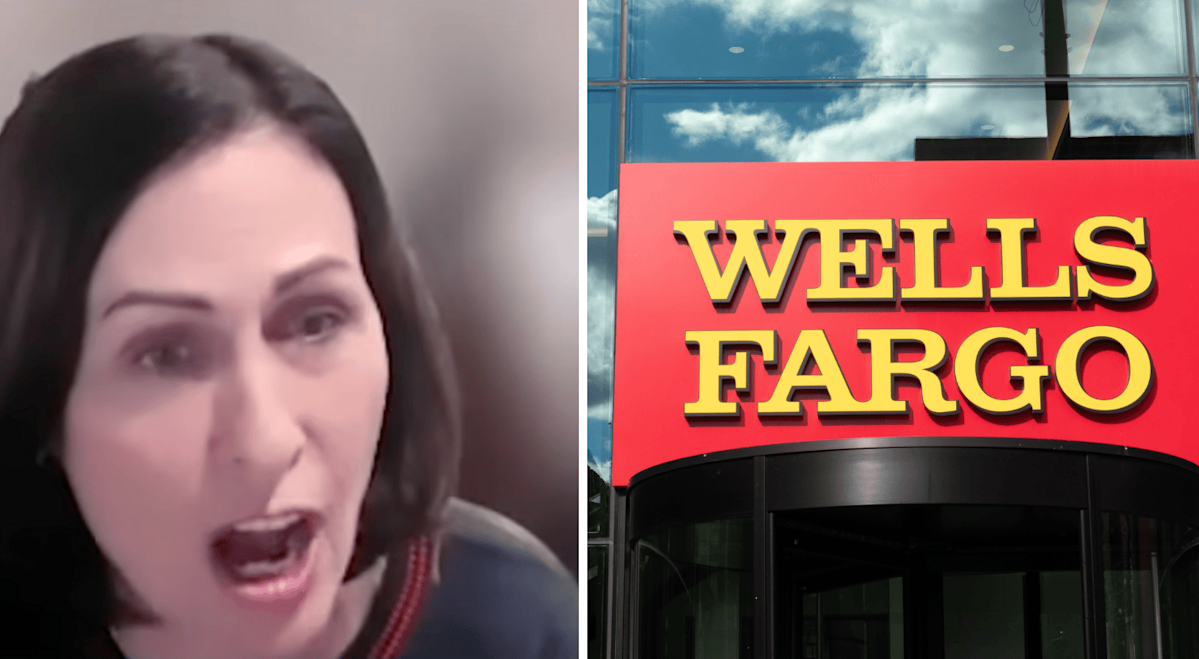
They went to Wells Fargo expecting a straightforward refund. Within 30 days, they got an automated denial. The reason? They hadn’t reported the fraud within 30 days of receiving their bank statement.
San Jose homeowner Kathy Pham had a nearly identical experience — a $2,400 property tax check stolen from the mail, altered and cashed by someone else, then denied by the same bank with the same explanation.
Here’s what tripped both families up. Under the Uniform Commercial Code — the framework governing commercial transactions in every state — customers must review bank statements promptly and report unauthorized transactions, typically within 30 to 60 days. Wells Fargo’s 42-page deposit account agreement sets that window at 30 days.
There was no way to spot the fraud from the statement alone. “It only shows the date and the amount,” Jody Glaser said. “It doesn’t show who you wrote the check to. It doesn’t say who cashed the check. It just says ‘check.'”
The only way to catch it was to download the actual check image — something most people wouldn’t think to do for every cleared transaction. Wells Fargo’s position is that customers should do exactly that. The bank updated its account agreement last November to make that expectation explicit, though the clause wasn’t in place when these families filed their claims.
Under the UCC, an altered check is not “properly payable,” and liability generally falls on the bank that accepted the fraudulent check from the thief (2). But if the customer doesn’t report the problem within that statement window, banks can shift the loss back onto them — which is precisely what Wells Fargo did here.
This isn’t an isolated incident, and it’s not the first time Wells Fargo has been at the center of a disputed fraud claim. Moneywise previously reported on a 90-year-old man who lost $814,000 in life savings to a scam and was similarly denied by Wells Fargo.
Mail theft-related check fraud has become one of the fastest-growing financial crimes in the country. In 2024, USPS recorded over 52,000 high-volume mail theft attacks — up 156% since 2019 (3). Check fraud still accounts for half of all fraud-related suspicious activity reports filed by banks, according to FinCEN data analyzed by the Federal Reserve — with total fraud suspicious activity reports from financial institutions up 110% between 2020 and 2024 (4). The FBI issued a public service announcement in January 2025, warning that the problem continues to accelerate (5). In 2024, Postal Inspectors reported 4,754 arrests and 4,228 convictions related to mail theft, carrier robberies and mail fraud (6).
The very mailbox where the Glasers dropped their check was later sealed off and taken out of service. A sign on it now reads: “Please drop mail inside the post office.” A USPS Office of Inspector General audit found the agency lacks accountability for its universal “arrow keys” — the master keys that open blue collection boxes — which are frequently targeted in carrier robberies and used to commit mail theft (7).
Read More: The average net worth of Americans is a surprising $620,654. But it almost means nothing. Here’s the number that counts (and how to make it skyrocket)
After ABC7’s 7 On Your Side intervened, Wells Fargo refunded Pham’s $2,400. The bank did not explain why it approved her appeal but continued to deny the Glasers’ $28,000 claim, citing privacy rules.
In a statement, Wells Fargo said it “empathize[s] with our customer’s situation” and that its “priority is to support our customers and raise awareness for them to avoid, detect, and promptly report incidents.”
“Some random person stole the check, easily changed the name, and cashed it, and the bank is saying it’s on us,” Jody Glaser said. “That could happen all the time. That is a huge, huge, huge problem.”
1. Stop mailing checks for large payments. If your county or mortgage company accepts electronic payments, use them. The convenience fee — if there is one — is cheap insurance against a five-figure loss.
2. If you must mail a check, drop it inside the post office. Blue collection boxes are prime targets. The FBI recommends mailing as close to the posted pickup time as possible.
3. Use gel or indelible black ink. Standard ballpoint ink can be chemically washed off a check. Gel pens are significantly harder to alter.
4. Review your check images monthly — not just your statement. This is the lesson the Glasers learned at enormous cost. Your statement won’t show who cashed a check. Log into your bank’s online portal and pull up images of every check that cleared. If you discover fraud, report it to your bank in writing immediately, file with the U.S. Postal Inspection Service at uspis.gov (8) and the FBI’s IC3 at ic3.gov, and file a police report. If your bank denies your claim, appeal — and don’t be afraid to contact your state attorney general’s office or a consumer advocate. Pham’s refund came only after a TV news team got involved.
Join 200,000+ readers and get Moneywise’s best stories and exclusive interviews first — clear insights curated and delivered weekly. Subscribe now.
—
We rely only on vetted sources and credible third-party reporting. For details, see our editorial ethics and guidelines.
ABC7 / KGO San Francisco, 7 On Your Side (1); Uniform Commercial Code §§ 3-407, 4-401, 4-406 / ICBA Practical Guide (2); FedWeek / USPS data (3); Federal Reserve, Consumer Compliance Outlook (4); FBI Internet Crime Complaint Center (5); U.S. Postal Facts (6); USPS Office of Inspector General (7); U.S. Postal Inspection Service (8)
This article provides information only and should not be construed as advice. It is provided without warranty of any kind.














Leave a Reply