
By Diana Novak Jones
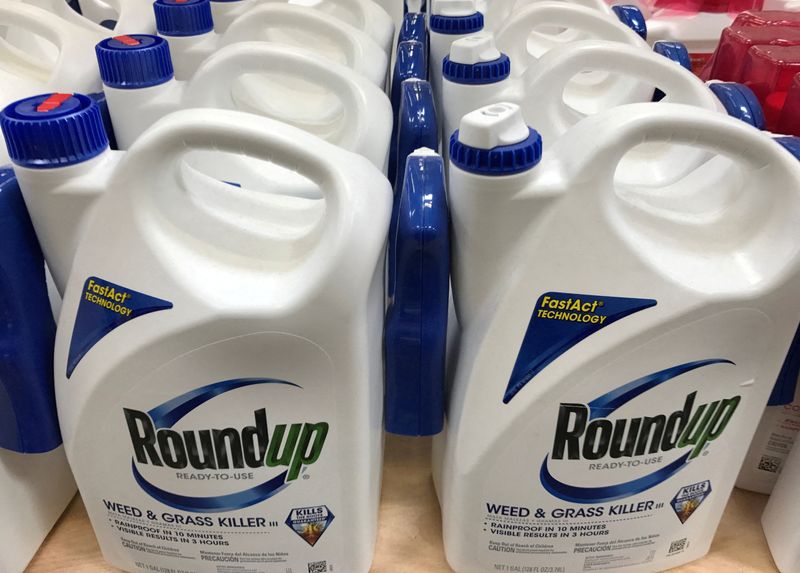
April 26 (Reuters) – The U.S. Supreme Court hears arguments on Monday in Bayer’s bid to limit thousands of lawsuits alleging that the German company’s Roundup weedkiller causes cancer in a case that is one part of sprawling yearslong litigation over the product.
Here is a look at how the court’s decision, which is expected by the end of June, could affect Bayer’s overall liability.
The justices are hearing Bayer’s appeal of a lower court’s ruling in a case brought by a man who said he was diagnosed with non-Hodgkin lymphoma, a type of blood cancer, after years of exposure to Roundup. The Missouri Court of Appeals upheld a $1.25 million verdict that a St. Louis jury awarded the plaintiff, John Durnell, over his cancer diagnosis.
The company is facing tens of thousands of similar lawsuits over Roundup in both federal and state courts across the country.
At issue at the Supreme Court is whether a federal law dictating warning labels on pesticides takes precedence over similar state laws. Bayer argues that plaintiffs cannot claim it violated state laws by failing to warn about any cancer risk posed by Roundup because the U.S. Environmental Protection Agency has found no such risk and requires no such warning on the product’s label. President Donald Trump’s administration has taken Bayer’s side in the case.
The Supreme Court is expected to rule by the end of June.
A decision in favor of Bayer would strike a major blow to the multitude of other lawsuits because plaintiffs would no longer be able to claim the company failed to follow state laws when it did not include a warning about cancer risk on its label.
Status of Roundup lawsuits
Bayer is facing claims over Roundup from approximately 65,000 plaintiffs in U.S. state and federal courts. In lawsuits filed beginning in 2015, plaintiffs have said they developed non-Hodgkin lymphoma and other forms of cancer after using the weedkiller at home or on the job. Roundup is among the most widely used weedkillers in the United States. Bayer has said decades of studies have shown Roundup and its active ingredient, glyphosate, are safe for human use.
Bayer settlement
In February, Bayer announced it had reached a $7.25 billion settlement with attorneys seeking to represent a nationwide class of people who have said Roundup exposure caused their cancer. The deal is aimed at resolving most of the remaining lawsuits as well as potential future lawsuits from people who already have been exposed to Roundup and develop cancer in the future. A state court judge in Missouri gave an initial green light in March to the proposed settlement. Final approval has not yet been granted, with a hearing scheduled for July.












Leave a Reply