
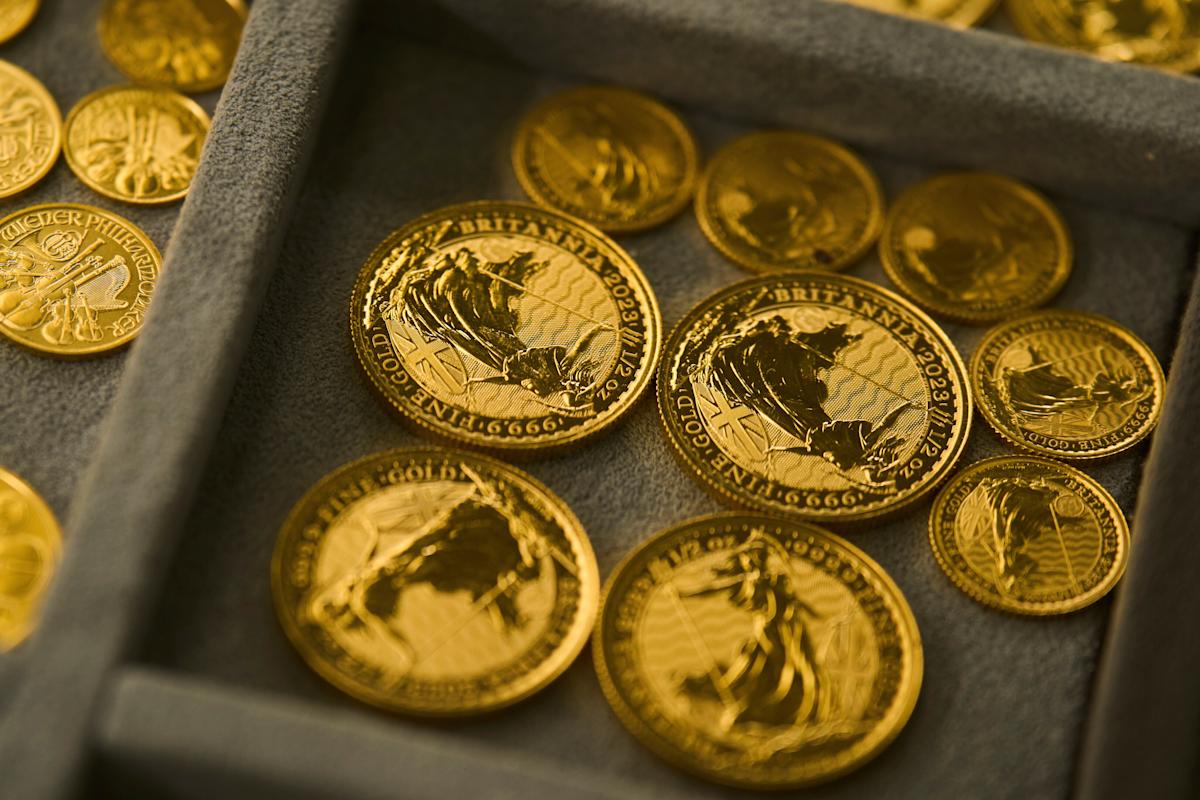
The price of gold can be quoted in multiple forms because the precious metal is traded in different ways. The two main gold prices that investors should know about are spot prices and gold futures prices.
Learn more: How to invest in gold in 4 steps
The spot price of gold is the current market price per ounce for physical gold as a raw material, sometimes called spot gold. Gold ETFs that are backed by physical gold assets generally track the gold spot price.
The spot price is lower than what you’d pay to buy gold coins, bullion, or jewelry, since your total price will include a markup called the gold premium that covers refining, marketing, dealer overhead, and profits. The spot price is more like a wholesale price, and the spot price plus the gold premium is the retail price.
Learn more: Thinking of buying gold? Here’s what investors should watch for.
Gold futures are contracts that mandate a gold transaction at a specific price on a future date. These contracts are exchange-traded and more liquid than physical gold. They settle on the contract expiration date or earlier, either financially or via delivery. A cash settlement involves paying the contract’s profit or loss in cash. Delivery means the seller sends physical gold to the buyer for the contracted price.
Learn more: Gold alternatives? How to invest in silver, platinum, and palladium.
Supply and demand determine gold spot prices and gold futures prices. Factors that influence gold supply and demand include:
-
Geopolitical events: Gold is considered a safe-haven asset, meaning it can hold its value — and sometimes appreciate — when stocks and other assets are volatile or in decline. Geopolitical events, such as military conflicts and trade disputes, can prompt stock price volatility and, in turn, stoke higher demand for gold.
-
Central bank buying trends: Central banks own gold to hedge against inflation and support economic stability. Unlike traditional currency, the price of gold is not tied to a banking system that is subject to manipulation or collapse. Central banks influence the global gold supply because they buy and sell in large quantities.
-
Inflation: Many investors consider gold an effective hedge against inflation. Rising prices, therefore, can stimulate gold demand and push gold prices higher.
-
Interest rates: When interest rates rise, gold prices can decline. When interest rates fall, gold prices can rise. This happens in part because gold does not pay interest. Cash and fixed-income assets are preferred in higher-rate environments because they can produce higher yields.
-
Mining production: Mining activity affects the global gold supply, while production costs influence gold prices.
Learn more: Gold IRA: Benefits, risks, and how it differs from a traditional IRA
Historically, the gold futures price has been volatile, particularly when adjusted for inflation. Significant trends include:
-
April 1934 to July 1970: Gold declined more than 65% in an extended downturn.
-
July 1970 to January 1980: Gold rose nearly 850% in a sharp spike upward.
-
January 1980 to February 2001: Gold fell 82%.
-
February 2001 to September 2025: Gold gained by 591%.
Owning gold potentially exposes you to similar extended trends, which is why it’s important to set your allocation carefully.
In the lackluster years, your gold position will negatively impact your overall investment returns. If that feels problematic, a lower allocation percentage is more appropriate. On the other hand, you may be willing to accept gold’s underperforming years so you can benefit more in the good years. In this case, you would target a higher percentage.
If you are interested in learning more about gold’s historical value, Yahoo Finance has been tracking the historical price of gold since 2000.
In 2025, the gold futures price rose more than 65%. It was the precious metal’s strongest calendar year performance since 1979.
Thomas Winmill, portfolio manager at Midas Funds, said the historic run-up into 2026 has been driven by investors seeking a hedge against a “potential negative reaction in the general stock and bond markets to the current news cycle.” Headlines about evolving U.S. tariff policies and U.S. military involvement in Venezuela, Iran, Greenland, and domestic cities can be unnerving for investors.
Additionally, rising national debt erodes confidence in the U.S. dollar. A continuation of that trend would negatively affect financial assets such as stocks and bonds and benefit gold.
While the specific factors driving gold’s strength today may be historically distinct, gold’s recent performance is not out of character. “Gold’s behavior, like that of any hard asset, can be extremely volatile,” Winmill said. As an example, gold rose more than 100% in 1979 and nearly 30% in 1980 before falling about 33% in 1981.
Tim Manni edited this article.






Leave a Reply