
January 30, 2026
3 min read

Key takeaways:
- Advanced practice providers provide continuity of care, which benefits patients.
- One role for advanced practice providers is to help manage the growing population of patients with atrial fibrillation.
Advanced practice providers are highly knowledgeable medical professionals who are part of a health care team and play a key role in developing and implementing patients’ treatment plans.
Advanced practice providers (APPs) include nurse practitioners, physician assistants, certified registered nurse anesthetists and anesthesiologist assistants. They play an essential role in implementing continuity of care, which has been shown to benefit patients, and in managing an increasing volume of patients who use health systems for a variety of reasons, including when their wearable device suggests they may have a condition such as atrial fibrillation.

Continuity of care
As APPs, we provide continuity of care that complements the work of physicians and often keeps health care services running. From the initial intake to follow-up care, we support patients at each step of their journey. This consistency not only improves the patient’s experience but can also positively impact recovery. Research from The BMJ and The Journal of Family Practice links continuity of care to better patient outcomes, including reduced hospitalizations, lower mortality rates, fewer ED visits, improved medication adherence and overall better health.
Our ability to deliver this continuity of care comes from a versatile skill set. For example, as an APP in cardiology, I see my patients at intake, assess their conditions, perform procedures like implantation of insertable cardiac monitors, monitor diagnoses and conduct follow-up once a diagnosis is received. By being part of the entire process, patients are able to have a consistent care provider rather than being transferred to multiple specialists. From my experience, the peace of mind of knowing there is one dedicated provider overseeing their health journey in coordination with other care providers is invaluable to patients and their families.
How APPs help patients with AF
As a physician assistant in our cardiac electrophysiology department, I help patients who experience symptoms of what can often be hard-to-find abnormal heart rhythm conditions, such as AF, which may impact more than 12 million Americans by 2030. If left untreated, people with AF are five times more likely to have a stroke and have increased risk forheart failure.
As with many areas of medicine, the landscape of electrophysiology and cardiology evolved tremendously over the years with technological advancements that make infrequent abnormal heart rhythms easier to detect, manage and treat. Diagnosis is crucial for managing and treating AF effectively. Recently, there has been a growing interest in consumer wearables such as smartwatches and other consumer technologies as a detection tool, as some now have heart monitoring capabilities. While these devices can provide valuable insights into general heart health, they may lack the precision and diagnostic capabilities of medical-grade devices and can work well as a supplement rather than a substitute for professional monitoring.
Because infrequent episodes of AF may require more continuous, uninterrupted monitoring over what could be several months or even several years in some cases, medical grade options, like insertable cardiac monitors, can provide a clearer picture of what’s going on. However, device innovation alone may not keep up with the growing demand, especially as the prevalence of AF continues to rise. This influx of patients can put a strain on clinics and hospital systems, contributing to medical staff burnout and negatively impacting patient care.
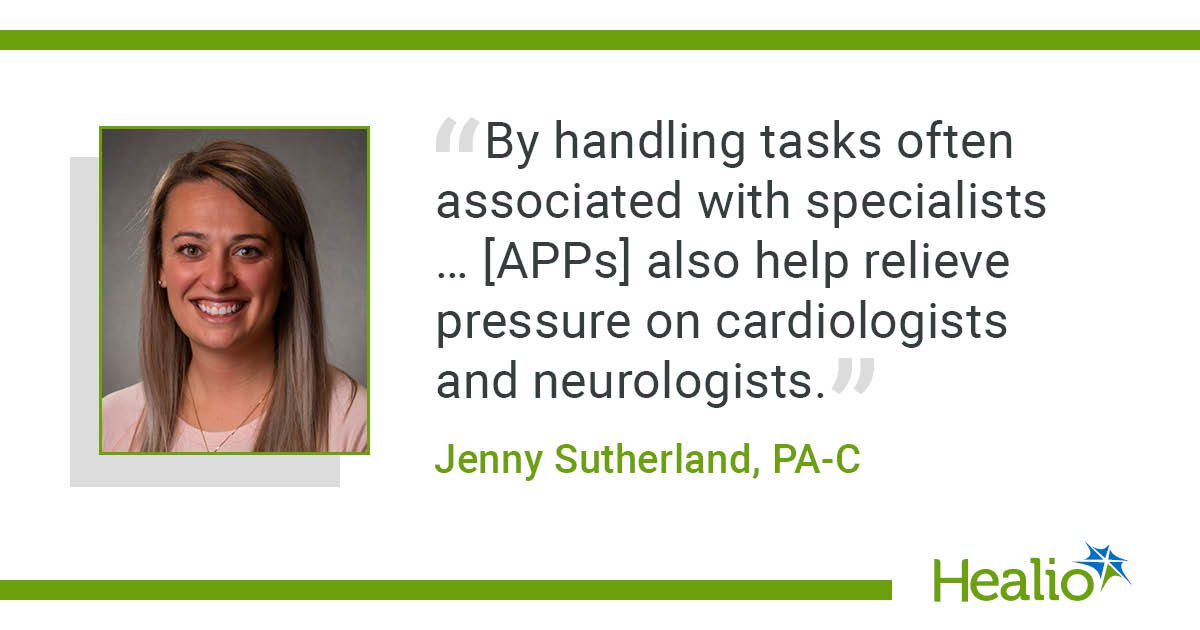
To address this challenge, solidifying care teams is essential, from initial referral through treatment and beyond. By handling tasks often associated with specialists, such as diagnosing AF or performing device implant procedures, we also help relieve pressure on cardiologists and neurologists.
APPs play a critical role in delivering quality patient experiences and alleviating staff strain. With specialized skills and versatility, APPs are uniquely positioned to step into various roles and meet multiple patient care needs, creating a continuity of care.
Patient care improves with APP support
In my experience, expanding APP integration has profoundly impacted our care pathways, enhancing both efficiency and patient outcomes. I strongly urge hospital systems to review their care models and explore how APPs can play a bigger role in helping to address key challenges and create more seamless patient journeys, especially for the millions of patients with heart rhythm abnormalities like AF. Moreover, APPs enable great growth for cardiac electrophysiology programs.
As highly trained and trusted members of care teams, APPs are equipped to diagnose, manage conditions, prescribe medications and even perform procedures across specialties. We’re essential in driving forward the quality and accessibility of patient care. With increased investment in APP resources, we can foster a more resilient and efficient health care system nationwide. This means creating a health care environment where patients facing serious conditions like AF can access timely, effective care, ultimately leading to better outcomes and a more compassionate health care experience.
For more information:
Jenny Sutherland, PA-C, is an advanced practice provider in cardiac electrophysiology at Metropolitan Heart and Vascular Institute in Coon Rapids, Minnesota. She can be reached at cardiology@healio.com.
Sources/Disclosures
Source:
Expert Submission
References:
Disclosures:
Sutherland reports no relevant financial disclosures.

Ask a clinical question and tap into Healio AI’s knowledge base.
- PubMed, enrolling/recruiting trials, guidelines
- Clinical Guidance, Healio CME, FDA news
- Healio’s exclusive daily news coverage of clinical data
<











Leave a Reply