

Key takeaways:
- Major depression is a common reason patients experience poor outcomes.
- Even after depression is diagnosed, it often goes untreated or undertreated.
DESTIN, Fla. — Patients with chronic conditions who are failing on conventional therapies may be suffering from undiagnosed major depression, according to a presenter at Congress of Clinical Rheumatology East.
Michael R. Clark, MD, MPH, MBA, professor of psychiatry and behavioral sciences at George Washington University School of Medicine and Health Sciences, and executive vice president of medical affairs at MedPoint Health Partners, has conducted extensive research at the intersection of depression and chronic pain.

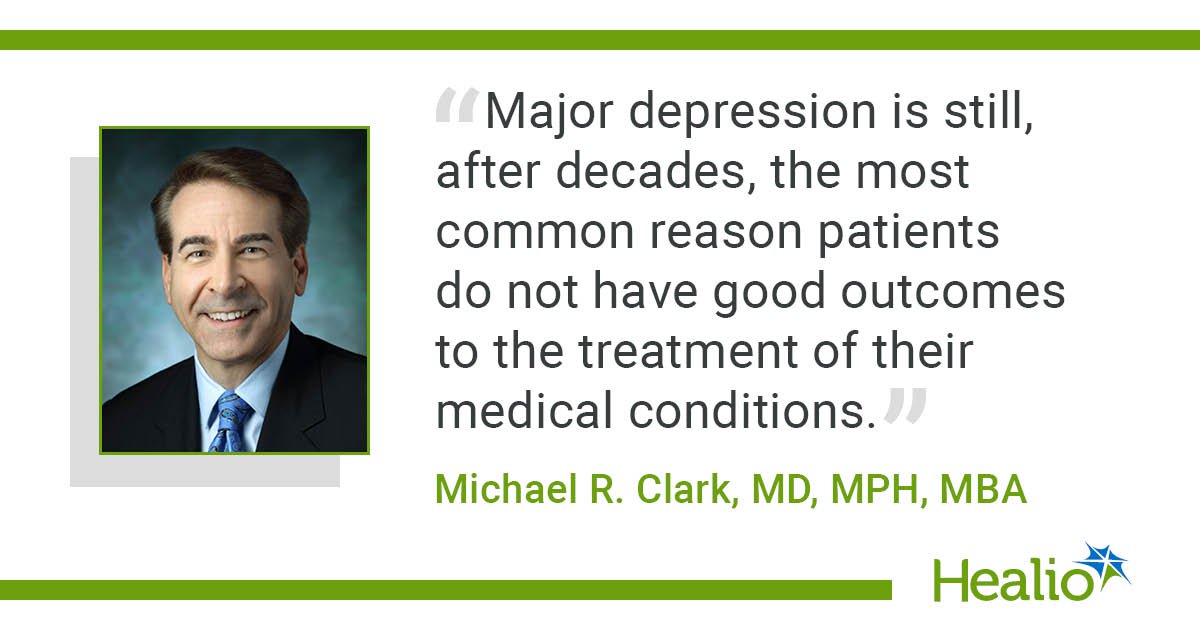
“Major depression is still, after decades, the most common reason patients do not have good outcomes to the treatment of their medical conditions,” he told Healio. “Even if major depression is diagnosed, it is usually undertreated. As a result, other physical symptoms are amplified, less tolerable and more disabling, not to mention less responsive to usual treatments.”
According to Clark, 60% of patients with depression report pain symptoms at the time of diagnosis.
“After 8 years, depression was the best predictor of persistence of chronic pain symptoms in general practice,” he said.
In addition, individuals diagnosed with depression carry a two-fold risk for myriad negative outcomes, including chronic daily headaches, atypical chest pain, musculoskeletal pain and low back pain.
Although Clark maintained that treating depression is important, he encouraged rheumatologists to begin by managing the patient’s disease.
“Fix the broken parts to restore function,” he said.
However, even this recommendation comes with a warning.
“All repairs cause damage,” Clark said.
Behavioral interventions are an essential component of managing mental health conditions, according to Clark.
“Interrupt unproductive habits by focusing the patient on their primary goals,” Clark said. “But keep in mind, all demands to stop doing particular acts are stigmatizing and likely be met with some resistance.”
And although Clark acknowledged that employing these strategies can be difficult, he encouraged rheumatologists to be persistent, as depression can continue to exacerbate physical outcomes.
“It becomes more difficult to focus on an underlying disease process and prescribe the best treatments because the patient keeps complaining and demanding new treatment strategies,” he said.
With that in mind, Clark offered a starting point for clinicians to consider when managing a patient who may be experiencing depression in addition to their chronic disease.
“The short answer or recommendation to a rheumatologist is ask yourself if the patient is doing well or making progress,” he said. “If the answer is no, and you are failing to find an effective treatment, they are probably depressed until proven otherwise.”
For more information:
Michael R. Clark, MD, MPH, MBA, can be reached at mrclark@jhmi.edu.
Sources/Disclosures
Source:
Clark MR. Perspectives on pain & depression: Linkages and management challenges. Presented at: Congress of Clinical Rheumatology East; April 30-May 3, 2026; Destin, Florida (hybrid meeting).
Disclosures:
Clark reports no relevant financial disclosures.

Ask a clinical question and tap into Healio AI’s knowledge base.
- PubMed, enrolling/recruiting trials, guidelines
- Clinical Guidance, Healio CME, FDA news
- Healio’s exclusive daily news coverage of clinical data
<








Leave a Reply