
April 27, 2026
2 min read

Key takeaways:
- Researchers noted an 8.5 percentage point jump in extensively drug-resistant Shigella cases from 2011 to 2023.
- An ID expert said it is important to educate and not shame the public on Shigella as an STI.
Extensively drug-resistant Shigella is on the rise in the United States, according to data published by the CDC.
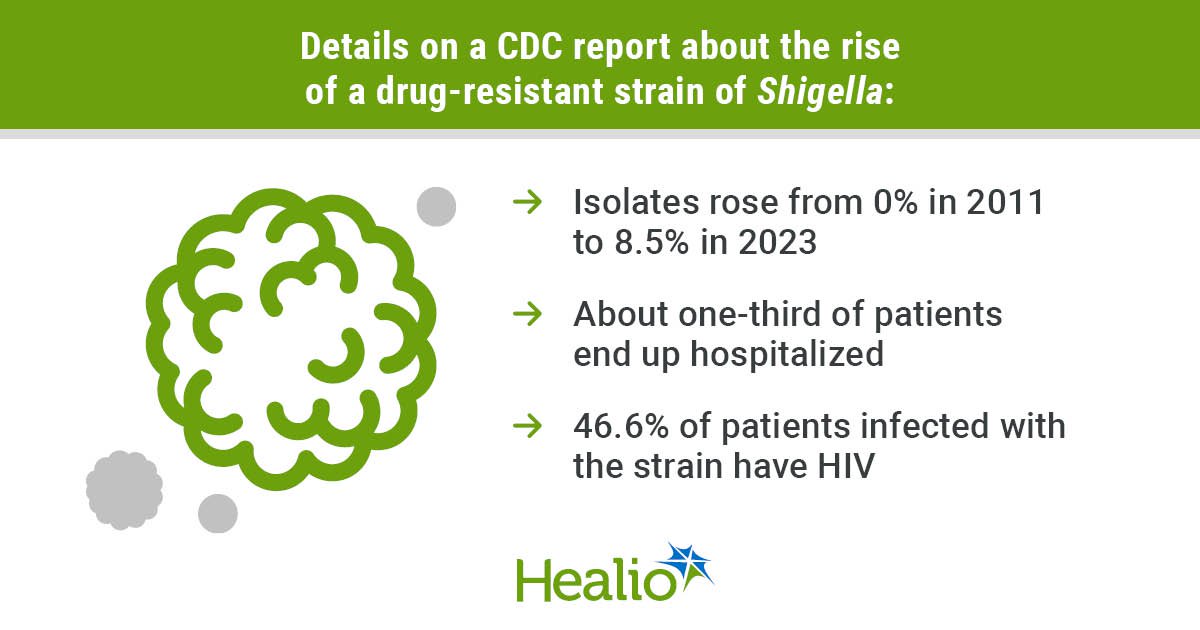
Shigella is a bacterium that can be sexually transmitted and causes infectious diarrhea. The new study published in MMWR found that among nearly 17,000 Shigella isolates submitted to a CDC surveillance network, the proportion of extensively drug-resistant (XDR) isolates rose from 0% in 2011 to 8.5% in 2023. Around one-third of patients with XDR Shigella ended up hospitalized.

Data derived from Logan N, et al. MMWR Morb Mortal Wkly Rep. 2026;doi:10.15585/mmwr.mm7513a1.
The report mentioned that XDR Shigella spreads easily from person-to-person through fecal-oral contact or sexual activity. It cited prior studies that identify men who have sex with men as a “transmission route” for Shigella while also noting that of the 116 patients infected with XDR shigellosis with HIV status information, 54 (46.6%) had HIV.
The study also noted of the 492 patients with XDR shigellosis and available sex and age information, median age was 41 years. And of the 473 patients aged at least 18 years, 86.2% were men.
Jason E. Zucker, MD, assistant professor of medicine at Columbia University Medical Center, told Healio he sees Shigella cases come through his group’s sexual health clinic.
“Anecdotally,” he said, “it does seem that more are resistant to antibiotics, though I don’t have hard data on that from our clinic specifically.”
Zucker, who was not part of the CDC study, also said it is important to educate — not shame — people about Shigella as an STI.
“The starting point is recognizing that the sexual practices that can transmit Shigella are common and normal,” Zucker said. “Effective education means integrating Shigella into the same conversations we already have about STI prevention.”
CDC guidelines advise preventing contact with feces during sex, using barriers and washing hands after touching objects that have been in contact with the anal area.
“The goal is to deliver guidance that reduces harm in a way that feels practical and empowering rather than shaming,” Zucker added.
In the study, oral carbapenems, pivmecillinam and fosfomycin are mentioned as possible treatments for XDR shigellosis, although none have been approved by the FDA for this indication.
“Treatment of XDR shigellosis remains challenging because no optimal therapy has been established,” the report added.
Shigella causes an estimated 450,000 infections each year nationwide, making it a leading cause of diarrheal illness, according to the CDC. Common symptoms of the infection include diarrhea, fever, stomach pain and experiencing a feeling to pass stool when bowels are empty.
Meanwhile, Zucker said most shigellosis cases will resolve on their own. He also said the rise of XDR Shigella “should prompt a broader conversation about sexual health, make sure the patient is up-to-date on STI screening, discuss [pre-exposure prophylaxis] if they’re not already on it and assess whether they’re connected to HIV prevention or care.”
For more information:
Jason E. Zucker, MD, can be reached at jz2700@cumc.columbia.edu.

Ask a clinical question and tap into Healio AI’s knowledge base.
- PubMed, enrolling/recruiting trials, guidelines
- Clinical Guidance, Healio CME, FDA news
- Healio’s exclusive daily news coverage of clinical data
<











Leave a Reply