
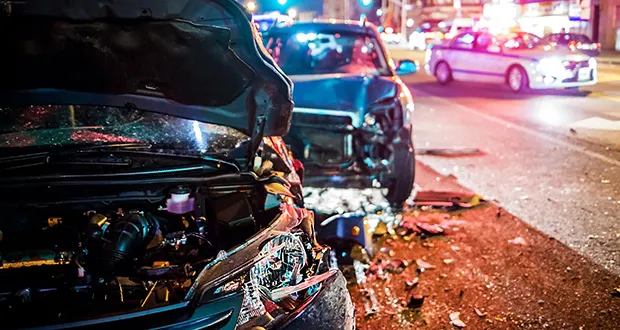
While across the EU road deaths fell 12 per cent since 2019, in Ireland fatalities rose by 31 per cent, and are on track to increase again this year
Ireland’s worsening levels of road deaths are a result of ‘system failures’, with the Government ‘frighteningly off course’ when it comes to road safety targets, consultants in emergency medicine have claimed.
The Irish Association of Emergency Medicine (IAEM) has called for urgent action to stop the carnage on the country’s roads. Last year 190 people died from crashes, with figures for the first four months of 2026 already indicating that this figure will be exceeded by the end of the year.
“The Government’s own target of no more than 72 deaths annually by 2030 is now frighteningly off course,” the doctors said in a statement.
“As the doctors staffing Ireland’s Emergency Departments, we see at first-hand this carnage. Every week we treat patients who sustain ultimately fatal injuries or have been seriously injured.
“Behind every death are many more who survive with catastrophic injuries that leave permanent disability and often require years of rehabilitation. The true burden of road trauma on the health system is far greater than the fatality count might suggest.”
While across the EU road deaths have fallen 12 per cent since 2019, in Ireland fatalities rose by 31 per cent. The IAEM noted that nearly half of those killed were vulnerable road users such as pedestrians, cyclists and motorcyclists. Cyclist deaths were at their highest since 2017, with motorcyclist deaths their highest since 2007.
“As doctors, we understand the difference between an unavoidable outcome and one resulting from system failures and sadly Ireland’s worsening road deaths are as a result of such system failures,” the statement added.
“Responsibility for road safety in Ireland is deeply fragmented with the Road Safety Authority (RSA), a multitude of government departments including the Department of Transport, An Garda Síochána, Transport Infrastructure Ireland and 31 local authorities all having a role with no single body accountable for outcomes.”
The IAEM criticised the Government for abandoning plans to reform the RSA, and pointed to a 43 per cent fall in the number of speeding detections in the past decade as an example of ‘how backwards Ireland has gone’.
“Ireland operates a mere dozen or so fixed-speed cameras while Finland operates 1,164. Bizarrely, local authorities cannot access crash location data to identify dangerous roads thus incident black spots can remain un-addressed for years.”
The organisation called for the Government to implement five demands set out by the campaign group Stop Road Deaths. These are:
- A statutory Road Safety Commissioner with the authority, budget and legal mandate to deliver the 2030 target;
- Automated speed cameras deployed on high-risk routes within 12 months;
- Mandatory black spot redesign with a funded national programme to fix the 50 highest-risk road sections identified by crash data;
- Reversal of the enforcement collapse by restoring dedicated road policing numbers to at least 2014 levels;
- Parliamentary accountability requiring every TD to state publicly whether they support these reforms.
“These are not aspirational, they are specific, evidence-based reforms that our European peers have implemented,” the IAEM said.
“The Safe System Approach adopted in principle by the Irish Government and endorsed by the World Health Organisation holds that no one should die or be seriously injured using the road network. That principle is meaningless without institutional mechanisms to deliver it.
“Norway, Sweden and Finland have demonstrated what is achievable. Norway now has the lowest road mortality rate in Europe (16 deaths per million, compared to Ireland’s 33). Indeed, Helsinki went an entire year without a single traffic fatality. These are not countries with fewer cars or easier terrain, they are countries that decided road deaths were a governance problem and addressed them as such.
“Ireland needs the political will to take the necessary steps our Scandinavian colleagues have taken. IAEM therefore calls on the government to stop regarding road traffic deaths as inevitable tragedies and instead do what is required to make Ireland’s roads safe for all.”
A spokesperson for the Department of Transport said that Phase Two of Ireland’s 2021-2030 Road Safety Strategy is currently being overseen by Minister of State, Sean Canney, and a leadership group comprising of the RSA, Gardaí, the National Transport Authority and others.
“Key deliverables for this year include passing the National Vehicle and Driver File Bill 2025 which will allow for direct sharing of road traffic collision data with Local Authorities and for them to resume accepting and processing that data,” the spokesperson said,
“It should be noted that as an interim measure the Department has been undertaking detailed collision analysis on the regional and local road network to identify locations of interest which once identified are notified to the local authorities.”
“A long-standing issue relating to repeat renewal of learner permits is also being addressed with the regulations restricting this practice coming into effect in November 2026.
“Furthermore, the increased deployment of safety cameras in the coming years is a key action to be delivered under Action 6 of the Phase 2 Action Plan of the Road Safety Strategy. In that regard the first National Safety Camera Strategy will be published in the coming days, which will provide the framework for the rollout of road safety cameras across the road network.
“In addition, this year, the RSA has again ringfenced funding of €18 million for road safety awareness, education and promotional campaigns focused on making our roads safer for all road users, including and especially vulnerable road users.”
Today Emergency Medicine and Retrieval Consultant, Dr Eoin Fogarty, will brief TDs and Senators at Leinster House on the impact of alcohol on road safety.
The briefing will put forward recommendations from Alcohol Action Ireland (AAI), which includes higher rates of breath-testing so that every licenced driver is tested at least once a year.
“Crucially, Government must act on the significant international evidence that reducing population-level alcohol consumption by enhancing controls on price, marketing and availability has an impact in reducing alcohol related collisions,” said AAI CEO Dr Sheila Gilheany.
“Research across the EU indicates that a 10 per cent increase in alcohol prices is associated with a seven per cent reduction in road deaths – for Ireland in 2025 that would be 13 people still alive. Every Budget that doesn’t include an increase in excise duties is a missed opportunity to reduce deaths on Irish roads.”
<









Leave a Reply