
January 23, 2026
2 min read

Key takeaways:
- Smartwatch screening detected new-onset AF more often vs. standard care in patients at risk for stroke.
- Earlier diagnosis could expedite initiation of anticoagulant therapy in this high-risk population.
Remote screening with a smartwatch detected new-onset atrial fibrillation more often vs. standard care among patients at elevated risk for stroke, researchers reported.
Use of smartwatch screening (Apple Watch Series 5 or 8, Apple) may expedite diagnosis of new-onset AF and initiation of anticoagulation therapy in those who may benefit from earlier intervention, according to a study.

The results of the EQUAL prospective, multicenter, randomized controlled trial evaluating the use of smartwatch-based screening to detect new-onset AF in patients at increased risk for stroke were published in the Journal of the American College of Cardiology.
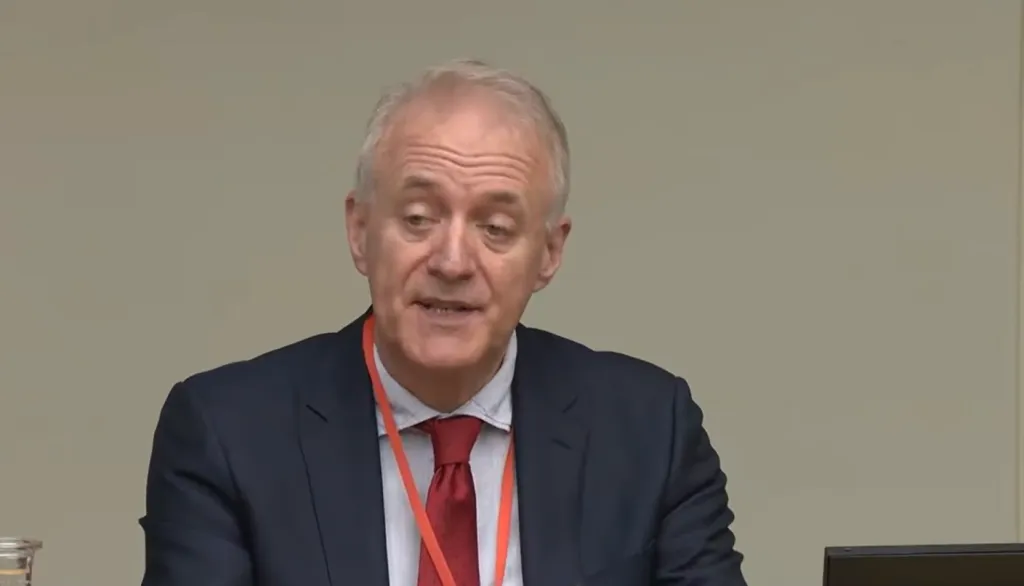
“Traditionally, monitoring takes place with other ECG devices, but patients can find them a bit irritating, and most of them can only monitor for 2 weeks at a time,” Michiel Winter, MD, cardiologist at Amsterdam University Medical Center, said in a press release.
“Wearables that track both your pulse and heart’s electrical activity by combining [photoplethysmography] and ECG functions have been around for a while now. However, how well this technology works for the screening of patients at elevated risk for atrial fibrillation had not yet been investigated in a real-world setting,” Nicole van Steijn, PhD candidate at Amsterdam University Medical Center, said in the release.
Overall, 437 older patients were enrolled at two secondary care centers in the Netherlands, all with elevated risk for stroke (median age, 75 years; 47% women): CHA2DS2-VASc score of 2 or more for men and of 3 or more for women (median score, 3).
Participants were randomly assigned to 6 months of remote monitoring with a smartwatch with photoplethysmography and single-lead ECG functionality or standard care.
The ECGs were remotely adjudicated by an independent telemonitoring team within 24 hours of detection (HartWacht), including at least one dedicated adjudicator, a trained cardiac nurse, supervised by a cardiologist.
Patients assigned to the smartwatch group were asked to wear the watch at least 12 hours per day while awake and record a 30-second single-lead ECG when perceived AF symptoms occurred or after receiving a notification of irregular rhythm from the smartwatch.
Standard care included 12-lead ECG, Holter monitoring, in-hospital telemetry or handheld mobile ECG devices. Patients in both groups were instructed to notify the study team if AF was diagnosed.
The primary outcome was detection of new-onset AF, defined as a confirmed AF episode of at least 30 seconds on single-lead or standard ECG.
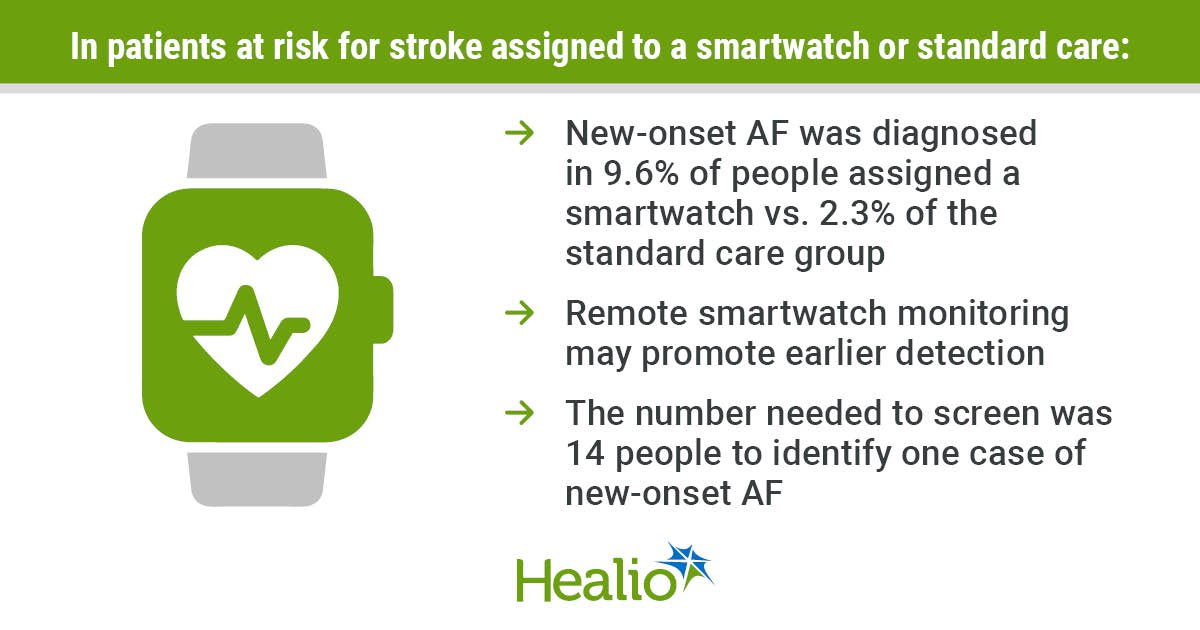
New-onset AF was diagnosed in 9.6% of people assigned to the smartwatch group and 2.3% of the standard care group once during the 6-month trial period, indicating earlier AF detection in the smartwatch group, according to the study (risk difference, 7.3 percentage points; 95% CI, 2.9-11.7; P = .001; HR = 4.4; 95% CI, 1.66-11.66).
The researchers reported a number needed to screen of 14 patients (95% CI, 9-34) to detect one case of new-onset AF.
Moreover, asymptomatic AF was detected in several patients in the smartwatch group only, and all patients diagnosed with new-onset AF initiated anticoagulant therapy, according to the study.
In total, major adverse CV events occurred in 0.9% of each group after completion of the trial.
“Using smartwatches with [photoplethysmography] and ECG functions aids doctors in diagnosing individuals unaware of their arrhythmia, thereby expediting the diagnostic process. Our findings suggest a potential reduction in the risk of stroke, benefiting both patients and the health care system by reducing costs. This reduction would offset the initial cost of the device,” Winter said in the release.

Ask a clinical question and tap into Healio AI’s knowledge base.
- PubMed, enrolling/recruiting trials, guidelines
- Clinical Guidance, Healio CME, FDA news
- Healio’s exclusive daily news coverage of clinical data
<











Leave a Reply