

Key takeaways:
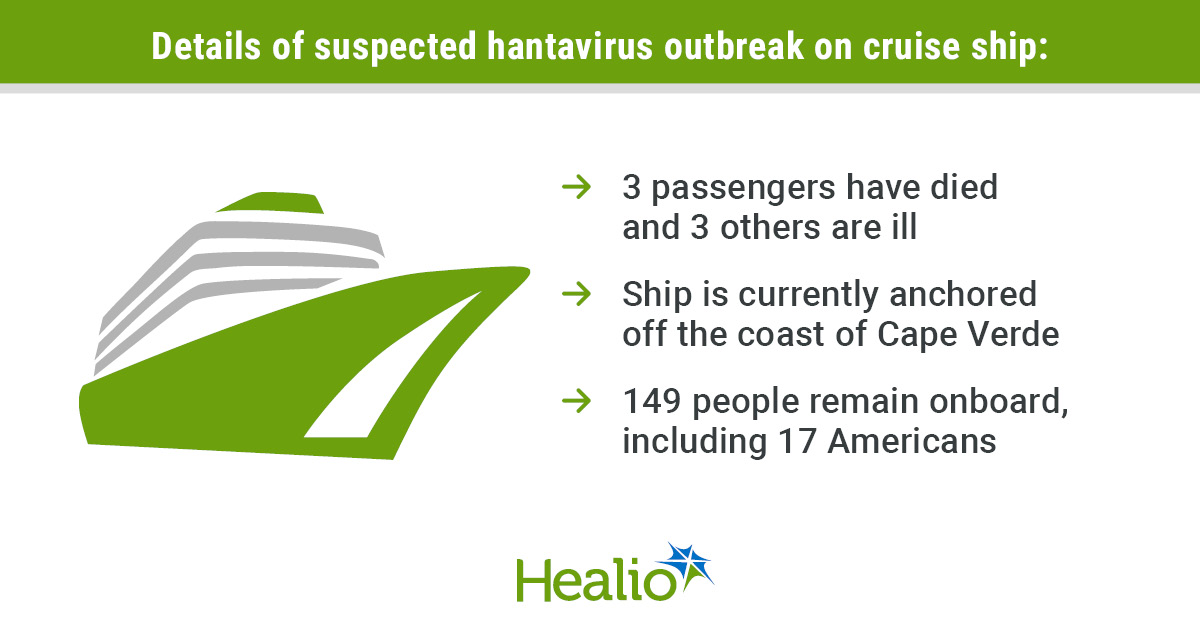
- The ship is currently anchored off the coast of Cape Verde with 149 people onboard.
- Hantavirus gained attention last year when it killed late actor Gene Hackman’s wife.
Hantavirus, a rodent-borne illness that can cause the lungs to fill with fluid, is suspected of killing three passengers and sickening at least three others in an outbreak aboard a cruise ship, according to WHO.
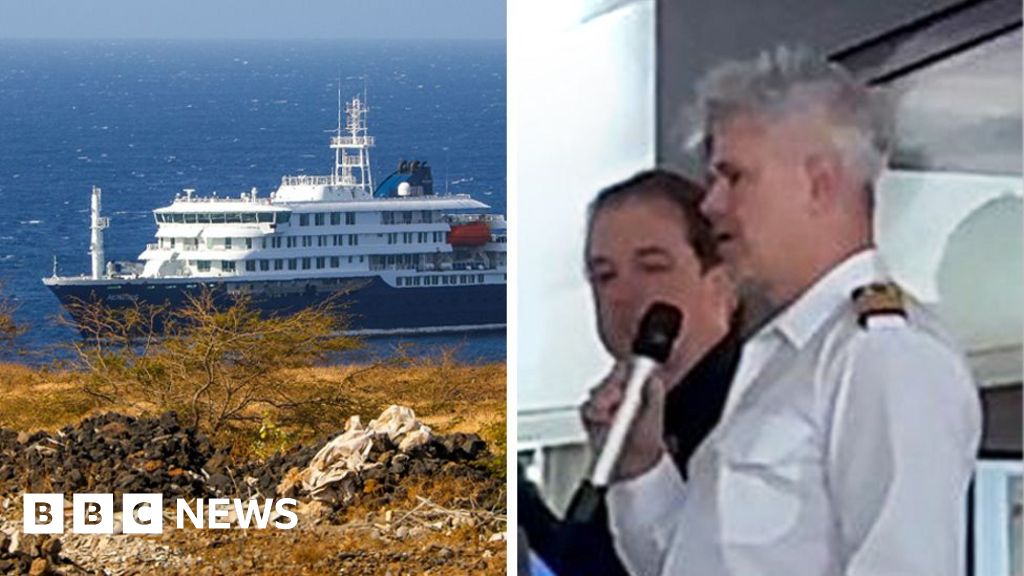
The outbreak occurred aboard the MV Hondius, which sailed from Argentina and is currently anchored off the coast of Cape Verde, an island nation 350 miles off the west coast of Africa.

Data derived from WHO and Oceanwide Expeditions.
Cape Verde has refused docking permission for the ship, Netherlands-based operator Oceanwide Expeditions said in a statement. Of the 149 people who remain onboard, 17 are Americans, the operator said.
The three fatalities include a husband and wife from the Netherlands and a German citizen, Oceanwide Expeditions said, adding that two crew members are under “urgent medical care” onboard for acute respiratory symptoms and another passenger has been transported to an ICU in Johannesburg. Of the six suspected cases, one has been confirmed by laboratory testing, according to WHO.
“Detailed investigations are ongoing, including further laboratory testing and epidemiological investigations,” WHO said Sunday on X. “Medical care and support are being provided to passengers and crew. Sequencing of the virus is also ongoing.”
Hantavirus spreads to humans through exposure to mouse or rat urine, droppings and saliva, according to the CDC. A bite or scratch from a rodent can also spread the disease, but this is a rare occurrence, the agency noted.
Nearly 40% of people who develop respiratory symptoms related to hantavirus may die from the disease, according to the CDC. In the United States, more than 90% of cases occur west of the Mississippi.
Hantavirus surfaced in the news in February 2025 after Betsy Arakawa, wife of actor Gene Hackman, died from hantavirus pulmonary syndrome (HPS) in New Mexico, according to the state’s chief medical examiner.
Steven Bradfute, PhD, an associate professor at the Center for Global Health at the University of New Mexico, said his team’s lab performed a study that showed a quarter of rodents caught in New Mexico carried Sin Nombre virus, the most common cause of HPS in North America.
Bradfute said the virus can be “pretty pathogenic” but typically does not spread person-to-person, even in the contained space of a cruise ship. However, he said human-to-human transmission can exist with Andes virus, a variant of hantavirus found in Argentina. And because the ship departed from Argentina, there is reason for “increased concern.”
“This is the first time, to my knowledge, that there’s been hantavirus outbreak on a cruise ship,” Bradfute told Healio. “We don’t know if this this outbreak started from people getting infected on the ship or people had it before they got on the ship.”
According to the CDC, treatment for HPS focuses on supportive care, with there being no specific antiviral drugs or cures for the virus. Severely ill patients may need breathing support, such as intubation.
Hantavirus also can lead to hemorrhagic fever with renal syndrome, a severe and often deadly illness that impacts the kidneys, but that is less common than HPS in the Western Hemisphere, according to the CDC.
Bradfute advised that people wear an N95 respirator when cleaning up rodent droppings and use a disinfectant with 10% bleach. He said it is important to wipe the droppings up with paper towels and not sweep or vacuum the contaminated area. Bradfute also said it is not time to cancel any travel plans.
“It’s good to be cautious,” he said, “but there’s nothing here that makes me think people should stop traveling. There’s nothing here to suggest that there is that sort of danger.”
For more information:
Steven Bradfute, PhD, can be reached at infectiousdisease@healio.com.
Sources/Disclosures
Source:
World Health Organization (@WHO). May 3, 2026. X.
References:
- Atlantic Odyssey incl. Antarctic Peninsula to Cape Verde. https://oceanwide-expeditions.com/antarctica/cruises/pla32d28-atlantic-odyssey-incl-antarctic-peninsula-to-cape-verde. Accessed May 4, 2026.
- CBS News. Gene Hackman, wife Betsy’s cause of death revealed by officials. YouTube. March 7, 2025. Accessed May 4, 2026. https://www.youtube.com/watch?v=FMJxw-1OOp0&t=64s.
- CDC: About hantavirus. https://www.cdc.gov/hantavirus/about/index.html. May 13, 2024. Accessed May 4, 2026.
- CDC: Reported cases of hantavirus disease: https://www.cdc.gov/hantavirus/data-research/cases/index.html. Published April 23, 2026. Accessed May 4, 2026.
- Operational update: Medical board m/v Hondius. https://oceanwide-expeditions.com/blog/operational-update-medical-situation-aboard-m-v-hondius?srsltid=AfmBOoo_EVIi0C99byJ3Xjyps7N49VV8n_3P016Ga27DOfG2b3nJrEYI. Published May 3, 2026. Accessed May 4, 2026.
- Press update: timeline of the medical situation on board the m/v Hondius. https://oceanwide-expeditions.com/press/press-update-timeline-of-the-medical-situation-on-board-the-m-v-hondius. Published May 4, 2026. Accessed May 4, 2026.
Disclosures:
Bradfute report relevant disclosures.

Ask a clinical question and tap into Healio AI’s knowledge base.
- PubMed, enrolling/recruiting trials, guidelines
- Clinical Guidance, Healio CME, FDA news
- Healio’s exclusive daily news coverage of clinical data
<













Leave a Reply