
April 27, 2026
1 min read

Key takeaways:
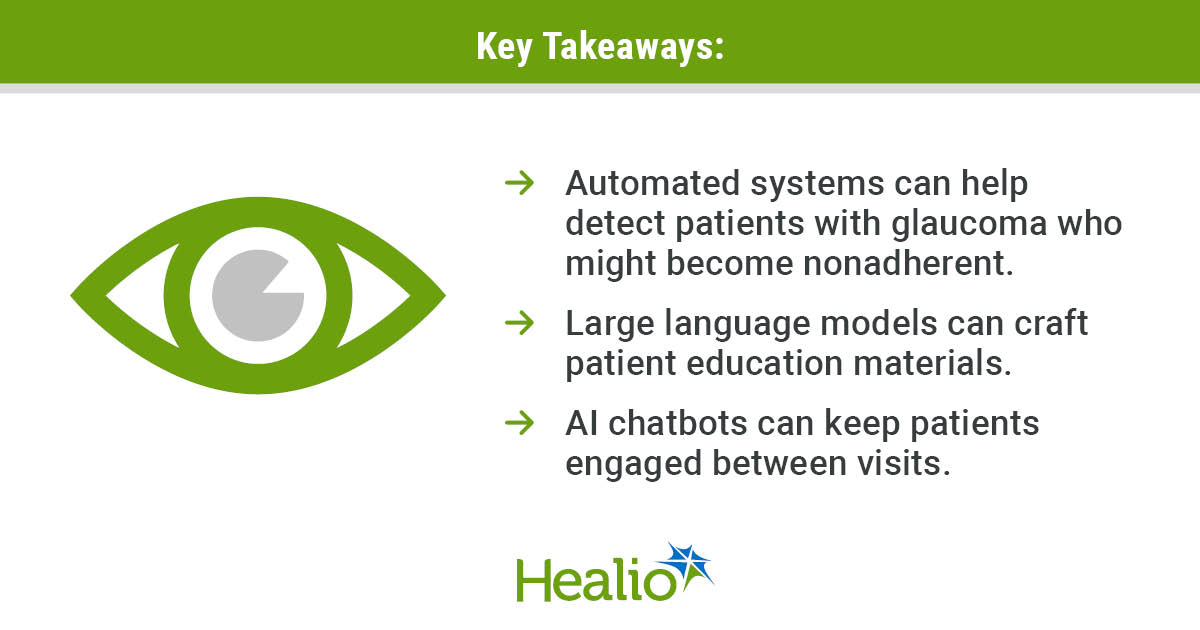
- Automated systems can detect patients who might become nonadherent.
- AI chatbots can keep patients engaged between visits.
AI may help clinicians monitor nonadherence in patients with glaucoma, according to a speaker at the American Glaucoma Society annual meeting.
Siamak Yousefi, PhD, said that nonadherence is common in patients with glaucoma due to factors related to the disease itself, such as it being asymptomatic and slow to progress, as well as treatment, including complex regimens, cost and difficulty instilling drops.

Data were derived from Yousefi S. Dr. Chatbot will see you now: AI for glaucoma patient engagement and adherence. Presented at: American Glaucoma Society meeting; Feb. 19-22, 2026; Rancho Mirage, California (hybrid).
“There are system-level drivers as well, including poor follow-up tracking and essentially no tracking at all in most of the cases,” he said. “Fragmented care, just 2 to 3 minutes of physician-patient interaction, and then months or likely years of complete silence, complete disconnection.”
Yousefi said AI could help clinicians monitor patient nonadherence in a few ways.
First, practices could use automated systems to detect patients who missed appointments or are lost to follow-up based on electronic health record data. Detecting noncompliant patients would be the first step in implementing an AI-integrated intervention to reengage them without interrupting a practice’s workflow.
AI models could also be used to collect data related to the EHR, such as prescription refills, IOP variability and visit patterns, to predict nonadherence and then start an intervention with the patient, Yousefi said.
“For example, scheduling patients earlier compared to what they are expected to come and visit us so more frequent visits can be done … or using the LLMs to do more interventions like providing adaptive patient education through generating material,” he said.
In addition to using large language models (LLMs) to create educational material for patients, Yousefi said they can also be used as conversational tools to keep patients engaged between visits.
“AI can help in detection, prediction and monitoring of noncompliant patients and then do the least intervention, which is more frequent scheduling,” he said. “LLMs and conversational chatbots can provide tailored education and motivational interviewing for patients with glaucoma.”
Sources/Disclosures
Source:
Yousefi S. Dr. Chatbot will see you now: AI for glaucoma patient engagement and adherence. Presented at: American Glaucoma Society meeting; Feb. 19-22, 2026; Rancho Mirage, California (hybrid).
Disclosures:
Yousefi reports no relevant financial disclosures.

Ask a clinical question and tap into Healio AI’s knowledge base.
- PubMed, enrolling/recruiting trials, guidelines
- Clinical Guidance, Healio CME, FDA news
- Healio’s exclusive daily news coverage of clinical data
<













Leave a Reply