
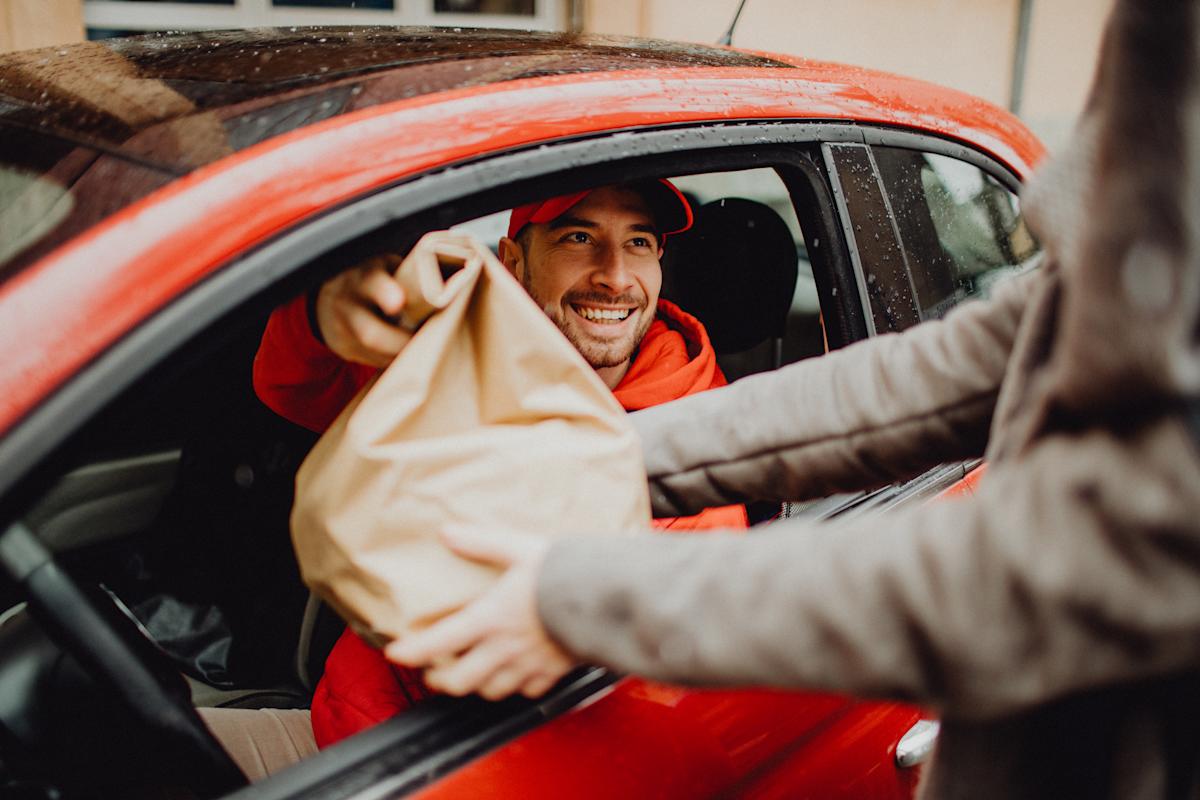
Delivering food for an app-based service like DoorDash or Uber Eats can be a good way to earn extra money. But it can also cost you big time if you don’t have the right car insurance – and your personal auto policy probably isn’t enough. While many platforms provide some insurance to drivers, there are potential coverage gaps that could leave you vulnerable.
In this article, we’ll break down how car insurance works for delivery drivers. You’ll learn what kind of coverage you need, as well as where to buy delivery driver insurance so that you’re protected if you’re in an accident.
Learn more: How does car insurance work? The basics explained.
Most auto insurance policies are intended for personal use. They typically cover you when you’re commuting to and from work, running errands, or driving to meet a friend.
But when you use your vehicle for business purposes — including making deliveries — your personal auto policy often won’t cover you. If you got into an accident while making a delivery, your insurer could deny the claim if they determined the crash occurred during business use.
The app or platform you’re making deliveries for may provide some level of coverage. But that coverage may only kick in at specific points in the delivery process.
Delivery platforms often break down deliveries into distinct stages. If you’re involved in a crash, the specific stage of delivery will become relevant to whether you’re covered by your personal insurance or the platform’s insurance.
When you’re not using your vehicle for business purposes, you’re covered by your personal car insurance. Once you’ve accepted an order or are en route to your customers, the platform’s insurance usually kicks in, assuming that the service extends coverage to delivery drivers.
But it’s when you’re logged in but haven’t yet accepted an order that coverage gaps are most likely to arise. Your personal car insurance may not cover you because you’re driving for business purposes, but you could also not be covered under the app’s insurance, either.
Neither Instacart nor GrubHub provides auto insurance to drivers, meaning you’re entirely responsible for securing your own insurance if you deliver for these platforms. But many delivery apps provide some level of coverage to drivers.
Insurance provided by platforms is often secondary, meaning it may only kick in after you’ve exhausted your own policy limits. Comprehensive coverage and collision coverage, which help pay for damages to your vehicle, are often limited or nonexistent.
Drivers receive $1 million of auto liability coverage, uninsured/underinsured motorist coverage, and contingent comprehensive and collision coverage. (Basically, that means you need to carry comprehensive and collision insurance on your personal auto policy for the coverage to apply.)
Amazon Flex provides insurance to drivers in all states other than New York. According to Amazon, “If you live in New York, you may need additional commercial insurance to meet state law.”
Learn more: New York state car insurance: Review your options and how to save
DoorDash drivers, aka “Dashers,” in most states have $1 million in liability coverage through the company’s third-party insurance provider. Dashers are covered from the time they’ve accepted an order on the app until they’ve made the delivery or the order has been cancelled or unassigned.
Postmates provides drivers with $1 million worth of liability coverage. The liability coverage is supplemental, which means it’s offered in addition to your personal car insurance. Postmates’ insurance kicks in once you’ve accepted a delivery and ends once you’ve completed it.
UberEats gives drivers up to $100,000 in bodily injury liability coverage per accident and $25,000 of property damage liability insurance once they’ve logged into the app and are awaiting an order. Drivers may also receive uninsured/underinsured motorist coverage, personal injury protection (PIP) and medical payments coverage, depending on their state’s law.
Once you’ve accepted an order or are making a delivery, you’re covered by at least $1 million in liability insurance. If your car is damaged during a delivery, you’re protected by contingent comprehensive and collision insurance, though there’s a $2,500 deductible. Contingent means secondary coverage and kicks in if your primary auto policy is insufficient or won’t pay out.
To fill the gaps between your personal insurance and the platform’s coverage, you have two primary options.
-
Rideshare coverage: This coverage may be offered as an add-on or endorsement to your existing auto insurance policy, or might need to be purchased as separate coverage from the same or even another carrier. Rideshare insurance typically fills the gap between the time when a driver logs into an app and picks up a passenger for a service like Uber or Lyft. However, depending on the insurer, it may extend to drivers making deliveries for an app.
-
Commercial insurance:It may be necessary if you can’t purchase a rideshare endorsement or policy. However, commercial insurance tends to be far more expensive than rideshare coverage.
Many insurers don’t yet offer rideshare insurance for delivery drivers, but here are a few options. If you’re not sure whether your carrier offers delivery driver insurance or aren’t clear about what your policy covers, contact your carrier or speak to an insurance agent.
GEICO requires rideshare insurance whether you’re driving passengers for Uber or Lyft or making deliveries for a service like Amazon Flex or DoorDash.
Learn more: GEICO car insurance review
Progressive offers rideshare insurance as an add-on to personal auto policies that applies to delivery drivers, as permitted by state law. In states where rideshare endorsements aren’t available, you can buy a commercial auto policy.
Learn more: Progressive car insurance review
State Farm offers rideshare insurance, but it doesn’t classify delivery platforms as rideshare services. If you only drive for delivery platforms like DoorDash or UberEats (and never drive passengers for pay), you may be able to add a business use endorsement to your personal policy.
Learn more: State Farm car insurance review
USAA has rideshare insurance that you can also use if you make deliveries for an app. You can also purchase a commercial policy with a rideshare option in some states. Note that USAA membership is limited to military members and their families.
Learn more: USAA car insurance review
Tim Manni edited this article.




Leave a Reply