
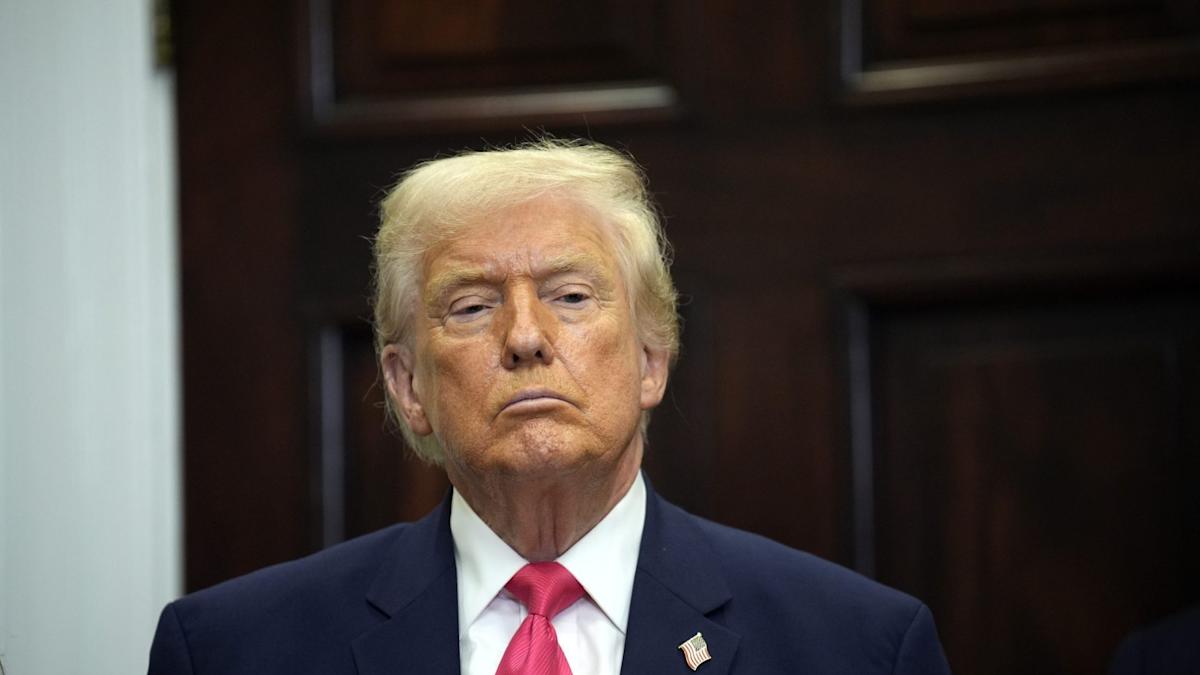
President Donald Trump recently announced his “Great Healthcare Plan,” which promises to lower drug prices, lower insurance premiums and maximize price transparency.
Find Out: Would Trump’s Australian-Style Retirement Be Better or Worse Than the U.S. Plan?
Read Next: How Middle-Class Earners Are Quietly Becoming Millionaires — and How You Can, Too
The announcement comes at a time when many Americans are worried about the rising cost of healthcare. A January KFF survey found that healthcare costs are the top financial worry for many Americans, with two-thirds (66%) saying they are at least somewhat worried about affording the cost of healthcare — that’s more than the percent that are worried about affording food and groceries, utilities, housing costs and transportation expenses.
But will Trump’s plan actually make healthcare more affordable? Here’s what one expert thinks.
Trump’s plan focuses on several strategies: reducing prescription drug prices through Pharmacy Benefit Manager (PBM) reforms, applying “Most Favored Nation” (MFN) pricing to certain medications, providing insurance premium relief and expanding healthcare price transparency.
While each of these measures could generate savings, Peter Basica, founder of 360 Smarter Care — a company focused on reducing healthcare costs — said the overall impact would be modest when spread across the population.
“For the sake of discussion, let’s say the PBM reforms and MFN reforms perform well above projections at 20% — the savings amount to $51 billion,” he said. “Spread that over the U.S. population, and it breaks down to $150 per American. While welcome, it doesn’t begin to move the needle.”
Check Out: I’m a Financial Planner: Cut These 7 Hidden Expenses To Save Hundreds a Month
One proposal would move certain prescription drugs to over-the-counter (OTC) status. On paper, this could lower drug prices and reduce visits to physicians’ offices, urgent care centers and emergency departments. In practice, Basica warned, the change could backfire.
“This is a terrible idea,” he said. “Hospital care is the largest driver of the $5.1 trillion healthcare expense, and 25% of hospital visits could have been avoided if the patient had simply taken their prescription drugs as prescribed.”
Basica said medication adherence is closely tied to the relationship between patients and their primary care physicians.
“The lack of that personal relationship, the lack of trust in their physician, is directly related to the lack of
adherence,” he said. “Moving some of the most common prescription drugs to OTC further erodes the concept of a trusted primary care physician-patient relationship.”








Leave a Reply