
Oireachtas Health Committee hears how 800 people are waiting to access HIV PrEP treatment, with some facing delays of up to one year
A service providing preventative treatment for people at risk of contracting HIV received just one-quarter of the additional staff it said it needs to carry out its work, the Oireachtas Health Committee has heard.
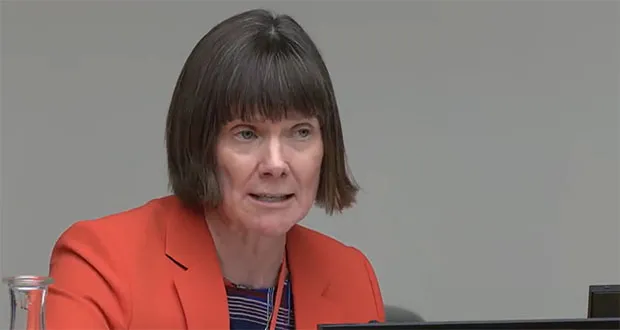
Prof Fiona Lyons, national clinical lead for the HSE’s Sexual Health Programme, said that in 2025 her team requested 28 additional staff to help provide HIV pre-exposure prophylaxis (PrEP) medication to people around the country. Currently there are around 800 people waiting to access Prep, with delays of between nine and 12 months recorded in some areas.
However, last year funding for just seven additional staff was provided to address delays in the service. Prof Lyons added that, for the 2026 HSE Service Plan, the PrEP programme was ‘not invited’ to make a submission outlining its staffing needs.
Health Committee chair and Social Democrats TD Pádraig Rice highlighted how Ireland is unlikely to achieve a goal of ending new HIV transmissions by 2030.
In 2024 the number of first-time diagnoses of HIV in Ireland exceeded 200 last year for the first time since the pandemic, while the number of cases overall here is, per capita, the second highest in Europe.
Last year Ireland published an updated National Sexual Health Strategy 2025-2035. It commits to developing a HIV action plan and model of care.
Prof Lyons said that plans are in place to publish the model of care by the end of July and a survey is underway to identify resources and staffing it will need to be fully implemented.
However, in response to questions from Sinn Féin health spokesman David Cullinane, she said that her team ‘won’t be waiting for the model of care to address the inequity of access to the prep services’. Currently ten counties, including the TD’s constituency of Waterford, have no local PrEP service.
“We developed a prep program in 2019 and the HSE completely acknowledges that the absence of a PrEP service in Waterford is completely unacceptable,” Prof Lyons added.
Adam Shanley of the School of Medicine, Trinity College, told the Committee that access to PrEP ‘remains uneven. “People outside major urban centres often face additional barriers. Some clinics are operating at capacity, leading to waiting lists and unclear pathways of access,” he said.
Pádraig Burke of the Gay Health Network said that long waits for access to the medication ‘are not just an inconvenience; they are a missed prevention opportunity’.
“Access to STI testing and sexual health care should not depend on where someone lives, yet it remains frustratingly uneven,” he added. Outside major urban centres, particularly in the Midlands, the West and the North-West, there are clear gaps. A person’s ability to protect their sexual health should not be dictated by their Eircode”
CEO of the Sexual Health Centre in Cork, Fiona Finn, called for a more integrated approach to sexual health services, including the development of community-based, ‘one-stop-shop’ services, where people can access a wide range of sexual healthcare in a single setting.
The meeting heard how access to gender-affirming care remains ‘significantly underdeveloped’, with some trans people waiting more than 10 years to access services.
“We are clearly failing our trans community,” Ms Finn said. “Many must seek care abroad, or outside formal pathways, increasing inequality. At present, general practitioners are not adequately supported to provide gender affirming care.”
The World Health Organisation recommends that trans healthcare falls under the realm of sexual health in national health systems – this is not the case under the HSE.
Prof Lyons said that she agreed with the WHO recommendation, while Deputy Rice said that he believes there would be fewer barriers to access and a more inclusive system if trans healthcare came under the HSE’s Sexual Health Programme.
Ireland has second-highest levels of HIV per capita in Europe, new report finds
<











Leave a Reply